Toggle Categories
Get Instant Support
Choose your preferred way to connect with our team
-
Get Free Quote Fill out form for detailed pricing
-
Send Email Detailed inquiry support
-
WhatsApp Quick mobile chat
Response Time
Within 8 hours on working days, 24 hours on holidays
Products
Anti-FAAH1 Monoclonal Antibody for WB, IF/ICC, ELISA - O00519
Item Number: CM0012154
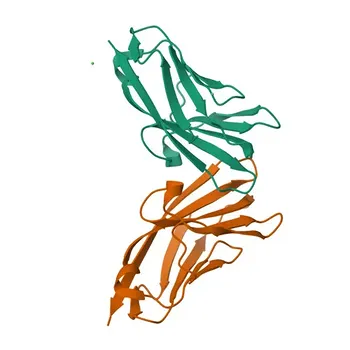
Rabbit anti-Human CD66b Monoclonal Antibody for Flow Cytometry - P31997
Item Number: CM0012177
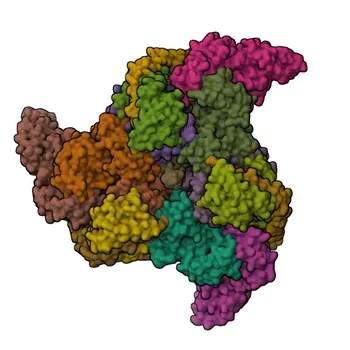
ATP6V1A Rabbit Polyclonal Antibody for WB, ELISA - P38606
Item Number: CM0013557
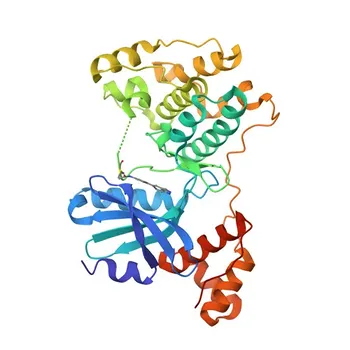
Anti-MELK Rabbit Polyclonal Antibody for WB and ELISA - Q14680
Item Number: CM0013597
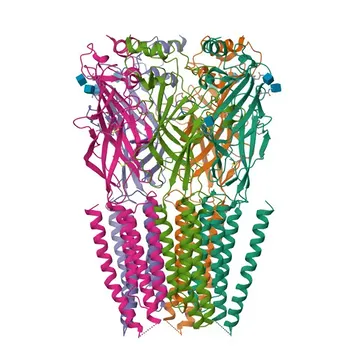
Anti-GLRA2 Rabbit Polyclonal Antibody for WB and ELISA - P23416
Item Number: CM0014074
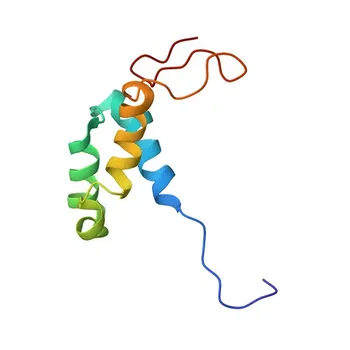
Anti-HP1BP3 Rabbit Polyclonal Antibody for WB, IHC-P, ELISA - Q5SSJ5
Item Number: CM0014687
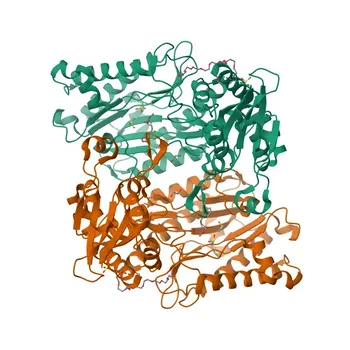
Anti-XPNPEP3 Rabbit Polyclonal Antibody for WB, IF/ICC, ELISA - Q9NQH7
Item Number: CM0014980
Anti-Slug Polyclonal Antibody for WB and ELISA - O43623
Item Number: CM0015127
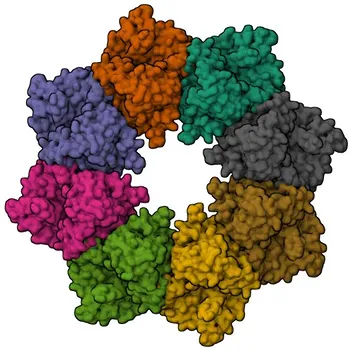
Anti-C10orf2/Twinkle mtDNA Helicase Polyclonal Antibody for WB, ELISA - Q96RR1
Item Number: CM0015766
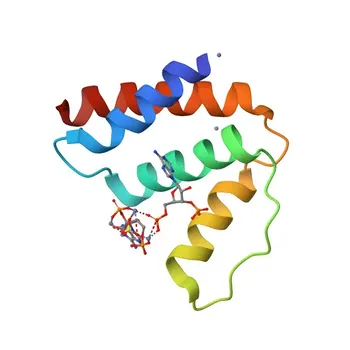
Anti-DBI Polyclonal Antibody for WB, IF/ICC, IP, ELISA - P07108
Item Number: CM0016664
Anti-RTN4RL1 Rabbit Polyclonal Antibody for WB, ELISA - Q86UN2
Item Number: CM0017668
Anti-FILIP1L Polyclonal Antibody for WB, ELISA - Q4L180
Item Number: CM0019804
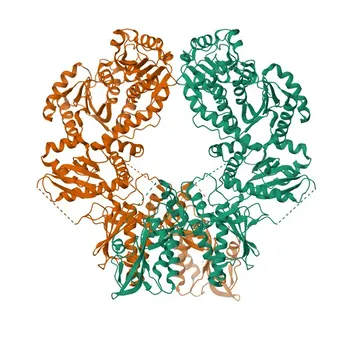
Anti-SLFN11 Rabbit Polyclonal Antibody for WB, ELISA - Q7Z7L1
Item Number: CM0020936
MIXL1 Rabbit pAb for WB and ELISA - Q9H2W2
Item Number: CM0023033
Anti-TTC7A Rabbit Polyclonal Antibody for WB, ELISA - Q9ULT0
Item Number: CM0023069
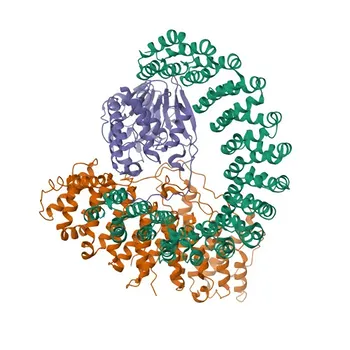
Anti-PP2A-B56δ/PR61δ/PPP2R5D Polyclonal Antibody for WB, IHC-P, IF/ICC, ELISA - Q14738
Item Number: CM0023533
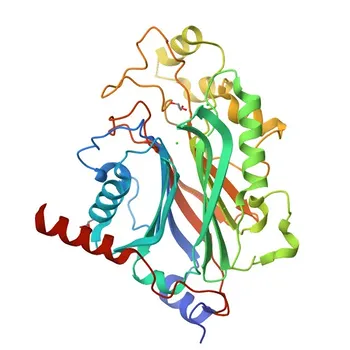
Anti-INPP5E Polyclonal Antibody for WB, IF/ICC, ELISA - Q9NRR6
Item Number: CM0023841
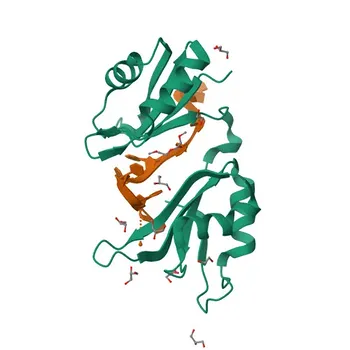
CXCR3-B Rabbit pAb - P49682-2
Item Number: CM0024302
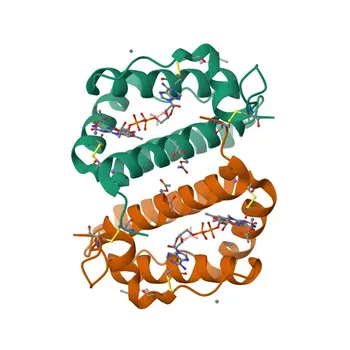
Anti-GFER Rabbit Polyclonal Antibody for WB, IHC-P, ELISA - P55789
Item Number: CM0024752
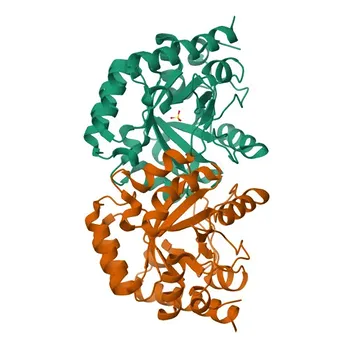
Anti-UMPS Polyclonal Antibody for WB, ELISA - P11172
Item Number: CM0025259
Anti-RPP25L Rabbit Polyclonal Antibody for WB, ELISA - Q8N5L8
Item Number: CM0025320
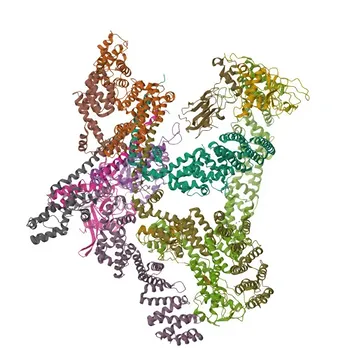
GPS1 Rabbit pAb - Q13098
Item Number: CM0025445
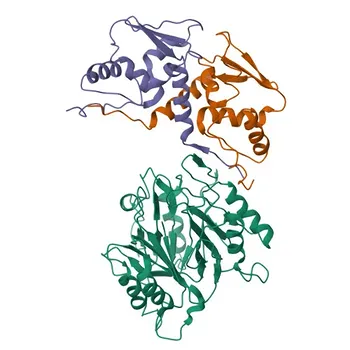
Anti-FBXO22 Rabbit Polyclonal Antibody for WB, ELISA - Q8NEZ5
Item Number: CM0025459
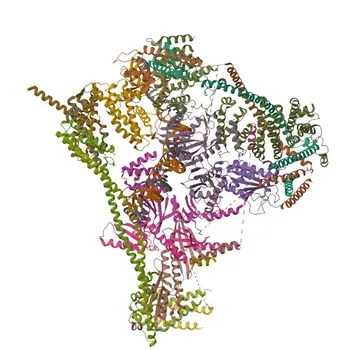
Anti-APITD1 Rabbit pAb - Q8N2Z9
Item Number: CM0025855
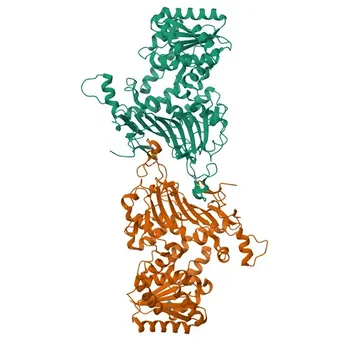
Anti-H6PD Rabbit Polyclonal Antibody for WB, ELISA - O95479
Item Number: CM0025961
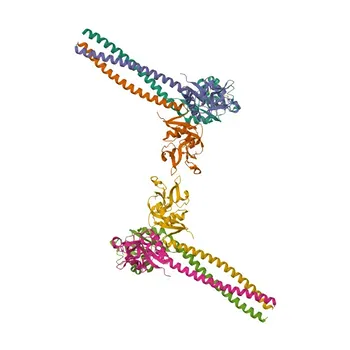
Anti-Langerin/CD207 Rabbit Polyclonal Antibody for WB, ELISA - Q9UJ71
Item Number: CM0026597
Anti-CFHR3 Polyclonal Antibody for WB, IF-P, ELISA - Q02985
Item Number: CM0026741
Anti-Aconitase 2 (ACO2) Rabbit Polyclonal Antibody for WB, IF/ICC, IHC-P, ELISA - Q99798
Item Number: CM0026798
Anti-HAND2 Polyclonal Antibody for WB, IF, IHC, ELISA - P61296
Item Number: CM0026822
REQUEST A QUOTE
Our professional team will reply to you within one business day. Please feel free to contact us!
Related Articles
Where Ct Values Become Trustworthy: Establishing the qPCR Fluorescence Threshold
Learn how baseline noise, statistical thresholds, exponential-phase placement, and validation turn qPCR fluorescence into reliable Ct values.
From Molecular Recognition to Reliable Results: Engineering Biosensors for Rapid Safety Testing
How antibodies and enzymes turn invisible molecular events into reliable biosensor signals, and how material quality determines test performance.
When the Surface Becomes the Assay: Direct Hapten Coating for More Efficient IVD Biosensors
Compare direct hapten derivative coating with protein conjugates to improve SPR assay sensitivity, reduce antibody use, and extend chip life.
From Hapten to Reliable Result: Engineering Small-Molecule Immunoassays for Diagnostic Use
Discover how hapten chemistry, antibody selection, competitive formats, and validation determine small-molecule immunoassay performance.
Why Direct Hapten Coupling Changes the Economics of Small-Molecule Biosensors
Compare direct hapten coupling with protein conjugates to improve ligand density, signal quality, antibody efficiency, and chip reusability.
What Your qPCR Signal Really Means: Choosing Between SYBR Green I and TaqMan Chemistry
Compare SYBR Green I and TaqMan qPCR detection chemistry, from false-positive risk and multiplexing to workflow design for reliable IVD assays.
From a 36-Hour Wait to a 30-Minute Decision: The Workflow Advantage of Rapid Antibody-Based Immunosensors
Rapid antibody-based immunosensors compress analyte detection from 24–36 hours to about 30 minutes, changing workflows, decisions, and assay design.
Choosing the Right High-Throughput Toxicology Platform: Cell-Based Bioassays Versus ELISA
Compare cell-based bioassays and ELISA for toxicology screening, from biological relevance and throughput to validation and technical support.
Engineering the Weakest Link: Recombinant Antibodies for Reliable Multi-Analyte Biosensors
Learn how engineered recombinant antibodies improve multi-analyte biosensors through uniform recognition, oriented surfaces, avidity, and wider dynamic range.
qPCR Primer Design: The Small Decisions That Determine Assay Reliability
A practical guide to qPCR primer design, from amplicon length and 3' stability to validation for efficient, reproducible diagnostics.
Why Competitive Immunoassays Read Higher Than GC-MS—and How Raw Materials Close the Gap
Discover why competitive immunoassays overestimate target levels versus GC-MS, and how hapten, antibody, blocker, and buffer choices reduce bias.
The Silent Well: How No Template Controls Protect Molecular Diagnostic Integrity
A practical guide to No Template Controls: how unexpected qPCR signals reveal contamination, reagent impurities, artifacts, and broken workflow controls.
The Signal You Lose Before the qPCR Run Begins: A Practical System for Protecting Primers and Fluorogenic Probes
Learn how aliquoting, dark storage, controlled thawing, and buffer choice protect qPCR fluorescence, Cq reproducibility, and assay sensitivity.
Multiplex Micro-Array Immunoassays: The Antibody Bottleneck Behind Faster, Smarter Diagnostics
Explore how multiplex micro-array immunoassays increase speed and data density, and why antibody specificity, conjugates, and consistency limit scale.
Why Open Chemistry and Flexible Reaction Volumes Define Better Diagnostic PCR Systems
Learn how open chemistry compatibility and flexible reaction volumes improve PCR assay control, sensitivity, cost, scalability, and supply independence.
Why Dioxin Immunoassays Fail in Complex Matrices—and How to Engineer Them for Reliable Screening
Explore how matrix interference, antibody cross-reactivity, and sample preparation limit dioxin immunoassays—and how better materials and workflows improve accuracy.
qPCR Efficiency: The Mathematical Foundation of Reliable Molecular Diagnostics
Learn how qPCR efficiency is calculated, why the 90–100% range matters, and how it protects diagnostic accuracy, sensitivity, and compliance.
When a Surface Becomes a Sensor: Choosing Between QCM, SAW, and Six Classes of Quality Detection
Explore six sensor families, how QCM and SAW convert molecular binding into frequency shifts, and why surface chemistry determines diagnostic reliability.
Designing Generic Antibodies: How Hapten Engineering Enables Broad-Spectrum Pesticide Detection
Learn how strategic hapten design exposes conserved pesticide structures, improves antibody cross-reactivity, and guides reliable multi-residue assays.