Polyclonal Antibodies
SYVN1 Rabbit Polyclonal Antibody for WB, ELISA - Q86TM6
Item Number : CM0025244
Price varies based on specs and customizations
- Application
- WB, ELISA
- Cross Reactivity
- Human, Mouse
- Protein Weight
- 68kDa

Shipping:
Contact us to get shipping details Enjoy On-time Dispatch Guarantee.
Why Choose Us
Easy ordering process, quality products, and dedicated support for your business success.
Core Product Specifications and Parameters
| Parameter | Value |
|---|---|
| Product Name | SYVN1 Rabbit pAb |
| Remarks/Alias | DER3; HRD1; SYVN1 |
| Species | Human |
| GeneID (Human) | 84447 |
| GeneID | 84447 |
| Immunogen | Synthetic peptide corresponding to a sequence within amino acids 500-600 of human SYVN1 (NP_757385.1) |
| Source | Rabbit |
| Category | Polyclonal Antibodies |
| Application | WB, ELISA |
| Cross Reactivity | Human, Mouse |
| SWISS | Q86TM6 |
| Protein Weight | 68kDa |
| Shipping | Ice bag |
Biological Background: SYVN1 Function and Localization
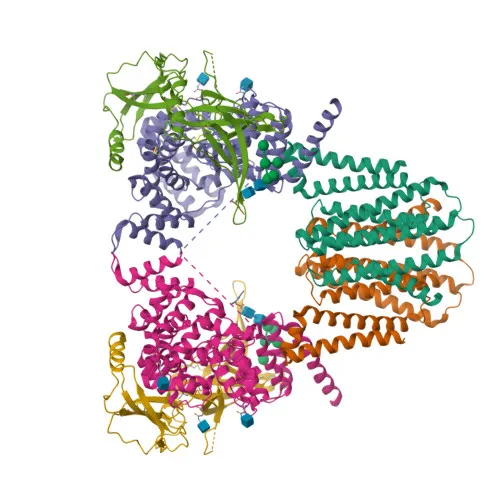
- SYVN1 (synoviolin, HRD1) is a RING-type E3 ubiquitin ligase that accepts ubiquitin from the ER-associated UBC7 E2 conjugating enzyme and transfers it to substrate proteins, targeting them for proteasomal degradation. Related references: PMID:12459480, PMID:12646171, PMID:12975321
- It is a central component of the endoplasmic reticulum-associated degradation (ERAD) pathway, which eliminates misfolded proteins from the ER to maintain cellular proteostasis. Related references: PMID:12459480, PMID:12646171, PMID:12975321
- SYVN1 protects cells from ER stress-induced apoptosis, underscoring its anti-apoptotic function.
- It promotes the degradation of normal short-lived proteins (e.g., SGK) and disease-associated proteins such as polyglutamine-expanded huntingtin (HTT) and unfolded GPR37, thereby providing neuroprotection. Related references: PMID:17141218
- SYVN1 sequesters the tumor suppressor p53/TP53 in the cytoplasm and promotes its ubiquitination and degradation, thereby negatively regulating p53-dependent transcription, cell cycle arrest, and apoptosis. Related references: PMID:17170702
- The protein localizes to the endoplasmic reticulum membrane and is widely expressed, with particularly high levels in liver and kidney; its expression is elevated in synovial tissues from rheumatoid arthritis patients.
- SYVN1 is a multi-pass transmembrane protein with zinc-finger domains and is subjected to phosphorylation, reflecting its involvement in stress signaling and ubiquitin conjugation.
Experimental Guidance and Technical Tips
- For Western blot, use positive control lysates from human or mouse cell lines with confirmed SYVN1 expression, such as HeLa, HEK293, or liver/kidney tissue extracts.
- The predicted molecular weight is approximately 68 kDa (calculated 67.7 kDa from UniProt); include a pre-stained protein ladder and run a 10% SDS-PAGE gel.
- For ELISA applications, the immunogen (aa 500–600) targets the C-terminal region of SYVN1; consider using this peptide as a positive control.
- Due to the polyclonal nature of the antibody, validate each new lot for consistent performance in your specific assay.
- Cross-reactivity with mouse enables translational studies; however, confirm reactivity in your mouse model of interest.
- Avoid repeated freeze-thaw cycles; aliquot and store at -20°C or as recommended.
CamelBio: Your One-Stop Sourcing Bridge
CamelBio offers comprehensive IVD raw material solutions, including this SYVN1 rabbit polyclonal antibody, to support research in ubiquitin-proteasome pathways, ER stress, and apoptosis. Whether you need validated antibody pairs, optimized monoclonal/polyclonal antibodies, or bulk ancillary reagents, CamelBio streamlines your sourcing from concept to clinic. Our team also provides technical consulting to accelerate your diagnostic development.
REQUEST A QUOTE
Our professional team will reply to you within one business day. Please feel free to contact us!