Monoclonal Antibodies
Rabbit anti-Human Flt3/CD135 Monoclonal Antibody for Flow Cytometry - P36888
Item Number : CM0009648
Price varies based on specs and customizations
- Application
- FC
- Cross Reactivity
- Human
- Protein Weight
- 108kDa/112kDa

Shipping:
Contact us to get shipping details Enjoy On-time Dispatch Guarantee.
Why Choose Us
Easy ordering process, quality products, and dedicated support for your business success.
Core Product Specifications and Parameters
| Parameter | Value |
|---|---|
| Product Name | Rabbit anti-Human Flt3/CD135 mAb |
| Remarks/Alias | FLT3; CD135; FLK-2; FLK2; STK1; fms related tyrosine kinase 3 |
| Species | Human |
| Gene ID (Human) | 2322 |
| Gene ID | 2322 |
| Immunogen | Recombinant protein / Recombinant fusion protein containing a sequence corresponding to amino acids 27-163 of human Flt3/CD135 (NP_004110.2). |
| Source | Rabbit |
| Category | Monoclonal Antibodies |
| Application | FC |
| Cross Reactivity | Human |
| SWISS | P36888 |
| Protein Weight | 108kDa/112kDa |
| Shipping | Ice bag |
Biological Background: Flt3/CD135 Function and Localization
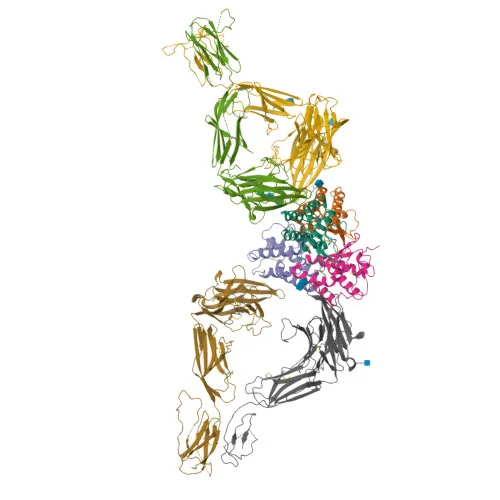
- Receptor-type tyrosine-protein kinase FLT3, also known as Flt3/CD135, FLK-2, FLT-3, or STK-1, is encoded by the FLT3 gene (Gene ID: 2322) in humans.
- Functions as a cell-surface receptor for the cytokine FLT3LG, playing a critical role in regulating differentiation, proliferation, and survival of hematopoietic progenitor cells and dendritic cells.
- Upon ligand binding, activates multiple downstream signaling pathways, including RAS/MAPK, PI3K/AKT/mTOR, and STAT5, promoting cellular responses. Constitutively active mutations are common in acute myeloid leukemia (AML).
- Subcellularly localized to the plasma membrane and endoplasmic reticulum lumen.
- Detected in bone marrow, hematopoietic stem cells, myeloid and granulocyte/macrophage progenitor cells; highly expressed in T-cell leukemia cells, with lower levels in kidney and pancreas (at protein level).
- Post-translational modifications include glycosylation, phosphorylation, and ubiquitination, and the protein features immunoglobulin-like domains typical of the receptor tyrosine kinase family.
- Keywords: Alternative splicing, ATP-binding, Disease variant, Glycoprotein, Proto-oncogene, Receptor, Tyrosine-protein kinase, Transmembrane helix.
Experimental Guidance and Technical Tips
- The immunogen corresponds to the extracellular domain (amino acids 27-163), which is ideal for binding to the native receptor in non-permeabilized cells, supporting flow cytometry applications.
- As an conjugate, ensure appropriate laser excitation (typically 561 nm or 594 nm) and bandpass filter selection; perform compensation if multiplexing with other fluorophores.
- For flow cytometry, verify target expression in hematopoietic lineages such as bone marrow, peripheral blood mononuclear cells, or leukemia cell lines; include an isotype control to assess non-specific binding.
CamelBio: Your One-Stop Sourcing Bridge
CamelBio serves as a comprehensive one-stop sourcing partner for IVD raw materials, offering validated monoclonal and polyclonal antibodies, antigen-grade proteins, and ancillary reagents to accelerate diagnostic development. This anti-Flt3/CD135 conjugate supports hematology and oncology research applications, and CamelBio can facilitate scalable procurement of antibody pairs, recombinant proteins, and custom formulations to meet your specific assay requirements.
REQUEST A QUOTE
Our professional team will reply to you within one business day. Please feel free to contact us!