Monoclonal Antibodies
PGK1 Rabbit Monoclonal Antibody for WB, ELISA - P00558
Item Number : CM0002571
Price varies based on specs and customizations
- Application
- WB, ELISA
- Cross Reactivity
- Human, Mouse, Rat
- Protein Weight
- 45kDa

Shipping:
Contact us to get shipping details Enjoy On-time Dispatch Guarantee.
Why Choose Us
Easy ordering process, quality products, and dedicated support for your business success.
Core Product Specifications and Parameters
| Parameter | Value |
|---|---|
| Product Name | PGK1 Rabbit mAb |
| Remarks/Alias | PGKA; MIG10; HEL-S-68p; PGK1 |
| Species | Human |
| Gene ID (Human) | 5230 |
| Immunogen | Synthetic Peptide |
| Source | Rabbit |
| Category | Monoclonal Antibodies |
| Application | WB, ELISA |
| Cross Reactivity | Human, Mouse, Rat |
| SWISS | P00558 |
| Protein Weight | 45kDa |
| Shipping | Ice bag |
Biological Background: PGK1 Function and Localization
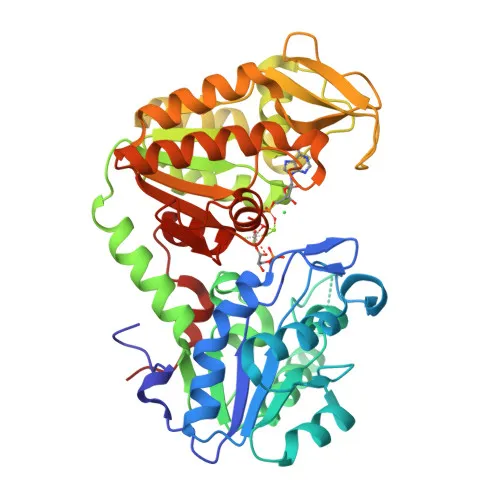
- PGK1 encodes phosphoglycerate kinase 1, a glycolytic enzyme that catalyzes the reversible conversion of 1,3-diphosphoglycerate to 3-phosphoglycerate, producing ATP. Related references: PMID:30323285, PMID:7391028
- In addition to its cytoplasmic role, PGK1 translocates to the mitochondrial matrix where it functions as a protein kinase, phosphorylating PDK1 to inhibit the pyruvate dehydrogenase complex, suppressing oxidative phosphorylation and promoting glycolysis. Related references: PMID:26942675, PMID:36849569
- PGK1 acts as a polymerase alpha cofactor (primer recognition protein), linking glycolysis to DNA replication. Related references: PMID:2324090
- It shows broad nucleotide substrate specificity, with ability to use both L- and D- forms of purine and pyrimidine nucleotides, though pyrimidine activity is lower. Related references: PMID:18463139
- PGK1 is mainly expressed in spermatogonia and localized to the sperm principal piece, suggesting a role in sperm motility. Related references: PMID:26677959
- Alternative splicing generates multiple isoforms; the protein undergoes acetylation, phosphorylation, and hydroxylation modifications.
- Disease-associated variants are linked to hereditary hemolytic anemia due to phosphoglycerate kinase deficiency.
Experimental Guidance and Technical Tips
- Based on the immunogen design (N-terminal peptide), this antibody is expected to recognize the N-terminal region, which may detect full-length PGK1 and N-terminal fragments. Validate in your experimental context.
- For Western blot, the expected molecular weight is approximately 45 kDa; however, post-translational modifications may cause slight shifts. Use appropriate positive controls (e.g., HeLa, HepG2 lysates) and validate in mouse/rat samples if cross-reactivity is desired.
- For ELISA, consider pairing with a detection antibody targeting a different epitope; optimize coating conditions and antibody titers for your specific assay requirements.
- Given PGK1's dual cytoplasmic and mitochondrial localization, subcellular fractionation may be useful to study compartment-specific functions.
CamelBio: Your One-Stop Sourcing Bridge
CamelBio provides diagnostic manufacturers and research laboratories with streamlined access to high-quality IVD raw materials, from validated antibody pairs and optimized monoclonal antibodies to bulk ancillary reagents. Whether you require PGK1 antibodies for glycolysis-related assay development or need assistance sourcing rare-target reagents, our integrated supply chain supports your project from concept to clinic. Contact us to explore reliable, scalable solutions tailored to your workflow.
REQUEST A QUOTE
Our professional team will reply to you within one business day. Please feel free to contact us!