Monoclonal Antibodies
PE Rabbit anti-Human MRC2 Monoclonal Antibody for Flow Cytometry - Q9UBG0
Item Number : CM0009245
Price varies based on specs and customizations
- Application
- FC
- Cross Reactivity
- Human
- Protein Weight
- 167kDa

Shipping:
Contact us to get shipping details Enjoy On-time Dispatch Guarantee.
Why Choose Us
Easy ordering process, quality products, and dedicated support for your business success.
Core Product Specifications and Parameters
| Parameter | Value |
|---|---|
| Product Name | PE Rabbit anti-Human MRC2 mAb |
| Remarks/Alias | CD280; UPARAP; CLEC13E; ENDO180 |
| Species | Human |
| Gene ID (Human) | 9902 |
| Gene ID | 9902 |
| Immunogen | Recombinant protein|Recombinant fusion protein containing a sequence corresponding to amino acids 35-513 of human MRC2 (NP_006030.2). |
| Source | Rabbit |
| Category | Monoclonal Antibodies |
| Application | FC |
| Cross Reactivity | Human |
| SWISS | Q9UBG0 |
| Protein Weight | 167kDa |
| Shipping | Ice bag |
Biological Background: MRC2 Function and Localization
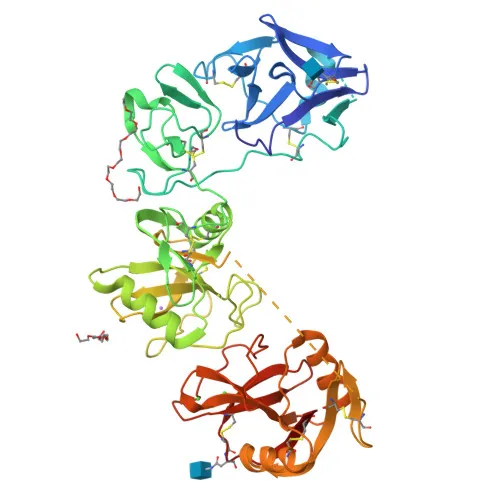
- MRC2, also designated CD280, UPARAP, CLEC13E, and ENDO180, is a C-type mannose receptor 2 encoded by the MRC2 gene.
- It operates as a calcium-dependent endocytic lectin receptor that internalizes glycosylated ligands from the extracellular space via clathrin-mediated endocytosis, releasing them in endosomal compartments.
- The receptor participates in the plasminogen activation system, regulating the extracellular levels of PLAUR/PLAU and thereby modulating protease activity at the cell surface.
- MRC2 contributes to the uptake, remodeling, and degradation of extracellular collagen matrices, likely in cooperation with matrix metalloproteinases (MMPs).
- It may play a role in cancer progression and chronic tissue destructive diseases by influencing collagen turnover.
- The protein is a single-pass type I transmembrane receptor localized to the cell membrane.
- Its expression is ubiquitous but low in tissues including brain, placenta, lung, kidney, pancreas, spleen, thymus, and colon; it is highly expressed in fetal lung and kidney and found in endothelial cells, fibroblasts, and macrophages.
- Post-translational modifications include glycosylation, disulfide bond formation, phosphorylation, and ubiquitination (isopeptide bond).
Experimental Guidance and Technical Tips
- As a PE-conjugated antibody intended for direct flow cytometry, always include a matched isotype control to assess nonspecific staining.
- To determine the optimal concentration, perform a titration (e.g., 0.1–1 μg per 1×10⁶ cells) tested on a relevant human cell line known to express MRC2.
- MRC2 is a cell-surface receptor; maintain cell viability and validate any fixation/permeabilization protocol as it may affect epitope accessibility.
- For multicolor panels, confirm that the PE emission does not cause compensation issues with other fluorochromes in your instrument configuration.
- As a positive control, consider human fibroblasts, macrophages, or cancer cell lines; a negative control (e.g., a cell type with no detectable MRC2) helps set gating thresholds.
CamelBio: Your One-Stop Sourcing Bridge
CamelBio supports diagnostic manufacturers and research institutes by offering a comprehensive range of IVD raw materials. This PE Rabbit anti-Human MRC2 monoclonal antibody is one example of our ready-to-use, application-optimized reagents for flow cytometry. We also provide antibody pair development, bulk ancillary reagents, and sourcing of rare target raw materials to accelerate your projects from concept to clinic.
REQUEST A QUOTE
Our professional team will reply to you within one business day. Please feel free to contact us!