Monoclonal Antibodies
PE Mouse anti-Human CD3 Monoclonal Antibody for Flow Cytometry - P07766
Item Number : CM0011580
Price varies based on specs and customizations
- Application
- FC
- Cross Reactivity
- Human
- Protein Weight
- 23kDa

Shipping:
Contact us to get shipping details Enjoy On-time Dispatch Guarantee.
Why Choose Us
Easy ordering process, quality products, and dedicated support for your business success.
Core Product Specifications and Parameters
| Parameter | Value |
|---|---|
| Product Name | PE Mouse anti-Human CD3 mAb |
| Remarks/Alias | T3E; TCRE; IMD18; CD3epsilon |
| Species | Human |
| GeneID (Human) | 916 |
| GeneID | 916 |
| Immunogen | Recombinant protein of human CD3 |
| Source | Mouse |
| Category | Monoclonal Antibodies |
| Application | FC |
| Cross Reactivity | Human |
| SWISS | P07766 |
| Protein Weight | 23kDa |
| Shipping | Ice bag |
Biological Background: CD3E Function and Localization
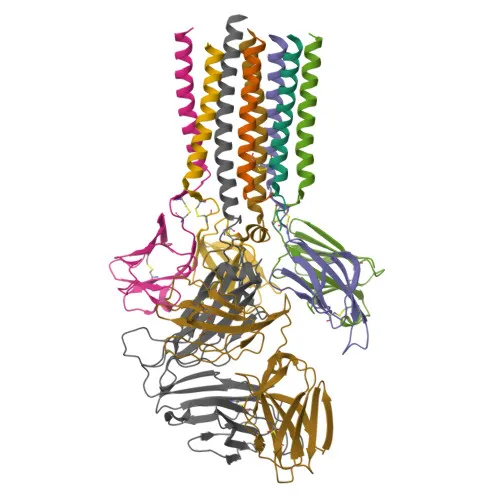
- CD3E encodes the epsilon chain of the T-cell surface glycoprotein CD3, which forms the TCR-CD3 complex on T lymphocytes and plays an essential role in adaptive immune response. Related references: PMID:15294938 PMID:15546002 PMID:2470098
- Upon TCR engagement, the CD3 epsilon chain transmits activation signals across the cell membrane via immunoreceptor tyrosine-based activation motifs (ITAMs) that are phosphorylated by Src family kinases LCK and FYN. Related references: PMID:2470098 PMID:40592325
- Phosphorylated ITAMs serve as docking sites for ZAP70 kinase, leading to its activation and initiation of downstream signaling cascades critical for T-cell activation and development.
- CD3E regulates TCR-CD3 complex surface expression by mediating internalization and down-regulation through endocytosis sequences in its cytosolic region. Related references: PMID:10384095 PMID:26507128
- Additionally, CD3E acts as a receptor for ITPRIPL1, which inhibits T-cell activation by recruiting NCK1 and blocking the CD3E-ZAP70 interaction, thereby suppressing ERK-NFkB signaling and calcium influx. Related references: PMID:12110186 PMID:38614099
- The protein contains an immunoglobulin-like domain, a transmembrane helix, and disulfide bonds, consistent with its role as a cell membrane receptor (UniProt Keywords: Disulfide bond, Immunoglobulin domain, Transmembrane).
- Subcellular localization is primarily at the cell membrane.
Experimental Guidance and Technical Tips
- Since this antibody is directly conjugated to PE, avoid freeze-thaw cycles and store protected from light to maintain fluorophore stability.
- Perform antibody titration to determine optimal concentration for flow cytometry staining, minimizing nonspecific binding and maximizing signal-to-noise ratio.
- Include appropriate isotype control and compensation controls when designing multicolor flow cytometry panels that include PE.
- CD3 is expressed on mature T lymphocytes; thus, use PBMCs, whole blood, or T-cell lines as positive control samples.
- Validate staining in the relevant biological system, and confirm target specificity using knockout or knockdown controls where possible.
CamelBio: Your One-Stop Sourcing Bridge
CamelBio is a trusted one-stop platform that connects diagnostic manufacturers and research laboratories with high-quality IVD raw materials. For T-cell biology and immunophenotyping applications, we offer a range of validated monoclonal antibodies, including this anti-CD3 conjugate, along with supporting reagents and custom sourcing services. Contact our team to explore bulk supply options and technical support for your CD3 detection workflows.
REQUEST A QUOTE
Our professional team will reply to you within one business day. Please feel free to contact us!