Polyclonal Antibodies
PARG Rabbit Polyclonal Antibody for WB, ELISA - Q86W56
Item Number : CM0014333
Price varies based on specs and customizations
- Application
- WB, ELISA
- Cross Reactivity
- Human
- Protein Weight
- 111kDa

Shipping:
Contact us to get shipping details Enjoy On-time Dispatch Guarantee.
Why Choose Us
Easy ordering process, quality products, and dedicated support for your business success.
Core Product Specifications and Parameters
| Parameter | Value |
|---|---|
| Product Name | PARG Rabbit pAb |
| Remarks/Alias | PARG99; PARG |
| Species | Human |
| Gene ID (Human) | 8505 |
| Immunogen | Recombinant fusion protein containing a sequence corresponding to amino acids 777-976 of human PARG (NP_003622.2) |
| Source | Rabbit |
| Category | Polyclonal Antibodies |
| Application | WB, ELISA |
| Cross Reactivity | Human |
| SWISS | Q86W56 |
| Protein Weight | 111kDa |
| Shipping | Ice bag |
Biological Background: PARG Function and Localization
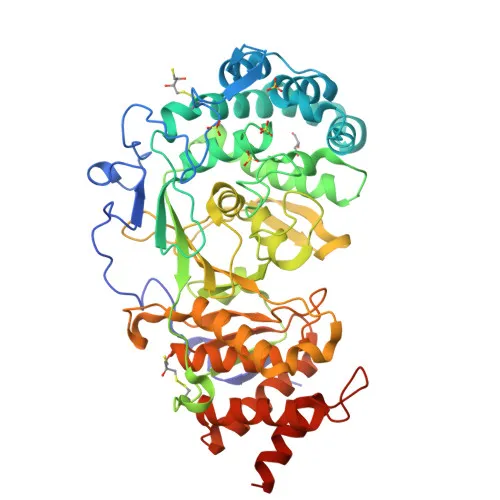
- PARG (Poly(ADP-ribose) glycohydrolase) is encoded by the PARG gene and exists as multiple isoforms, including the 111 kDa full-length form and the shorter PARG99 variant.
- PARG catalyzes the hydrolysis of poly(ADP-ribose) (PAR) chains, primarily acting as an exo-glycohydrolase but with weak endo-glycohydrolase activity, releasing ADP-ribose monomers and PAR fragments of varying lengths. Related references: PMID:23102699 PMID:23481255 PMID:37268618
- It cannot cleave the ester bond between the terminal ADP-ribose and the target protein, thus leaving proteins mono-ADP-ribosylated. This ensures the prevalence of mono-ADP-ribosylated species in cells. Related references: PMID:21892188 PMID:23474714 PMID:33186521
- After DNA damage, PAR synthesized by PARPs is rapidly degraded by PARG, preventing the accumulation of toxic PAR chains and facilitating timely DNA repair. Related references: PMID:23102699 PMID:34019811
- PARG is required to protect cells from prolonged replicative stress by preventing excessive PAR buildup, though it is dispensable for recovery after transient stress. Related references: PMID:24906880
- In the nucleus, PARG contributes to chromatin remodeling and gene expression regulation; it removes PAR from histone demethylase KDM4D, enabling retinoid acid-dependent gene transactivation. Related references: PMID:23102699
- PARG, together with PARP1, NMNAT1, and NUDT5, participates in nuclear ATP synthesis, providing energy for extensive chromatin remodeling events. Related references: PMID:27257257
- Subcellular localization of PARG includes the nucleus, cytoplasm, and mitochondrial matrix. It is ubiquitously expressed across tissues. Post‑translational modifications include acetylation and phosphorylation.
Experimental Guidance and Technical Tips
- The immunogen used to generate this rabbit polyclonal antibody covers amino acids 777–976 of human PARG, a region likely contributing to specificity.
- Validate the antibody in Western blotting (WB) using human cell lysates, with an expected band around 111 kDa.
- For ELISA, consider using the recombinant protein fragment (aa 777–976) as a coating antigen or control.
- Given the polyclonal nature, lot-to-lot consistency should be verified in the target application; inclusion of appropriate positive and negative controls is recommended.
- As PARG is also present in mitochondria, subcellular fractionation may be considered when studying localization-specific functions.
CamelBio: Your One-Stop Sourcing Bridge
CamelBio provides diagnostic manufacturers, labs, and research institutes with one-stop access to IVD raw materials and technical support. The PARG Polyclonal Antibody is ideal for research into DNA damage signaling, ADP-ribosylation metabolism, and chromatin remodeling. We offer validated polyclonal antibodies, recombinant proteins, and ancillary reagents to accelerate your assay development from concept to commercialization.
REQUEST A QUOTE
Our professional team will reply to you within one business day. Please feel free to contact us!