Polyclonal Antibodies
KLK10 (NES1) Rabbit Polyclonal Antibody for WB, IF/ICC, ELISA - O43240
Item Number : CM0026177
Price varies based on specs and customizations
- Application
- WB, IF/ICC, ELISA
- Cross Reactivity
- Human, Mouse, Rat
- Protein Weight
- 30kDa

Shipping:
Contact us to get shipping details Enjoy On-time Dispatch Guarantee.
Why Choose Us
Easy ordering process, quality products, and dedicated support for your business success.
Core Product Specifications and Parameters
| Parameter | Value |
|---|---|
| Product Name | KLK10 Rabbit pAb |
| Remarks/Alias | NES1; PRSSL1; KLK10 |
| Species | Human |
| GeneID (Human) | 5655 |
| GeneID | 5655 |
| Immunogen | Recombinant fusion protein containing a sequence corresponding to amino acids 43-276 of human KLK10 (NP_665895.1) |
| Source | Rabbit |
| Category | Polyclonal Antibodies |
| Application | WB, IF/ICC, ELISA |
| Cross Reactivity | Human, Mouse, Rat |
| SWISS | O43240 |
| Protein Weight | 30kDa |
| Shipping | Ice bag |
Biological Background: Kallikrein-10 Function and Localization
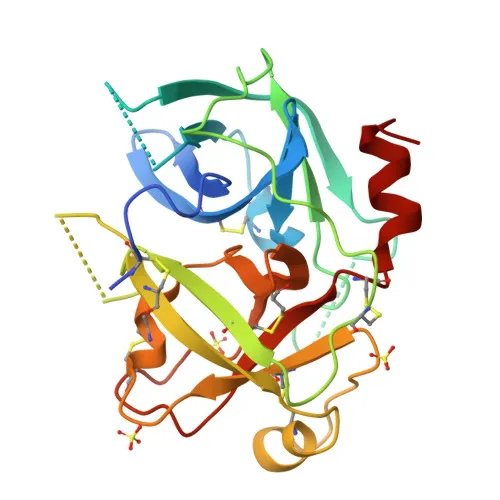
- Kallikrein-10 (KLK10), also designated normal epithelial cell-specific 1 (NES1) and protease serine-like 1 (PRSSL1), is a secreted serine protease belonging to the kallikrein-related peptidase family.
- It functions as a tumor suppressor, with documented roles in inhibiting breast and prostate cancer progression.
- The protein is secreted and contains a signal sequence, consistent with its extracellular role in proteolytic cascades.
- KLK10 is primarily expressed in hormone-responsive tissues, including breast, ovary, and prostate.
- The mature protein has a predicted molecular weight of approximately 30 kDa and features a conserved serine protease domain with disulfide bonds critical for structural stability.
- Post-translational modifications include N-linked glycosylation, which may influence its secretion and functional activity.
- UniProt annotations link KLK10 to processes including cell cycle regulation and proteolysis, and classify it as a secreted glycoprotein with tumor suppressor activity.
Experimental Guidance and Technical Tips
- The immunogen comprises amino acids 43–276, which corresponds to the mature protease domain; thus, the antibody is likely to recognize the secreted, processed form of KLK10.
- For Western blotting, expect a band near 30 kDa under reducing conditions; validate molecular weight in your lysate type as glycosylation may affect migration.
- In immunofluorescence/immunocytochemistry, permeabilization may be needed to detect intracellular pools, although extracellular staining is possible for secreted protein.
- For ELISA applications, the antibody may serve as a capture or detection reagent; users should titrate and pair-test in their specific assay format.
- Cross-reactivity with mouse and rat KLK10 is reported; confirm sequence homology of epitope region if quantitative comparison is required.
CamelBio: Your One-Stop Sourcing Bridge
CamelBio streamlines IVD raw-material procurement for diagnostic manufacturers and labs, offering validated antibody pairs, optimized polyclonal antibodies like this anti-KLK10 pAb, and bulk ancillary reagents. With expertise in tumor-suppressor targets and secreted cancer biomarkers, we support your assay development from concept to clinic. Contact us to discuss custom sourcing, technical consultations, and scalable supply solutions.
REQUEST A QUOTE
Our professional team will reply to you within one business day. Please feel free to contact us!