Polyclonal Antibodies
KCNC1 Rabbit Polyclonal Antibody for WB, ELISA - P48547
Item Number : CM0025424
Price varies based on specs and customizations
- Application
- WB, ELISA
- Cross Reactivity
- Human, Mouse, Rat
- Protein Weight
- 58kDa

Shipping:
Contact us to get shipping details Enjoy On-time Dispatch Guarantee.
Why Choose Us
Easy ordering process, quality products, and dedicated support for your business success.
Core Product Specifications and Parameters
| Parameter | Value |
|---|---|
| Product Name | KCNC1 Rabbit pAb |
| Remarks/Alias | KV4; EPM7; NGK2; KV3.1; KCNC1 |
| Species | Human |
| GeneID (Human) | 3746 |
| GeneID | 3746 |
| Immunogen | Synthetic peptide corresponding to a sequence within amino acids 1-100 of human KCNC1 (NP_004967.1) |
| Source | Rabbit |
| Category | Polyclonal Antibodies |
| Application | WB, ELISA |
| Cross Reactivity | Human, Mouse, Rat |
| SWISS | P48547 |
| Protein Weight | 58kDa |
| Shipping | Ice bag |
Biological Background: KCNC1 Function and Localization
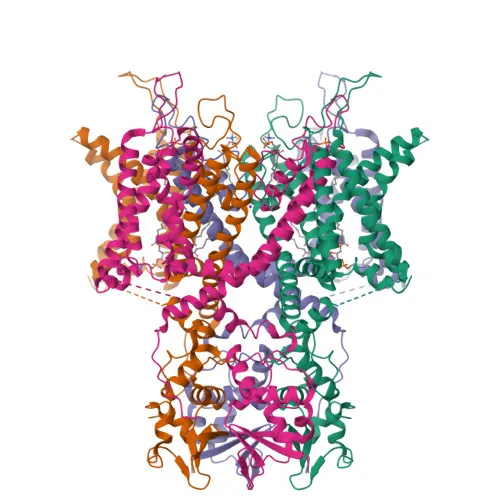
- KCNC1 encodes a voltage-gated potassium channel that opens upon membrane depolarization, allowing potassium efflux with slow inactivation kinetics (PubMed:25401298, PubMed:35840540). Related references: PMID:25401298, PMID:35840580
- It is essential for the rapid repolarization of fast-firing brain neurons, enabling sustained high-frequency action potential trains.
- The channel can form functional homotetrameric channels and heterotetrameric channels with KCNC2 and other family members, contributing to functional diversity.
- KCNC1 localizes to the cell membrane, axon, and presynaptic cell membrane, consistent with its role in neuronal signal propagation.
- Alternative splicing generates multiple isoforms, potentially expanding the functional repertoire of the channel.
- Mutations in KCNC1 are linked to epilepsy and neurodegenerative disorders (based on disease-associated keywords).
- The protein undergoes post-translational modifications, including glycosylation and phosphorylation, which may regulate channel trafficking and activity.
Experimental Guidance and Technical Tips
- The immunogen corresponds to the N-terminal region (amino acids 1–100) of human KCNC1; for Western blotting, verify band specificity using peptide competition or knockout control lysates.
- For WB, the predicted molecular weight is 58 kDa; use appropriate SDS-PAGE conditions and validate with a loading control.
- This antibody is applicable to ELISA; consider using it as a capture or detection reagent depending on the assay format, and include positive and negative controls to confirm performance.
- Cross-reactivity with mouse and rat KCNC1 has been observed, making it suitable for rodent neuroscience models; however, validate in the specific tissue or cell line of interest.
CamelBio: Your One-Stop Sourcing Bridge
CamelBio provides a seamless sourcing experience for IVD raw materials, offering validated antibody pairs, optimized polyclonal and monoclonal antibodies, and bulk ancillary reagents. For neuroscience and ion channel research, this anti-KCNC1 antibody supports studies on neuronal excitability and related disorders. Partner with CamelBio to streamline your workflow from concept to clinic with reliable supply and expert support.
REQUEST A QUOTE
Our professional team will reply to you within one business day. Please feel free to contact us!