Monoclonal Antibodies
APC Rabbit anti-Human CD1B Monoclonal Antibody for Flow Cytometry - P29016
Item Number : CM0005125
Price varies based on specs and customizations
- Application
- FC
- Cross Reactivity
- Human
- Protein Weight
- 37kDa/30kDa

Shipping:
Contact us to get shipping details Enjoy On-time Dispatch Guarantee.
Why Choose Us
Easy ordering process, quality products, and dedicated support for your business success.
Core Product Specifications and Parameters
| Parameter | Value |
|---|---|
| Product Name | APC Rabbit anti-Human CD1B mAb |
| Remarks/Alias | R1; CD1; CD1A |
| Species | Human |
| GeneID (Human) | 910 |
| GeneID | 910 |
| Immunogen | Recombinant protein |
| Source | Rabbit |
| Category | Monoclonal Antibodies |
| Application | FC |
| Cross Reactivity | Human |
| SWISS | P29016 |
| Protein Weight | 37kDa/30kDa |
| Shipping | Ice bag |
Biological Background: CD1b Function and Localization
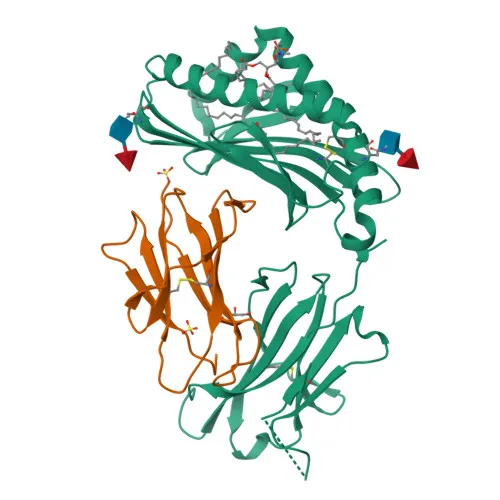
- CD1b is a T-cell surface glycoprotein and member of the CD1 family of antigen-presenting molecules.
- It binds self and non-self lipid and glycolipid antigens and presents them to T-cell receptors on natural killer T-cells, playing a central role in adaptive immunity.
- The protein is expressed as a type I membrane protein with a single transmembrane helix, an extracellular domain containing immunoglobulin-like domains, and a short cytoplasmic tail.
- CD1b localizes to the cell membrane as well as to endosome and lysosome membranes, facilitating the presentation of lipid antigens derived from intracellular pathogens.
- It is expressed on cortical thymocytes, certain T-cell leukemias, and in various other tissues, indicating a role in immune surveillance and T-cell development.
- Post-translational modifications include glycosylation and disulfide bond formation, which are critical for proper folding and antigen binding.
- Alternative splicing generates multiple isoforms, as indicated by proteomics identification and reference proteome data.
Experimental Guidance and Technical Tips
- The immunogen corresponds to amino acids 18-303 of human CD1B, which encompasses the extracellular domain; this design suggests the antibody may recognize native CD1b on the cell surface.
- For flow cytometry, consider titrating the antibody to determine the optimal concentration for your specific cell type and staining protocol.
- As this antibody is directly conjugated to APC, ensure your flow cytometer is equipped with a suitable laser (e.g., 633–635 nm) and filter set for APC detection.
- Validate antibody specificity in your system by including appropriate isotype controls and, if possible, using CD1b-deficient cells as negative controls.
- Cross-reactivity has been confirmed for human; reactivity with other species has not been tested. If using in non-human models, verify cross-reactivity experimentally.
CamelBio: Your One-Stop Sourcing Bridge
CamelBio provides diagnostic manufacturers, laboratories, and research institutes with one-stop access to IVD raw materials, technical services, and consulting. With our validated antibody pairs, optimized monoclonal/polyclonal antibodies, and bulk ancillary reagents, we support your CD1b-related research and assay development from concept to clinic. Our supply chain expertise ensures reliable sourcing for rare target raw materials, enabling you to focus on your core innovation.
REQUEST A QUOTE
Our professional team will reply to you within one business day. Please feel free to contact us!