Polyclonal Antibodies
Anti-USP14 Polyclonal Antibody for WB, ELISA - P54578
Item Number : CM0021287
Price varies based on specs and customizations
- Application
- WB, ELISA
- Cross Reactivity
- Human, Mouse
- Protein Weight
- 56kDa

Shipping:
Contact us to get shipping details Enjoy On-time Dispatch Guarantee.
Why Choose Us
Easy ordering process, quality products, and dedicated support for your business success.
Core Product Specifications and Parameters
| Parameter | Value |
|---|---|
| Product Name | USP14 Rabbit pAb |
| Remarks/Alias | TGT; Ubp6; USP14 |
| Species | Human |
| GeneID (human) | 9097 |
| GeneID | 9097 |
| Immunogen | Synthetic Peptide|A synthetic peptide corresponding to a sequence within amino acids 400-500 of human USP14 (NP_005142.1). |
| Source | Rabbit |
| Category | Polyclonal Antibodies |
| Application | WB, ELISA |
| Cross Reactivity | Human, Mouse |
| SWISS | P54578 |
| Protein Weight | 56kDa |
| Shipping | Ice bag |
Biological Background: USP14 Function and Localization
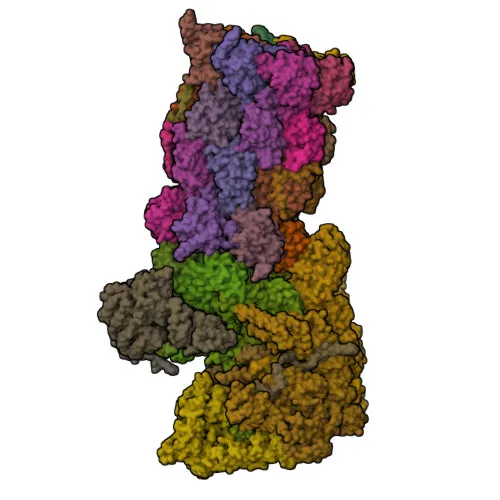
- USP14, also known as ubiquitin carboxyl-terminal hydrolase 14 or deubiquitinating enzyme 14, is a proteasome-associated deubiquitinase (DUB) that recycles ubiquitin from proteasomal substrates (PubMed:18162577, 28396413). Related references: PMID:18162577, PMID:28396413
- It exists in both proteasome-bound and free cytoplasmic pools, and its deubiquitinating activity is critical for maintaining free ubiquitin levels in cells (PubMed:18162577).
- USP14 is required for the degradation of CXCR4 chemokine receptor, impacting CXCL12-mediated chemotaxis (PubMed:19106094). Related references: PMID:19106094
- Under non-stressed conditions, USP14 acts as a physiological inhibitor of endoplasmic reticulum-associated degradation (ERAD) by interacting with ERN1 to prevent degradation of unfolded ER proteins (PubMed:19135427). Related references: PMID:19135427
- It plays an indispensable role in synaptic development and function at neuromuscular junctions (By similarity).
- USP14 contributes to innate immune defense by stabilizing the viral DNA sensor CGAS, thereby inhibiting its autophagic degradation (PubMed:27666593). Related references: PMID:27666593
- As a negative regulator, USP14 inhibits OPTN-mediated selective autophagy of KDM4D, modulating H3K9me2/me3 levels (PubMed:35145029). Related references: PMID:35145029
- Subcellular localization: predominantly cytoplasmic, with a fraction associated with the cell membrane (UniProt).
Experimental Guidance and Technical Tips
- The immunogen peptide is located within residues 400-500 of human USP14 (NP_005142.1). Consider this domain when assessing potential isoform or species cross-reactivity.
- This polyclonal antibody has been validated for Western blot (WB) and ELISA. For other applications such as immunohistochemistry or co-immunoprecipitation, additional optimization and validation are recommended.
- USP14 expression and proteasome association can vary across cell types and conditions; appropriate sample processing (e.g., cell fractionation) may improve detection sensitivity.
- As a deubiquitinase, USP14 activity may be influenced by proteasome inhibitors (e.g., MG-132) or DUB inhibitors; coordinate experiments accordingly.
CamelBio: Your One-Stop Sourcing Bridge
CamelBio provides diagnostic manufacturers and research labs with one-stop access to IVD raw materials, including high-quality antibodies for ubiquitin-proteasome research. Our USP14 antibody is part of a broader portfolio of deubiquitinase and proteasome-related reagents, complemented by technical and sourcing support from concept to clinic. Contact us for bulk orders, custom antibody services, and tailored solutions to accelerate your assay development.
REQUEST A QUOTE
Our professional team will reply to you within one business day. Please feel free to contact us!