Monoclonal Antibodies
Anti-SKP1 Rabbit Monoclonal Antibody for WB, IF/ICC, ELISA - P63208
Item Number : CM0008099
Price varies based on specs and customizations
- Application
- WB, IF/ICC, ELISA
- Cross Reactivity
- Human, Mouse, Rat
- Protein Weight
- 19kDa

Shipping:
Contact us to get shipping details Enjoy On-time Dispatch Guarantee.
Why Choose Us
Easy ordering process, quality products, and dedicated support for your business success.
Core Product Specifications and Parameters
| Parameter | Value |
|---|---|
| Product Name | SKP1 Rabbit mAb |
| Remarks/Alias | OCP2, p19A, EMC19, SKP1A, OCP-II, TCEB1L, SKP1 |
| Species | Human |
| Gene ID (Human) | 6500 |
| Gene ID | 6500 |
| Immunogen | Synthetic peptide corresponding to a sequence within amino acids 64-163 of human SKP1 (P63208) |
| Source | Rabbit |
| Category | Monoclonal Antibodies |
| Application | WB, IF/ICC, ELISA |
| Cross Reactivity | Human, Mouse, Rat |
| SWISS | P63208 |
| Protein Weight | 19kDa |
| Shipping | Ice bag |
Biological Background: SKP1 Function and Localization
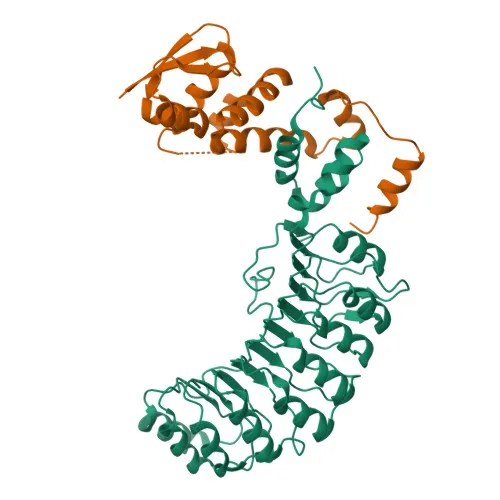
- SKP1 (S-phase kinase-associated protein 1), also known as p19A, OCP-2, and TCEB1L, is an essential component of the SCF (SKP1-CUL1-F-box protein) ubiquitin ligase complex.
- It functions as an adapter linking F-box proteins to CUL1, enabling substrate recognition and ubiquitination.
- The SCF(SKP2) complex directs ubiquitination of phosphorylated CDKN1B/p27kip, regulating G1/S transition in the cell cycle.
- SCF(BTRC) and SCF(FBXW11) direct ubiquitination of β-catenin (CTNNB1) and participate in Wnt signaling.
- SCF(FBXW11) directs ubiquitination of phosphorylated NFKBIA (IκBα), leading to NF-κB activation.
- SCF(BTRC) also directs ubiquitination of multiple substrates including NFKBIB, NFKBIE, ATF4, SMAD3, SMAD4, CDC25A, FBXO5, and CEP68 (PubMed:25704143). Related references: PMID:25704143
- SCF(FBXL3) and SCF(FBXL21) direct ubiquitination of circadian clock proteins CRY1 and CRY2.
- SKP1 is a phosphoprotein with alternative splicing, and it interacts with viral proteins (host-virus interaction).
- SKP1 acts as a core component of the Cul7-RING(FBXW8) ubiquitin ligase complex (PubMed:35982156) and the Cul1-RING(FBXL4) complex that mediates degradation of BNIP3/BNIP3L (PubMed:36896912). Related references: PMID:35982156 PMID:36896912
Experimental Guidance and Technical Tips
- The immunogen is a synthetic peptide spanning amino acids 64–163 of human SKP1; thus, the antibody is predicted to recognize an epitope within this central region. For species cross-reactivity, validate in the relevant sample system.
- For Western blot (WB), expect a band at approximately 19 kDa, though post-translational modifications may cause slight shifts. Optimize lysate preparation and antibody dilution for best results.
- For immunofluorescence/immunocytochemistry (IF/ICC), choose fixation and permeabilization conditions appropriate for nuclear and cytoplasmic targets, as SKP1 localizes throughout the cell.
- In ELISA applications, ensure the peptide or protein coating matches the immunogen region to achieve optimal detection.
CamelBio: Your One-Stop Sourcing Bridge
CamelBio provides diagnostic manufacturers and researchers one-stop access to IVD raw materials, including validated antibodies and ancillary reagents. This anti-SKP1 monoclonal antibody supports studies on ubiquitin-proteasome pathways, cell cycle regulation, and signal transduction. For bulk orders, custom conjugations, or sourcing rare target materials, CamelBio’s supply chain expertise streamlines your development from concept to clinic.
REQUEST A QUOTE
Our professional team will reply to you within one business day. Please feel free to contact us!