Polyclonal Antibodies
Anti-NGB (Neuroglobin) Rabbit Polyclonal Antibody for WB and ELISA - Q9NPG2
Item Number : CM0028939
Price varies based on specs and customizations
- Application
- WB, ELISA
- Cross Reactivity
- Mouse
- Protein Weight
- 17kDa

Shipping:
Contact us to get shipping details Enjoy On-time Dispatch Guarantee.
Why Choose Us
Easy ordering process, quality products, and dedicated support for your business success.
Core Product Specifications and Parameters
| Parameter | Value |
|---|---|
| Product Name | NGB Rabbit pAb |
| Remarks/Alias | NGB |
| Species | Human |
| Gene ID (Human) | 58157 |
| Gene ID | 58157 |
| Immunogen | A synthetic peptide corresponding to a sequence within amino acids 1-151 of human NGB (NP_067080.1). |
| Source | Rabbit |
| Category | Polyclonal Antibodies |
| Application | WB, ELISA |
| Cross Reactivity | Mouse |
| SWISS | Q9NPG2 |
| Protein Weight | 17kDa |
| Shipping | Ice bag |
Biological Background: Neuroglobin Function and Localization
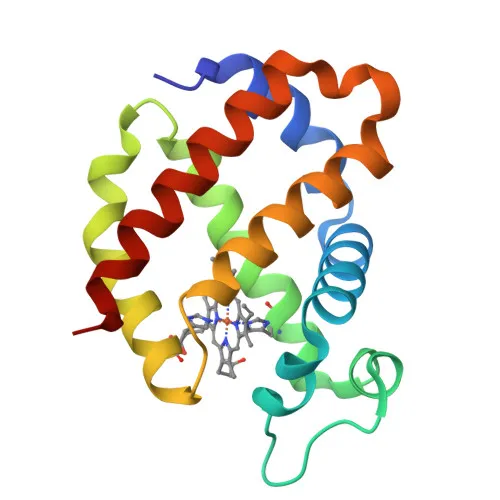
- Neuroglobin (NGB) is a monomeric hexacoordinate globin that binds dioxygen, carbon monoxide (CO), and nitric oxide (NO) via its heme-iron center. Related references: PMID:11473128, PMID:12962627, PMID:24699645
- It is proposed to facilitate oxygen transport and increase O₂ availability in metabolically active neuronal tissues, although its low abundance and high oxygen affinity may restrict its oxygen-releasing capacity. Related references: PMID:11473128, PMID:12860983, PMID:12962627
- The ferrous/deoxygenated form of neuroglobin displays nitrite reductase activity, generating nitric oxide that can inhibit cellular respiration in response to hypoxia. Related references: PMID:21296891
- In its deoxygenated state, neuroglobin may function as a guanine nucleotide dissociation inhibitor (GDI) for heterotrimeric Gα proteins, modulating signal transduction to promote neuroprotective responses during hypoxia and oxidative stress. Related references: PMID:12860983, PMID:18302932
- Neuroglobin localizes predominantly to the cytoplasm and cytosol, with additional presence in the mitochondrial matrix.
- It is primarily expressed in the brain, with the highest levels observed in the frontal lobe, subthalamic nucleus, and thalamus.
- Key structural features include a heme prosthetic group, iron coordination, and a disulfide bond; neuroglobin is also subject to phosphorylation and is classified as an oxidoreductase.
Experimental Guidance and Technical Tips
- The immunogen corresponds to a peptide spanning amino acids 1–151 of human neuroglobin (NP_067080.1); this region covers the majority of the protein, which may be useful for detecting full-length NGB.
- For Western blotting, a band at approximately 17 kDa is expected in lysates from tissues with NGB expression (e.g., brain); consider including positive and negative controls to confirm specificity.
- Based on the stated cross-reactivity with mouse, the antibody may be suitable for detecting mouse NGB in relevant samples; however, users should verify reactivity empirically.
- For ELISA applications, coating with the immunogen peptide or recombinant NGB protein could serve as a control; optimize antibody concentration and detection conditions.
- As with any polyclonal antibody, lot-to-lot variability is possible; consider validation on target tissue or cell lines prior to large-scale experiments.
CamelBio: Your One-Stop Sourcing Bridge
CamelBio empowers diagnostic manufacturers and research laboratories with integrated access to IVD raw materials, technical services, and consulting—from concept to clinic. For neuroglobin-focused studies in hypoxia and neuroprotection, we offer reliable polyclonal antibodies like this anti-NGB rabbit pAb, along with validated antibody pairs, optimized monoclonal/polyclonal reagents, and bulk ancillary materials. Our sourcing network can also accommodate custom requests for rare or specialized targets, streamlining your supply chain from early development through production.
REQUEST A QUOTE
Our professional team will reply to you within one business day. Please feel free to contact us!