Polyclonal Antibodies
Anti-NDUFB7 Rabbit Polyclonal Antibody for WB, IHC-P, IF/ICC - P17568
Item Number : CM0014215
Price varies based on specs and customizations
- Application
- WB, IHC-P, IF/ICC, ELISA
- Cross Reactivity
- Human, Mouse, Rat
- Protein Weight
- 16kDa

Shipping:
Contact us to get shipping details Enjoy On-time Dispatch Guarantee.
Why Choose Us
Easy ordering process, quality products, and dedicated support for your business success.
Core Product Specifications and Parameters
| Parameter | Specification |
|---|---|
| Product Name | Anti-NDUFB7 Rabbit Polyclonal Antibody |
| Remarks/Alias | B18, CI-B18, MC1DN39, NDUFB7 |
| Species | Human |
| Gene ID (Human) | 4713 |
| Immunogen | Recombinant fusion protein containing a sequence corresponding to amino acids 1-137 of human NDUFB7 (NP_004137.2) |
| Source | Rabbit |
| Category | Polyclonal Antibodies |
| Application | WB, IHC-P, IF/ICC, ELISA |
| Cross Reactivity | Human, Mouse, Rat |
| SWISS | P17568 |
| Protein Weight | 16kDa |
| Shipping | Ice bag |
Biological Background: NDUFB7 Function and Localization
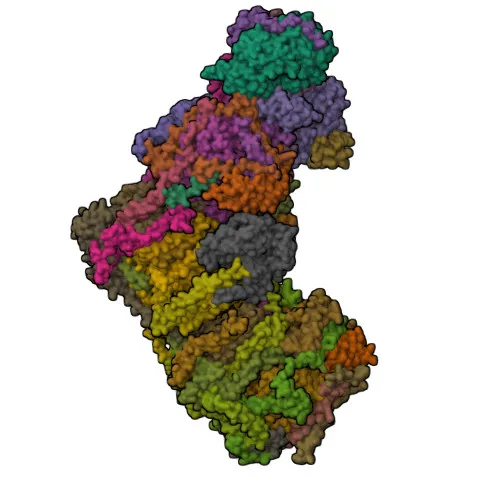
- NDUFB7 (NADH dehydrogenase [ubiquinone] 1 beta subcomplex subunit 7), also known as CI-B18 or B18, is a 16.4 kDa accessory subunit of the mitochondrial respiratory chain Complex I (NADH-ubiquinone oxidoreductase).
- It is not directly involved in catalysis but is essential for the assembly, stability, or regulation of Complex I, which transfers electrons from NADH to ubiquinone.
- NDUFB7 localizes to the mitochondrial inner membrane and intermembrane space, consistent with its role in the electron transport chain.
- The protein belongs to the NDUFB7 family and may also function as a cell adhesion protein (SQM1) in certain contexts.
- Post-translational modifications include disulfide bond formation, N-myristoylation, and phosphorylation, which may regulate its function or localization.
- Mutations in NDUFB7 are associated with primary mitochondrial disease (MC1DN39), underscoring its importance in cellular energy metabolism.
- NDUFB7 has been identified in proteomics studies as part of the mitochondrial respiratory chain supercomplexes.
Experimental Guidance and Technical Tips
- The immunogen consists of full-length recombinant human NDUFB7 (aa 1-137), raising antibodies that may recognize native, denatured, and potentially processed forms of the protein.
- In Western blotting (WB), expect a major band migrating near 16–17 kDa under reducing conditions; additional bands from complex I assembly intermediates or post-translational modifications may appear.
- For immunohistochemistry (IHC-P) and immunofluorescence (IF/ICC), confirm mitochondrial localization by co-staining with a mitochondrial marker; antigen retrieval conditions may need optimization depending on tissue type.
- The antibody cross-reacts with mouse and rat NDUFB7 by sequence alignment, but target abundance and detection sensitivity should be verified in each model system.
- When using this antibody for ELISA or capture/detection in diagnostic assays, validate performance with appropriate recombinant protein or native complex I standards.
- As with any polyclonal antibody, lot-to-lot consistency should be monitored, and users are advised to titrate newly received lots.
CamelBio: Your One-Stop Sourcing Bridge
CamelBio serves as a dedicated one-stop sourcing partner for IVD manufacturers and researchers, offering validated polyclonal antibodies like this anti-NDUFB7 together with complementary raw materials and assay building-block reagents. We maintain a broad inventory of mitochondrial complex I antigens and antibodies, supporting the development of diagnostic tools for metabolic and mitochondrial disorders. Explore our portfolio for bulk and custom antibody formats to streamline your clinical assay pipeline.
REQUEST A QUOTE
Our professional team will reply to you within one business day. Please feel free to contact us!