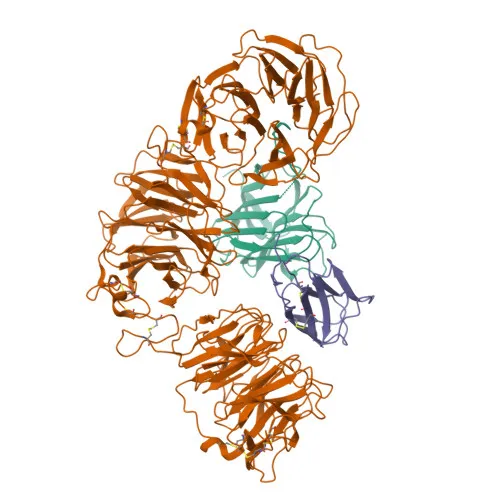
Polyclonal Antibodies
Anti-MUSK Polyclonal Antibody for WB, ELISA - O15146
Item Number : CM0026360
Price varies based on specs and customizations
- Application
- WB, ELISA
- Cross Reactivity
- Mouse
- Protein Weight
- 97kDa

Shipping:
Contact us to get shipping details Enjoy On-time Dispatch Guarantee.
Why Choose Us
Easy ordering process, quality products, and dedicated support for your business success.
Core Product Specifications and Parameters
| Parameter | Value |
|---|---|
| Product Name | MUSK Rabbit pAb |
| Remarks/Alias | CMS9; FADS; FADS1; MUSK |
| Species | Human |
| GeneID (Human) | 4593 |
| GeneID | 4593 |
| Immunogen | Recombinant fusion protein containing a sequence corresponding to amino acids 424-783 of human MUSK (NP_001159752.1) |
| Source | Rabbit |
| Category | Polyclonal Antibodies |
| Application | WB, ELISA |
| Cross Reactivity | Mouse |
| SWISS | O15146 |
| Protein Weight | 97kDa |
| Shipping | Ice bag |
Biological Background: MUSK Function and Localization
- MUSK (Muscle, skeletal receptor tyrosine-protein kinase) is a receptor tyrosine kinase that plays a central role in the formation and maintenance of the neuromuscular junction (NMJ), the synapse between motor neurons and skeletal muscle. Related references: PMID:25537362
- Upon recruitment of AGRIN by LRP4, MUSK is phosphorylated and activated, regulating NMJ formation through subsynaptic gene expression, actin cytoskeleton reorganization, and clustering of acetylcholine receptors (AChR).
- MUSK regulates AChR phosphorylation and clustering through activation of ABL1 and Src family kinases, and forms a ternary complex with DVL1 and PAK1 critical for this process.
- It mediates phosphorylation of FNTA, promoting prenylation and membrane recruitment of RAC1, thereby influencing actin dynamics and gene expression.
- May also contribute to acetylcholinesterase (AChE) localization at NMJs via interaction with COLQ (By similarity) and play roles in the central nervous system mediating cholinergic responses and synaptic plasticity (By similarity).
- Located at the postsynaptic cell membrane; mutations in MUSK are associated with congenital myasthenic syndrome, and the protein undergoes alternative splicing, phosphorylation, and ubiquitination.
Experimental Guidance and Technical Tips
- The immunogen spans the intracellular region (aa 424–783), making this antibody suitable for detecting total MUSK in denaturing Western blotting (WB) applications. Optimize antibody dilution using lysates from skeletal muscle or MUSK-expressing cell lines.
- For ELISA, consider using the recombinant immunogen as a positive control to establish standard curves, and validate specificity with relevant biological matrices.
- Cross-reactivity with mouse enables comparative studies across species; verify reactivity in your experimental system and consider mouse tissue as a convenient model for neuromuscular junction research.
- As a polyclonal antibody, lot-to-lot consistency may vary; include appropriate controls and validate each new lot for critical applications.
CamelBio: Your One-Stop Sourcing Bridge
CamelBio is a specialized IVD raw-material partner providing diagnostic manufacturers, laboratories, and research institutes with seamless access to validated antibodies, protein reagents, and ancillary materials. For neuromuscular junction and synaptic signaling research, we offer one-stop support including optimized polyclonal and monoclonal antibodies, bulk ancillary reagents, and rare target sourcing—helping you accelerate development from discovery to clinical application.
REQUEST A QUOTE
Our professional team will reply to you within one business day. Please feel free to contact us!
Related Articles
Why Direct Hapten Coupling Changes the Economics of Small-Molecule Biosensors
Compare direct hapten coupling with protein conjugates to improve ligand density, signal quality, antibody efficiency, and chip reusability.
Designing Generic Antibodies: How Hapten Engineering Enables Broad-Spectrum Pesticide Detection
Learn how strategic hapten design exposes conserved pesticide structures, improves antibody cross-reactivity, and guides reliable multi-residue assays.

Engineering High-Sensitivity Electrochemical Immunosensors for Small-Molecule Detection
How competitive assay design, high-affinity antibodies, HRP labels, and interface control enable reliable trace small-molecule detection.
Multiplex Micro-Array Immunoassays: The Antibody Bottleneck Behind Faster, Smarter Diagnostics
Explore how multiplex micro-array immunoassays increase speed and data density, and why antibody specificity, conjugates, and consistency limit scale.