Polyclonal Antibodies
Anti-ME1 Polyclonal Antibody (WB, ELISA) - P48163
Item Number : CM0027785
Price varies based on specs and customizations
- Application
- WB, ELISA
- Cross Reactivity
- Human, Mouse, Rat
- Protein Weight
- 64kDa

Shipping:
Contact us to get shipping details Enjoy On-time Dispatch Guarantee.
Why Choose Us
Easy ordering process, quality products, and dedicated support for your business success.
Core Product Specifications and Parameters
| Parameter | Details |
|---|---|
| Product Name | ME1 Rabbit pAb |
| Remarks/Alias | MES; HUMNDME; ME1 |
| Species | Human |
| Gene ID (Human) | 4199 |
| Gene ID | 4199 |
| Immunogen | Recombinant fusion protein containing a sequence corresponding to amino acids 1-300 of human ME1 (NP_002386.1) |
| Source | Rabbit |
| Category | Polyclonal Antibodies |
| Application | WB, ELISA |
| Cross Reactivity | Human, Mouse, Rat |
| SWISS | P48163 |
| Protein Weight | 64kDa |
| Shipping | Ice bag |
Biological Background: ME1 Function and Localization
- NADP-dependent malic enzyme (ME1) is a cytosolic enzyme that catalyzes the oxidative decarboxylation of (S)-malate to pyruvate and CO2, using NADP+ as a cofactor, and also decarboxylates oxaloacetate.
- ME1 plays a critical role in lipid biosynthesis by providing NADPH for reductive reactions and is a key link between glycolysis and the citric acid cycle.
- The protein is ubiquitously expressed across human tissues, with notable levels in liver, placenta, and white adipose tissue.
- Post-translational modifications include acetylation and phosphorylation, which may regulate enzyme activity and subcellular localization.
- The ME1 gene undergoes alternative splicing, producing multiple transcript variants that contribute to functional diversity.
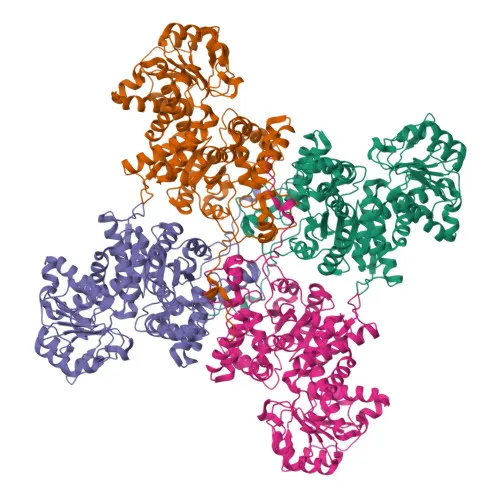
- Structural studies (3D-structure available) reveal a conserved active site architecture typical of malic enzymes, binding divalent metal ions and NADP+.
Experimental Guidance and Technical Tips
- The immunogen spans the N-terminal region (aa 1-300) of human ME1, which is well-conserved across human, mouse, and rat, consistent with the observed cross-reactivity. Validate in the relevant sample system if using other species.
- For Western blot, whole cell lysates from tissues or cell lines expressing ME1 (e.g., liver, adipose, or cancer cell lines) are suitable; consider using a positive control such as HepG2 or 3T3-L1 lysates. A band near 64 kDa is expected.
- For ELISA, coating with recombinant ME1 protein or the immunogen peptide fragment can be optimized; perform titration experiments to determine optimal antibody dilution and coating concentration.
- As a polyclonal antibody, lot-to-lot variation may affect performance; it is advisable to re-validate critical applications with each new lot.
CamelBio: Your One-Stop Sourcing Bridge
CamelBio empowers IVD developers and researchers with a one-stop sourcing solution for raw materials, streamlining your journey from concept to clinic. This anti-ME1 polyclonal antibody is ideal for metabolism and oncology research; we also supply validated antibody pairs, optimized monoclonals and polyclonals, bulk ancillary reagents, and custom sourcing for rare targets. Let CamelBio be your reliable partner in accelerating diagnostic development.
REQUEST A QUOTE
Our professional team will reply to you within one business day. Please feel free to contact us!