Monoclonal Antibodies
Anti-KCTD9 Monoclonal Antibody for WB, ELISA - Q7L273
Item Number : CM0003595
Price varies based on specs and customizations
- Application
- WB, ELISA
- Cross Reactivity
- Human
- Protein Weight
- 43 kDa

Shipping:
Contact us to get shipping details Enjoy On-time Dispatch Guarantee.
Why Choose Us
Easy ordering process, quality products, and dedicated support for your business success.
Core Product Specifications and Parameters
| Parameter | Value |
|---|---|
| Product Name | KCTD9 Rabbit mAb |
| Remarks/Alias | BTBD27; KCTD9 |
| Species | Human |
| Gene ID (Human) | 54793 |
| Gene ID | 54793 |
| Immunogen | Synthetic peptide | A synthetic peptide corresponding to a sequence within amino acids 1-100 of human KCTD9 (Q7L273) |
| Source | Rabbit |
| Category | Monoclonal Antibodies |
| Application | WB, ELISA |
| Cross Reactivity | Human |
| SWISS | Q7L273 |
| Protein Weight | 43 kDa |
| Shipping | Ice bag |
Biological Background: KCTD9 Function and Localization
- KCTD9, also known as BTBD27, is a BTB/POZ domain-containing protein, characterized by the presence of a BTB (BR-C, ttk and bab) / POZ (Pox virus and Zinc finger) domain.
- The protein functions as a substrate-specific adapter of a BCR (BTB-CUL3-RBX1) E3 ubiquitin-protein ligase complex, which mediates ubiquitination of target proteins, leading to their proteasomal degradation.
- KCTD9 is involved in the ubiquitin conjugation pathway, as indicated by keyword annotation (Ubl conjugation pathway).
- It is classified as a phosphoprotein, suggesting regulation by phosphorylation.
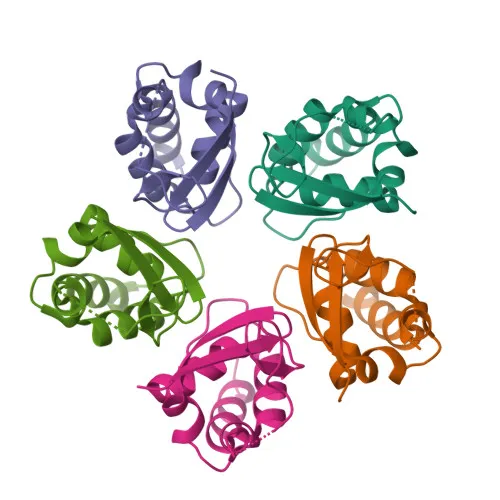
- The keyword "3D-structure" indicates that the three-dimensional structure of KCTD9 has been experimentally determined.
- The protein may contain repeated sequence motifs (keyword "Repeat").
Experimental Guidance and Technical Tips
- The immunogen is a synthetic peptide corresponding to residues 1-100 of human KCTD9 (N-terminal region). For Western blot, validate antibody specificity using human cell lysates expressing endogenous KCTD9; the expected molecular weight is approximately 43 kDa.
- For ELISA applications, the antibody can be employed as a detection or capture reagent; consider pairing with a second antibody against a non-overlapping epitope to develop a sandwich assay.
- Since cross-reactivity is confirmed for human, appropriate human-derived samples should be used; for other species, verify cross-reactivity experimentally if required.
- Given that KCTD9 is a phosphoprotein, consider the potential impact of phosphorylation state on antibody recognition.
CamelBio: Your One-Stop Sourcing Bridge
As a one-stop IVD raw-material partner, CamelBio supplies high-quality anti-KCTD9 monoclonal antibodies and other reagents for ubiquitination research. We offer validated antibody pairs, optimized monoclonal/polyclonal antibodies, and bulk ancillary reagents to support your assay development. Whether you need rare target sourcing or comprehensive technical support, CamelBio bridges your project from concept to clinic.
REQUEST A QUOTE
Our professional team will reply to you within one business day. Please feel free to contact us!