Monoclonal Antibodies
Anti-INTS11 Monoclonal Antibody for WB, ELISA - Q5TA45
Item Number : CM0006222
Price varies based on specs and customizations
- Application
- WB, ELISA
- Cross Reactivity
- Human, Mouse, Rat
- Protein Weight
- 68kDa

Shipping:
Contact us to get shipping details Enjoy On-time Dispatch Guarantee.
Why Choose Us
Easy ordering process, quality products, and dedicated support for your business success.
Core Product Specifications and Parameters
| Parameter | Value |
|---|---|
| Product Name | INTS11 Rabbit mAb |
| Remarks/Alias | RC68; INT11; RC-68; CPSF3L; CPSF73L; INTS11 |
| Species | Human |
| GeneID | 54973 |
| Immunogen | Recombinant fusion protein containing a sequence corresponding to amino acids 331-600 of human INTS11 (NP_060341.2) |
| Source | Rabbit |
| Category | Monoclonal Antibodies |
| Application | WB, ELISA |
| Cross Reactivity | Human, Mouse, Rat |
| SWISS | Q5TA45 |
| Protein Weight | 68kDa |
| Shipping | Ice bag |
Biological Background: INTS11 Function and Localization
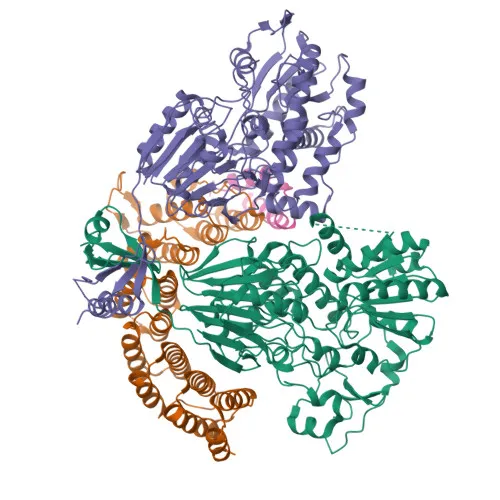
- INTS11 is the catalytic RNA endonuclease subunit of the integrator complex, which terminates RNA polymerase II transcription in the promoter-proximal region of genes. Related references: PMID:16239144 PMID:25201415 PMID:28396433
- It degrades the nascent RNA transcript and promotes Pol II release via dephosphorylation of the CTD domain of POLR2A/RPB1 and SUPT5H/SPT5. Related references: PMID:32697989 PMID:33243860 PMID:33548203
- The integrator complex also processes non-coding Pol II transcripts, including snRNAs, eRNAs, telomerase RNAs, and lncRNAs. Related references: PMID:22252320 PMID:26308897
- INTS11 mediates recruitment of cytoplasmic dynein to the nuclear envelope, likely as part of the integrator complex. Related references: PMID:23904267
- The protein localizes to both the nucleus and cytoplasm.
- INTS11 is a zinc-dependent hydrolase with a metalloprotease-like fold, as indicated by structural studies and metal-binding motifs.
- Alternative splicing generates multiple isoforms of INTS11.
- Post-translational modifications include isopeptide bond formation and ubiquitin conjugation.
Experimental Guidance and Technical Tips
- The immunogen (amino acids 331–600) covers a central region of INTS11 that includes the catalytic domain; this region is highly conserved among human, mouse, and rat, supporting the observed cross-reactivity.
- For Western blotting, a band around 68 kDa is anticipated; verify specificity using appropriate controls and lysates.
- ELISA can be employed to quantify INTS11 in cell or tissue extracts; consider pairing with a relevant detection antibody and validating in the intended sample system.
- Due to the antibody’s reactivity with multiple species, it may be suitable for cross-species comparative studies; always confirm performance in the specific experimental context.
CamelBio: Your One-Stop Sourcing Bridge
CamelBio serves as a comprehensive IVD raw-material partner, offering this anti-INTS11 antibody as part of a broader portfolio for transcription and RNA processing research. Beyond individual antibodies, we supply validated antibody pairs, optimized monoclonal/polyclonal reagents, bulk ancillary materials, and rare-target sourcing to streamline your assay development. Whatever your diagnostic manufacturing or laboratory needs, CamelBio bridges the gap from concept to clinic with reliable supply and expert support.
REQUEST A QUOTE
Our professional team will reply to you within one business day. Please feel free to contact us!