Polyclonal Antibodies
Anti-ICOSL Rabbit Polyclonal Antibody for WB, IHC-P, ELISA - O75144
Item Number : CM0026343
Price varies based on specs and customizations
- Application
- WB, IHC-P, ELISA
- Cross Reactivity
- Human, Mouse, Rat
- Protein Weight
- 33kDa

Shipping:
Contact us to get shipping details Enjoy On-time Dispatch Guarantee.
Why Choose Us
Easy ordering process, quality products, and dedicated support for your business success.
Core Product Specifications and Parameters
| Parameter | Value |
|---|---|
| Product Name | ICOSL Rabbit pAb |
| Remarks/Alias | B7h, B7H2, GL50, B7-H2, B7RP1, CD275, ICOSL, LICOS, B7RP-1, ICOS-L |
| Species | Human |
| GeneID (Human) | 23308 |
| GeneID | 23308 |
| Immunogen | Recombinant fusion protein containing a sequence corresponding to amino acids 19-256 of human ICOSL (NP_056074.1) |
| Source | Rabbit |
| Category | Polyclonal Antibodies |
| Application | WB, IHC-P, ELISA |
| Cross Reactivity | Human, Mouse, Rat |
| SWISS | O75144 |
| Protein Weight | 33kDa |
| Shipping | Ice bag |
Biological Background: ICOSL Function and Localization
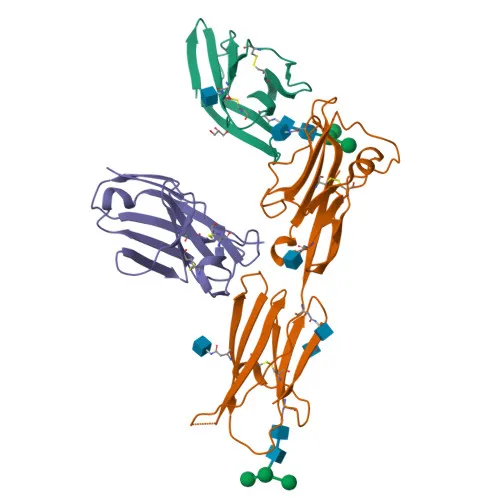
- ICOS ligand (ICOSL), also referred to as B7-H2, B7RP1, or CD275, is a member of the B7 family of immune regulatory proteins characterized by extracellular immunoglobulin-like domains.
- Serves as the ligand for the T-cell-specific surface receptor ICOS, delivering a potent costimulatory signal that promotes T-cell proliferation and cytokine secretion. Related references: PMID:11007762 PMID:11023515
- ICOSL engagement also induces B-cell proliferation and differentiation into plasma cells and co-stimulates memory T-cell function during secondary immune responses.
- In endothelial cells, ICOSL is required for proper neutrophil transmigration in response to chemoattractants such as CXCL8/IL8 or fMLP. Related references: PMID:30498080
- The protein is a single-pass type I membrane protein predominantly localized to the cell membrane. It is expressed on activated B-cells, monocytes, and dendritic cells, with broad tissue distribution including lymph nodes, spleen, and tonsil.
- Post-translational modifications include N-linked glycosylation and disulfide bond formation, which may influence protein migration in SDS-PAGE.
Experimental Guidance and Technical Tips
- The immunogen corresponds to the extracellular domain (aa 19-256) of human ICOSL, making the antibody suitable for recognizing the native and recombinant protein in applications such as ELISA and IHC-P.
- For Western blotting, the predicted molecular weight is approximately 33 kDa; however, glycosylation may result in a higher apparent band. Consider using enzymatic deglycosylation protocols if precise size confirmation is required.
- In IHC-P, suitable positive control tissues include human tonsil or lymph node, where ICOSL is expressed on resident B-cells and dendritic cells. Perform antigen retrieval and validate staining in the relevant sample system.
- For ELISA applications, this polyclonal antibody may be used as a capture or detection reagent; pairing validation is recommended to optimize assay sensitivity and specificity.
- Cross-reactivity is reported with mouse and rat orthologs, but sequence alignment of the target epitope across species is advisable to confirm reactivity for your specific experimental model.
CamelBio: Your One-Stop Sourcing Bridge
As a dedicated IVD raw-material provider, CamelBio streamlines your procurement of validated antibodies, optimized monoclonal and polyclonal antibodies, bulk ancillary reagents, and rare target materials—including immune checkpoint proteins like ICOSL. Whether you are developing T-cell costimulation assays, ELISA kits, or immunohistochemistry panels, we offer a one-stop sourcing experience to accelerate your diagnostic and research workflows from concept to clinic. Contact us to explore custom antibody pairing or bulk supply solutions tailored to your needs.
REQUEST A QUOTE
Our professional team will reply to you within one business day. Please feel free to contact us!