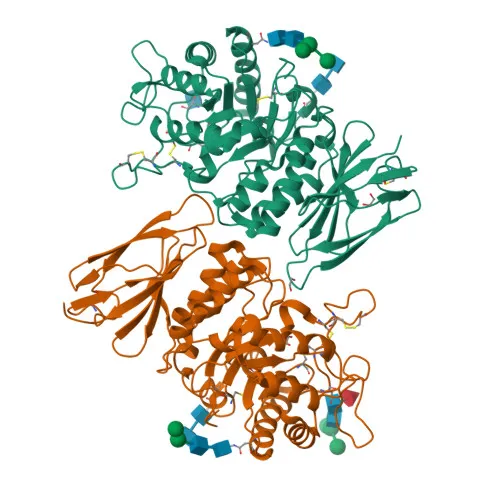
Polyclonal Antibodies
Anti-Galactosidase alpha (GLA) Polyclonal Antibody for WB, ELISA - P06280
Item Number : CM0018286
Price varies based on specs and customizations
- Application
- WB, ELISA
- Cross Reactivity
- Human
- Protein Weight
- 49kDa

Shipping:
Contact us to get shipping details Enjoy On-time Dispatch Guarantee.
Why Choose Us
Easy ordering process, quality products, and dedicated support for your business success.
Core Product Specifications and Parameters
| Parameter | Value |
|---|---|
| Product Name | Galactosidase alpha (GLA) Rabbit pAb |
| Remarks/Alias | GALA; Galactosidase alpha (GLA) |
| Species | Human |
| GeneID (Human) | 2717 |
| GeneID | 2717 |
| Immunogen | Recombinant protein (Recombinant fusion protein containing a sequence corresponding to amino acids 150-429 of human Galactosidase alpha (GLA) (NP_000160.1)) |
| Source | Rabbit |
| Category | Polyclonal Antibodies |
| Application | WB, ELISA |
| Cross Reactivity | Human |
| SWISS | P06280 |
| Protein Weight | 49kDa |
| Shipping | Ice bag |
Biological Background: Alpha-galactosidase A (GLA) Function and Localization
- The GLA gene encodes alpha-galactosidase A, also referred to as alpha-D-galactosidase A, galactosylgalactosylglucosylceramidase GLA, and melibiase.
- Alpha-galactosidase A is a lysosomal enzyme that catalyzes the hydrolysis of glycosphingolipids, playing a critical role in lipid metabolism and lysosomal degradation.
- It specifically cleaves terminal alpha-galactose residues from substrates such as globotriaosylceramide (Gb3) and other glycoconjugates.
- The enzyme localizes to the lysosome, where it functions optimally at an acidic pH.
- Mutations in GLA are linked to Fabry disease, an X-linked lysosomal storage disorder characterized by the accumulation of glycosphingolipids (keyword: Disease variant).
- Post-translational modifications include N-linked glycosylation and disulfide bond formation, which are important for enzyme stability and activity (keywords: Glycoprotein, Disulfide bond).
- The protein is synthesized with a signal peptide that directs it to the endoplasmic reticulum for subsequent processing and trafficking to the lysosome.
Experimental Guidance and Technical Tips
- The immunogen corresponds to amino acids 150–429 of human GLA, encompassing most of the catalytic domain; this antibody may recognize both mature and denatured forms, and is suitable for WB and ELISA.
- For Western blotting, a band at approximately 49 kDa (glycosylated form) is expected; proper lysate preparation and reducing conditions may be important.
- For ELISA, consider using recombinant GLA protein or cellular extracts as standards/antigens, and validate detection in your specific assay format.
- Due to lysosomal localization, cell or tissue fractionation may aid in signal enrichment.
- Cross-reactivity with other species has not been extensively tested; validation is advised if using non-human samples.
CamelBio: Your One-Stop Sourcing Bridge
At CamelBio, we bridge the gap between diagnostic developers and high-quality raw materials. This anti-GLA polyclonal antibody supports research in lysosomal storage disorders like Fabry disease, and we provide a complete portfolio of IVD raw materials, including validated antibody pairs, optimized monoclonal/polyclonal antibodies, and bulk ancillary reagents. For rare targets such as GLA, our sourcing expertise ensures reliable access to the critical components you need for your IVD assay development.
REQUEST A QUOTE
Our professional team will reply to you within one business day. Please feel free to contact us!