Polyclonal Antibodies
Anti-EEF2K Polyclonal Antibody for WB, IF/ICC, ELISA - O00418
Item Number : CM0025344
Price varies based on specs and customizations
- Application
- WB, IF/ICC, ELISA
- Cross Reactivity
- Human, Mouse
- Protein Weight
- 82kDa

Shipping:
Contact us to get shipping details Enjoy On-time Dispatch Guarantee.
Why Choose Us
Easy ordering process, quality products, and dedicated support for your business success.
Core Product Specifications and Parameters
| Parameter | Value |
|---|---|
| Product Name | [KO Validated] EEF2K Rabbit pAb |
| Remarks/Alias | eEF-2K; CaMKIII; HSU93850; 2K |
| Species | Human |
| GeneID (Human) | 29904 |
| GeneID | 29904 |
| Immunogen | Recombinant fusion protein containing a sequence corresponding to amino acids 406-725 of human EEF2K (NP_037434.1) |
| Source | Rabbit |
| Category | Polyclonal Antibodies |
| Application | WB, IF/ICC, ELISA |
| Cross Reactivity | Human, Mouse |
| SWISS | O00418 |
| Protein Weight | 82kDa |
| Shipping | Ice bag |
Biological Background: EEF2K Function and Localization
- EEF2K is a threonine kinase that regulates protein synthesis by controlling the rate of peptide chain elongation. It phosphorylates eukaryotic elongation factor 2 (EEF2) at a single site, rendering EEF2 unable to bind ribosomes and thus inactivating it. This reduces the overall rate of protein synthesis.
- EEF2K, also known as calcium/calmodulin-dependent eukaryotic elongation factor 2 kinase, is activated by upstream kinases such as AMPK and TRPM7. This activation links cellular energy status and calcium signaling to translational control.
- The kinase belongs to the serine/threonine-protein kinase family and requires calcium/calmodulin for its activity. It plays a critical role in cellular stress responses by modulating translation elongation.
- EEF2K has an ATP-binding site and undergoes phosphorylation, acetylation, and other post-translational modifications, as indicated by keywords including "Phosphoprotein" and "Acetylation".
- The protein has a molecular weight of approximately 82kDa and is classified under the transferase group, specifically transferring phosphorus-containing groups (kinase activity).
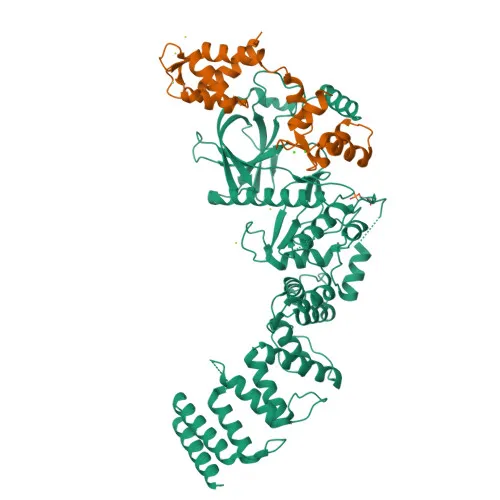
- As indicated by the UniProt keyword "3D-structure", structural information is available for EEF2K, which aids in understanding its kinase mechanisms.
Experimental Guidance and Technical Tips
- The immunogen corresponds to a region spanning amino acids 406-725 of human EEF2K. This region includes catalytic and regulatory domains, which may contribute to the antibody's ability to recognize endogenous EEF2K in denaturing (WB) and native (IF/ICC) conditions. However, validation in the specific experimental context is recommended.
- This antibody has been validated for knockout (KO) studies, as indicated by "[KO Validated]" in the product name, confirming its specificity for EEF2K. For applications like WB, use appropriate KO cell lysates as negative controls to confirm band specificity.
- For IF/ICC, optimize fixation and permeabilization conditions, as EEF2K localization may be influenced by cell type and activation state. Co-staining with calmodulin or ribosomal markers could aid in co-localization studies.
- For ELISA, consider using the recombinant protein fragment (aa 406-725) as a positive control and validate with biological samples, ensuring minimal cross-reactivity with other kinases.
CamelBio: Your One-Stop Sourcing Bridge
CamelBio offers a streamlined sourcing solution for IVD raw materials, including validated antibody pairs, optimized monoclonal and polyclonal antibodies, bulk ancillary reagents, and rare-target sourcing. The Anti-EEF2K polyclonal antibody supports research into translation regulation and kinase signaling, fitting seamlessly into diagnostic and research workflows. Partner with CamelBio for comprehensive procurement support from concept to clinic.
REQUEST A QUOTE
Our professional team will reply to you within one business day. Please feel free to contact us!