Monoclonal Antibodies
Anti-Dopamine Receptor D3 (DRD3) Rabbit Monoclonal Antibody for WB, ELISA - P35462
Item Number : CM0008958
Price varies based on specs and customizations
- Application
- WB, ELISA
- Cross Reactivity
- Human, Mouse, Rat
- Protein Weight
- 44kDa

Shipping:
Contact us to get shipping details Enjoy On-time Dispatch Guarantee.
Why Choose Us
Easy ordering process, quality products, and dedicated support for your business success.
Core Product Specifications and Parameters
| Parameter | Value |
|---|---|
| Product Name | Dopamine Receptor D3 (DRD3) Rabbit mAb |
| Remarks/Alias | D3DR; ETM1; FET1; Dopamine Receptor D3 (DRD3) |
| Species | Human |
| GeneID (Human) | 1814 |
| GeneID | 1814 |
| Immunogen | Synthetic Peptide|A synthetic peptide corresponding to a sequence within amino acids 1-100 of human Dopamine Receptor D3 (DRD3) (P35462). |
| Source | Rabbit |
| Category | Monoclonal Antibodies |
| Application | WB, ELISA |
| Cross Reactivity | Human, Mouse, Rat |
| SWISS | P35462 |
| Protein Weight | 44kDa |
| Shipping | Ice bag |
Biological Background: Dopamine Receptor D3 Function and Localization
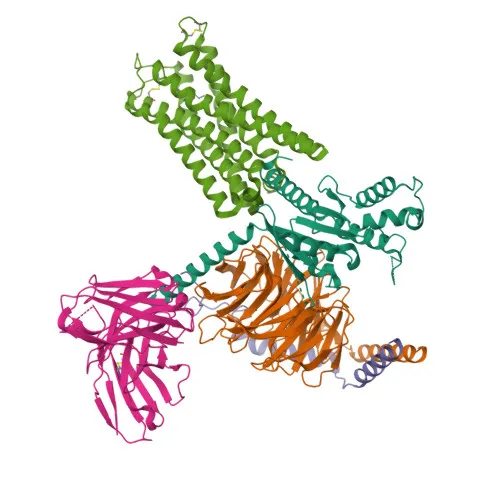
- D(3) dopamine receptor (DRD3/D3DR) is a G protein-coupled receptor encoded by the DRD3 gene, with alternative splicing variants documented.
- Functions as a dopamine receptor primarily in limbic brain areas, modulating cognitive, emotional, and endocrine functions, and plays a key role in motivation, reward, and behavior. Couples to G(i)/G(o) proteins to inhibit adenylate cyclase and reduce intracellular cAMP levels.
Related references:
PMID:39984436 PMID:10578130 - Promotes cell proliferation via MAP kinase signaling.
Related references:
PMID:19520868 - Positively regulates autophagy: activation stimulates AMPK, which phosphorylates RPTOR, enhancing MTOR interaction and inhibiting MTORC1, leading to ULK1 activation and autophagy initiation.
Related references:
PMID:31538542 - Forms heterotetramers with DRD1 to enhance beta-arrestin recruitment and regulate locomotor activity.
- Subcellularly localizes to the cell membrane.
- Shows brain-specific tissue expression.
- Contains structural features typical of GPCRs, including seven transmembrane helices, disulfide bonds, glycosylation, and palmitoylation sites.
- Associated with neuropsychiatric conditions such as schizophrenia and substance use disorders.
Related references:
PMID:39984436
Experimental Guidance and Technical Tips
- The immunogen corresponds to the N-terminal region (aa 1-100), enabling detection of total DRD3 protein; consider this when selecting lysates and blocking conditions.
- For WB, the predicted molecular weight is ~44 kDa; validate specificity using brain tissue lysates from human, mouse, or rat, as the antibody cross-reacts with these species.
- For ELISA, consider using the immunogenic peptide or recombinant DRD3 protein as coating antigen; optimize coating concentration and antibody dilution experimentally.
- Because DRD3 undergoes glycosylation and palmitoylation, the observed MW on SDS-PAGE may differ from the predicted 44 kDa; consider using deglycosylation enzymes if band shifts are observed.
CamelBio: Your One-Stop Sourcing Bridge
CamelBio offers diagnostic manufacturers and researchers a streamlined sourcing channel for high-quality IVD raw materials, including validated antibody pairs, optimized monoclonal antibodies, bulk ancillary reagents, and custom procurement for rare targets. This anti-DRD3 rabbit monoclonal antibody supports neuroscience and neuropsychiatric research applications such as WB and ELISA. Our integrated supply capabilities help expedite your assay development from concept to clinic.
REQUEST A QUOTE
Our professional team will reply to you within one business day. Please feel free to contact us!