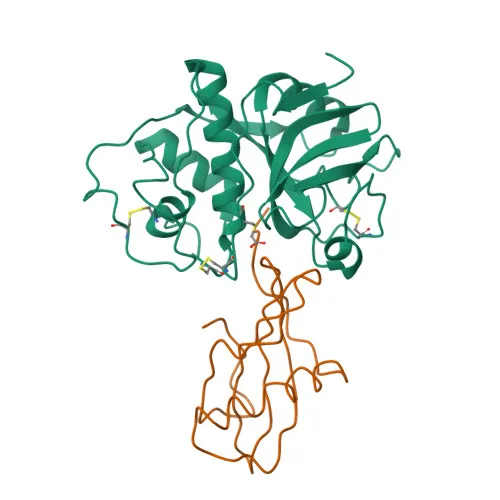
Monoclonal Antibodies
Anti-Cystatin B Monoclonal Antibody for WB, ELISA - P04080
Item Number : CM0003967
Price varies based on specs and customizations
- Application
- WB, ELISA
- Cross Reactivity
- Human, Mouse, Rat
- Protein Weight
- 11kDa

Shipping:
Contact us to get shipping details Enjoy On-time Dispatch Guarantee.
Why Choose Us
Easy ordering process, quality products, and dedicated support for your business success.
Core Product Specifications and Parameters
| Parameter | Value |
|---|---|
| Product Name | Cystatin B Rabbit mAb |
| Remarks/Alias | PME; ULD; CST6; EPM1; STFB; CPI-B; EPM1A; Cystatin B |
| Species | Human |
| Gene ID (Human) | 1476 |
| Gene ID | 1476 |
| Immunogen | Synthetic peptide: A synthetic peptide corresponding to a sequence within amino acids 1-98 of human Cystatin B (NP_000091.1) |
| Source | Rabbit |
| Category | Monoclonal Antibodies |
| Application | WB, ELISA |
| Cross Reactivity | Human, Mouse, Rat |
| SWISS | P04080 |
| Protein Weight | 11kDa |
| Shipping | Ice bag |
Biological Background: Cystatin B Function and Localization
- Cystatin B (also known as Stefin-B, CPI-B, or liver thiol proteinase inhibitor) is an intracellular protein belonging to the cystatin superfamily of cysteine protease inhibitors.
- It functions as a tight-binding reversible inhibitor of cathepsins L, H, and B, thereby regulating lysosomal cysteine protease activity.
- The protein is encoded by the CSTB gene (also designated CST6 or STFB) and is located on human chromosome 21.
- Subcellular localization includes both the cytoplasm and the nucleus, consistent with its role in controlling proteolysis in multiple compartments.
- Post-translational modifications include acetylation, and the protein has been identified through direct protein sequencing and proteomics approaches.
- Mutations in CSTB are associated with progressive myoclonus epilepsy (EPM1), a neurodegenerative disorder, highlighting its role in neuronal function.
- The mature protein has a molecular weight of approximately 11 kDa, as determined by sequence analysis.
- Additional keywords linking to disease variants include epilepsy and neurodegeneration, underscoring its clinical relevance.
Experimental Guidance and Technical Tips
- The immunogen is a synthetic peptide covering the N-terminal region (amino acids 1–98) of full-length human Cystatin B, suggesting the antibody likely recognizes the native protein.
- For Western blot analysis, a band around 11 kDa is expected; consider using 12–15% SDS-PAGE gels and optimized transfer conditions for small proteins.
- Cross-reactivity with mouse and rat Cystatin B has been reported; validation in the relevant sample system is recommended.
- In ELISA, coating antigen and antibody concentration should be titrated to achieve optimal signal-to-noise ratio; this antibody is suitable for both direct and sandwich ELISA formats.
- Since Cystatin B is itself a protease inhibitor, standard sample preparation may not require additional thiol protease inhibitors, but confirm experimentally.
CamelBio: Your One-Stop Sourcing Bridge
As a dedicated one-stop sourcing platform, CamelBio provides diagnostic manufacturers and research laboratories with consistent access to critical IVD raw materials, including this high-quality anti-Cystatin B monoclonal antibody. Whether you need validated antibody pairs for protease-related assays, bulk ancillary reagents, or rare target sourcing, CamelBio supports your workflow from early-stage development to clinical application. For targets involved in neurodegeneration and protease inhibition pathways, our team can assist in selecting optimized immunoreagents to accelerate your diagnostic kit development.
REQUEST A QUOTE
Our professional team will reply to you within one business day. Please feel free to contact us!