Polyclonal Antibodies
Anti-Beclin 1 Polyclonal Antibody for WB, ELISA - Q14457
Item Number : CM0021615
Price varies based on specs and customizations
- Application
- WB, ELISA
- Cross Reactivity
- Human, Mouse, Rat
- Protein Weight
- 52kDa

Shipping:
Contact us to get shipping details Enjoy On-time Dispatch Guarantee.
Why Choose Us
Easy ordering process, quality products, and dedicated support for your business success.
Core Product Specifications and Parameters
| Parameter | Value |
|---|---|
| Product Name | Beclin 1 Rabbit pAb |
| Remarks/Alias | ATG6; VPS30; beclin1; Beclin 1 |
| Species | Human |
| Gene ID (Human) | 8678 |
| Gene ID | 8678 |
| Immunogen | Recombinant fusion protein containing a sequence corresponding to amino acids 25-280 of human Beclin 1 (NP_003757.1). |
| Source | Rabbit |
| Category | Polyclonal Antibodies |
| Application | WB, ELISA |
| Cross Reactivity | Human, Mouse, Rat |
| SWISS | Q14457 |
| Protein Weight | 52kDa |
| Shipping | Ice bag |
Biological Background: Beclin-1 Function and Localization
- Beclin-1, encoded by the BECN1 gene, is a central autophagy protein also known as ATG6, VPS30, or coiled-coil myosin-like BCL2-interacting protein.
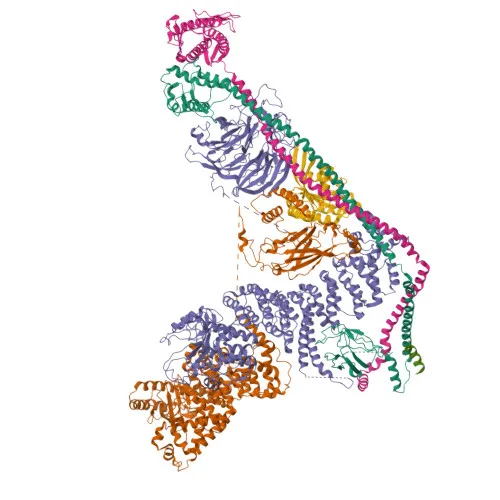
- Beclin-1 functions as a core subunit of the class III phosphatidylinositol 3-kinase (PI3KC3) complex, which generates phosphatidylinositol 3-phosphate (PI3P) essential for autophagosome formation and maturation. Related references: PMID:18570871, PMID:21358617, PMID:23184933
- Beclin-1 exists in different PI3KC3 complexes: PI3KC3-C1 is involved in autophagosome initiation, while PI3KC3-C2 functions in autophagosome maturation and endocytic trafficking. Related references: PMID:20208530, PMID:20643123, PMID:23974797
- The protein localizes to multiple membrane compartments including the endoplasmic reticulum, Golgi, endosomes, mitochondria, and autophagosomes, and can also be found in the nucleus and cytoplasm.
- A 35 kDa C-terminal fragment of Beclin-1 (Beclin-1-C) localizes to mitochondria and promotes apoptosis by inducing BAX translocation and proapoptotic factor release.
- Beclin-1 plays a role in antiviral defense and protects against neurovirulent Sindbis virus infection.
- Post-translational modifications include acetylation, phosphorylation, and ubiquitin-like conjugation, which regulate its activity in autophagy and other processes.
- Beclin-1 is ubiquitously expressed in human tissues, highlighting its fundamental role in cellular homeostasis.
Experimental Guidance and Technical Tips
- The immunogen used is a recombinant fusion protein covering amino acids 25-280, which corresponds to a region conserved across Beclin-1 and may provide cross-reactivity with mouse and rat Beclin-1 as indicated.
- For Western blot, a band around 52kDa is expected in human, mouse, and rat samples; a smaller ~35kDa band corresponding to the mitochondrial Beclin-1-C fragment may also be detected under certain conditions.
- For ELISA, consider using this antibody as a capture or detection reagent in autophagy-related assays.
- Due to the ubiquitous expression of Beclin-1, ensure appropriate loading controls and consider tissue-specific autophagy induction models.
- The antibody may be suitable for detecting Beclin-1 in multiple subcellular fractions, but optimization of sample preparation (e.g., membrane enrichment) is recommended.
CamelBio: Your One-Stop Sourcing Bridge
CamelBio offers a comprehensive range of IVD raw materials for autophagy and cell biology research, including validated antibodies like this Beclin-1 polyclonal antibody. As your sourcing bridge, we provide optimized antibody pairs, bulk quantities, and assistance in procuring rare or custom targets to accelerate diagnostic development from concept to clinic.
REQUEST A QUOTE
Our professional team will reply to you within one business day. Please feel free to contact us!