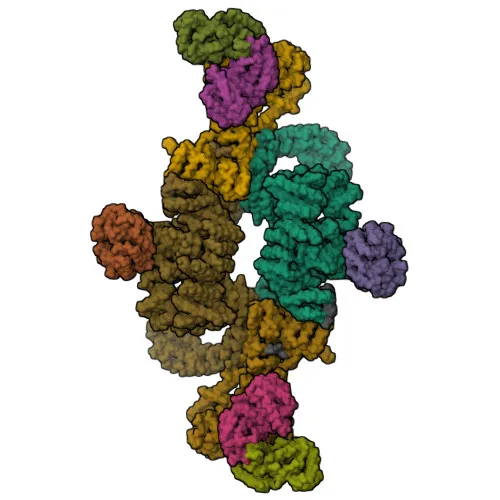
Monoclonal Antibodies
Anti-AKT1S1/PRAS40 Monoclonal Antibody for WB, ELISA - Q96B36
Item Number : CM0011445
Price varies based on specs and customizations
- Application
- WB, ELISA
- Cross Reactivity
- Human, Mouse, Rat
- Protein Weight
- 27 kDa

Shipping:
Contact us to get shipping details Enjoy On-time Dispatch Guarantee.
Why Choose Us
Easy ordering process, quality products, and dedicated support for your business success.
Core Product Specifications and Parameters
| Parameter | Value |
|---|---|
| Product Name | AKT1S1/PRAS40 Rabbit mAb |
| Remarks/Alias | Lobe; PRAS40; AKT1S1/PRAS40 |
| Species | Human |
| GeneID (Human) | 84335 |
| GeneID | 84335 |
| Immunogen | Synthetic Peptide |
| Source | Rabbit |
| Category | Monoclonal Antibodies |
| Application | WB, ELISA |
| Cross Reactivity | Human, Mouse, Rat |
| SWISS | Q96B36 |
| Protein Weight | 27 kDa |
| Shipping | Ice bag |
Biological Background: AKT1S1/PRAS40 Function and Localization
- AKT1S1 (PRAS40) is a negative regulator of mTORC1, a central nutrient sensor controlling cell growth and biosynthesis. Related references: PMID:17277771, PMID:17386266, PMID:17510057
- It directly inhibits mTORC1 by blocking substrate recruitment, and dissociates upon insulin stimulation via phosphorylation and 14-3-3 binding. Related references: PMID:29236692, PMID:17386266, PMID:18372248
- Subcellularly, AKT1S1 localizes predominantly to the cytoplasm and cytosol.
- It is widely expressed, with highest levels in liver and heart, and elevated in cancer cell lines such as HeLa and A-549.
- The protein undergoes alternative splicing, phosphorylation, and methylation.
- It may also contribute to nerve growth factor-mediated neuroprotection.
Experimental Guidance and Technical Tips
- The immunogen corresponds to a central region (amino acids 150–256) of human AKT1S1. This design targets a sequence likely to be conserved and may enable detection of total AKT1S1 in WB.
- For ELISA applications, consider pairing this antibody with a second antibody recognizing a distinct epitope to develop a sandwich assay. Validate in the relevant sample system, such as HeLa or HEK293 cell lysates, to confirm specificity.
- Because the antibody cross-reacts with mouse and rat, it can be used for cross-species studies, but it is advisable to verify performance in each species separately.
CamelBio: Your One-Stop Sourcing Bridge
CamelBio supports diagnostic manufacturers and research institutes with reliable access to IVD raw materials and technical expertise. For mTOR signaling and cancer research, we can supply validated antibody pairs, optimized monoclonal/polyclonal antibodies like this AKT1S1 clone, and ancillary reagents in bulk. Our one-stop platform also assists in sourcing rare-target raw materials, helping you streamline assay development from concept to clinic.
REQUEST A QUOTE
Our professional team will reply to you within one business day. Please feel free to contact us!