Toggle Categories
Get Instant Support
Choose your preferred way to connect with our team
-
Get Free Quote Fill out form for detailed pricing
-
Send Email Detailed inquiry support
-
WhatsApp Quick mobile chat
Response Time
Within 8 hours on working days, 24 hours on holidays
Monoclonal Antibodies
Rabbit anti-Human CD39/ENTPD1 mAb for FC - P49961
Item Number: CM0004899
Rabbit anti-Human CD158a/KIR2DL1 Monoclonal Antibody for Flow Cytometry - P43626
Item Number: CM0004926
Rabbit anti-Human FGFR3 Monoclonal Antibody for Flow Cytometry - P22607
Item Number: CM0004927
Rabbit anti-Human CD300c Monoclonal Antibody for IF/ICC, FC - Q08708
Item Number: CM0004932
Anti-CD166/ALCAM Monoclonal Antibody for WB, IF/ICC, ELISA - Q13740
Item Number: CM0006732
Anti-CD80 Rabbit Monoclonal Antibody for WB, FC, ELISA - P33681
Item Number: CM0006939
Anti-PU.1/SPI1 Monoclonal Antibody for WB, IF, IHC-P, FC, ELISA - P17947
Item Number: CM0007005
Anti-CD9 Rabbit Monoclonal Antibody for WB, IF, IHC-P, FC, ELISA - P21926
Item Number: CM0007016
Anti-PKC alpha Rabbit Monoclonal Antibody for WB/ELISA - P17252
Item Number: CM0007148
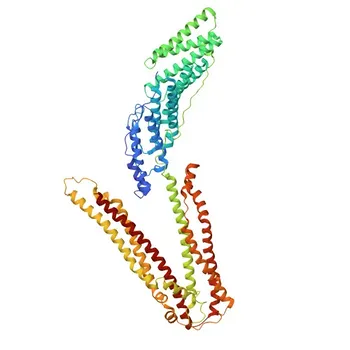
Anti-ALIX Rabbit Monoclonal Antibody for WB, IF/ICC, IP, ELISA - Q8WUM4
Item Number: CM0007199
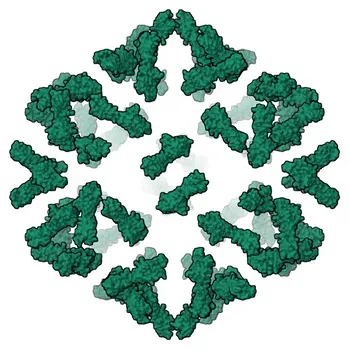
Anti-CAR/CXADR Rabbit Monoclonal Antibody for WB, IF/ICC, ELISA - P78310
Item Number: CM0007253
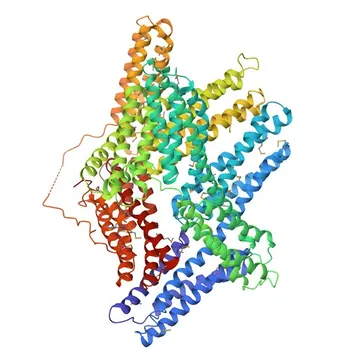
Anti-Vinculin Monoclonal Antibody for WB, IHC-P, ELISA - P18206
Item Number: CM0007505
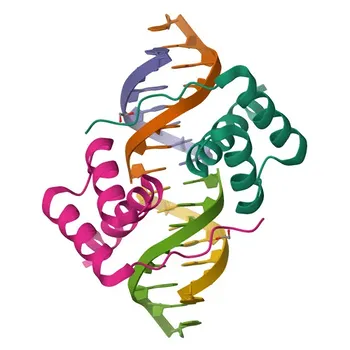
PAX3 Rabbit Monoclonal Antibody for WB, ELISA - P23760
Item Number: CM0007575
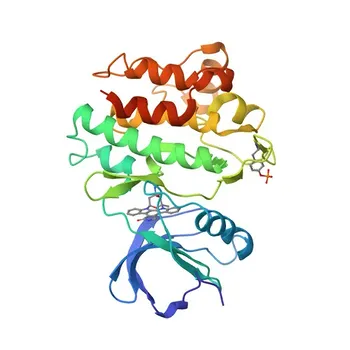
Anti-Fyn Rabbit Monoclonal Antibody for WB, ELISA - P06241
Item Number: CM0007901
FITC Rabbit Anti-Mouse CD32 Monoclonal Antibody for Flow Cytometry - P08101
Item Number: CM0007969
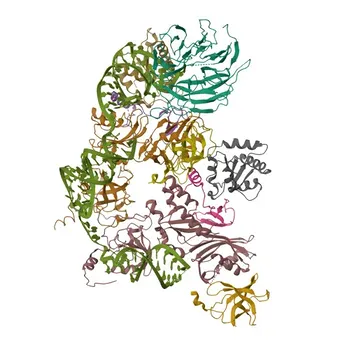
Anti-DKC1 Rabbit Monoclonal Antibody for WB, IHC-P, ELISA - O60832
Item Number: CM0008482
FITC Rabbit anti-Human/Monkey CD19 mAb - CD19
Item Number: CM0008921
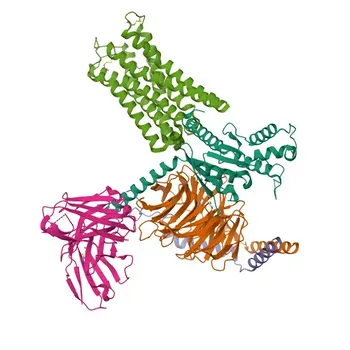
Anti-Dopamine Receptor D3 (DRD3) Rabbit Monoclonal Antibody for WB, ELISA - P35462
Item Number: CM0008958
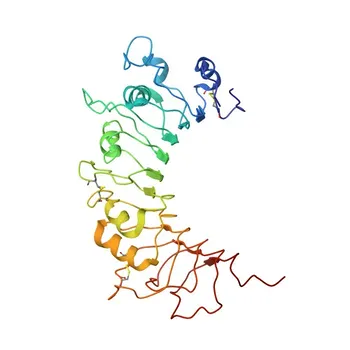
APC/Cyanine7 Rabbit anti-Human/Monkey CD14 Monoclonal Antibody for FC - P08571
Item Number: CM0009023
Anti-Human CD8b Monoclonal Antibody () for Flow Cytometry - P10966
Item Number: CM0009381
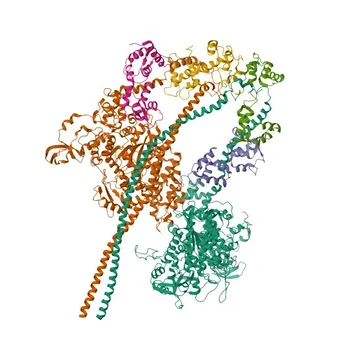
Anti-Myosin Heavy Chain Rabbit Monoclonal Antibody for WB, IHC, IF, ELISA - P12883 / P13533
Item Number: CM0009434
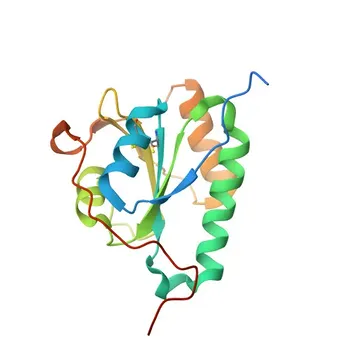
Anti-PDIA6 Rabbit Monoclonal Antibody for WB, IF/ICC, ELISA - Q15084
Item Number: CM0009676
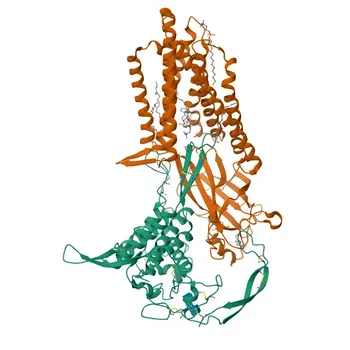
Anti-WNT3A Monoclonal Antibody for WB, IP, IF/ICC, IF-P, IHC-P, ELISA - P56704
Item Number: CM0009692
Anti-Olig2 Rabbit Monoclonal Antibody for WB, ELISA - Q13516
Item Number: CM0010100
PE Rabbit anti-Mouse/Rat CD31/PECAM1 mAb - Q08481
Item Number: CM0010322
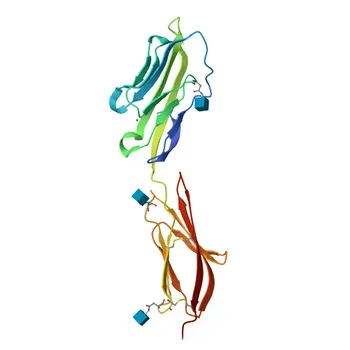
Anti-Human CD2 Monoclonal Antibody () for Flow Cytometry - P06729
Item Number: CM0010716
Human Naïve/Memory B cells Panel
Item Number: CM0011034
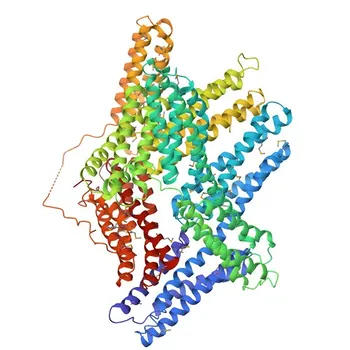
Anti-Vinculin Monoclonal Antibody for WB, IF-P, ELISA - P18206
Item Number: CM0011431
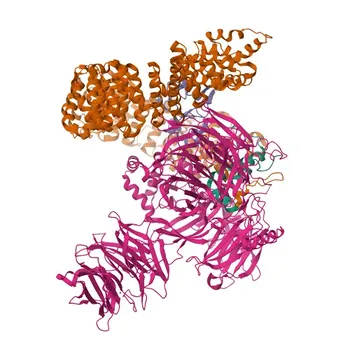
Anti-SF3B1 Monoclonal Antibody for WB, IHC-P, IF/ICC, ELISA - O75533
Item Number: CM0011698
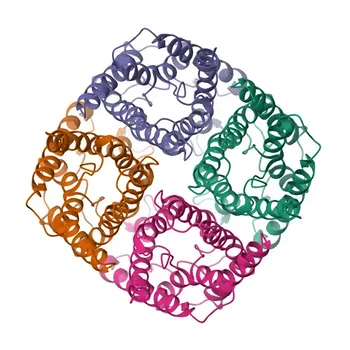
Anti-Aquaporin-1 (AQP1) Rabbit Monoclonal Antibody for WB, IF-P, IHC-P, ELISA - P29972
Item Number: CM0012288
REQUEST A QUOTE
Our professional team will reply to you within one business day. Please feel free to contact us!
Related Articles
Where Ct Values Become Trustworthy: Establishing the qPCR Fluorescence Threshold
Learn how baseline noise, statistical thresholds, exponential-phase placement, and validation turn qPCR fluorescence into reliable Ct values.
From Molecular Recognition to Reliable Results: Engineering Biosensors for Rapid Safety Testing
How antibodies and enzymes turn invisible molecular events into reliable biosensor signals, and how material quality determines test performance.
pH Is a Hidden Variable: Engineering More Reliable Competitive ELISA Kits for Small-Molecule Contaminants
Learn how precise pH control protects antibody binding, HRP activity, sensitivity, and reproducibility during competitive ELISA development.
When Fluorescence Becomes Evidence: Engineering a Competitive ELISA for Trace Molecule Detection
Learn how procedural discipline, blank correction, substrate selection, and reader configuration turn fluorometric ELISA sensitivity into reliable trace detection.
Choosing the Right High-Throughput Toxicology Platform: Cell-Based Bioassays Versus ELISA
Compare cell-based bioassays and ELISA for toxicology screening, from biological relevance and throughput to validation and technical support.
Engineering the Weakest Link: Recombinant Antibodies for Reliable Multi-Analyte Biosensors
Learn how engineered recombinant antibodies improve multi-analyte biosensors through uniform recognition, oriented surfaces, avidity, and wider dynamic range.
qPCR Primer Design: The Small Decisions That Determine Assay Reliability
A practical guide to qPCR primer design, from amplicon length and 3' stability to validation for efficient, reproducible diagnostics.
From Molecular Binding to Manufacturing Discipline: How Reliable ELISA Kits Are Engineered
Explore the four operational mechanisms that govern ELISA kit performance, from passive coating and washing to signal generation and scalable IVD manufacturing.
The Silent Well: How No Template Controls Protect Molecular Diagnostic Integrity
A practical guide to No Template Controls: how unexpected qPCR signals reveal contamination, reagent impurities, artifacts, and broken workflow controls.
Lab-on-a-Chip Diagnostics: Why Miniaturization Succeeds Only When Chemistry, Materials, and Workflow Align
Explore how lab-on-a-chip platforms accelerate diagnostics and why raw materials, surface chemistry, assay integration, and usability determine success.
Why Open Chemistry and Flexible Reaction Volumes Define Better Diagnostic PCR Systems
Learn how open chemistry compatibility and flexible reaction volumes improve PCR assay control, sensitivity, cost, scalability, and supply independence.
Why Minor Groove Binders Turn Short Hydrolysis Probes into Precision Diagnostic Tools
MGB chemistry improves probe stability, SNP discrimination, signal-to-noise ratio, and low-copy detection in demanding molecular assays.
qPCR Efficiency: The Mathematical Foundation of Reliable Molecular Diagnostics
Learn how qPCR efficiency is calculated, why the 90–100% range matters, and how it protects diagnostic accuracy, sensitivity, and compliance.
When a Surface Becomes a Sensor: Choosing Between QCM, SAW, and Six Classes of Quality Detection
Explore six sensor families, how QCM and SAW convert molecular binding into frequency shifts, and why surface chemistry determines diagnostic reliability.
Competitive ELISA vs. GC/MS: Building a Faster, Defensible Strategy for Trace Detection
Learn how competitive ELISA compares with GC/MS for trace detection and how to validate immunoassay kits for reliable laboratory screening.