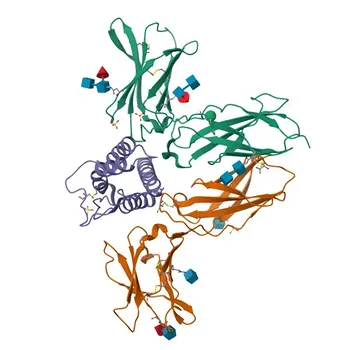
Developing antibody-based immunoassays for infectious disease pathogen detection demands more than just a good antibody—it requires a meticulously engineered system that balances target specificity, assay format, and rigorous validation to deliver reliable results. The core challenge lies in generating antibodies that rapidly bind unique pathogen markers with high affinity while ignoring structurally similar host proteins and non-target organisms. Without robust raw materials and strategic assay design, even the most promising biomarker will fail in the real world, plagued by cross-reactivity and irreproducible performance.
The defining tension in infectious disease immunoassay development is achieving both exquisite sensitivity and bulletproof specificity—two goals that often pull in opposite directions. Success hinges on selecting the right target, the right antibody type, and the right assay architecture, then validating every component against the messy biological matrices where the pathogen actually lives.
Target Selection: Choosing the Right Pathogen Fingerprint
The first decision is the most consequential: what exactly are you detecting? A seemingly small misstep in target selection can inject error into every downstream optimization.
The Surface Need vs. The Deep Requirement
At the surface, you need a target that is present when the pathogen is present. But the deeper requirement is a target that is thermodynamically stable, structurally accessible, and unique—one that reliably distinguishes the pathogen from host proteins, normal flora, and evolutionarily related non-target organisms.
The Hidden Problem of Antigenic Variability
Pathogens mutate. Viral proteins like influenza hemagglutinin or HIV envelope can drift, making a strain-specific antibody obsolete. For robust detection, conserve your targeting. Choose surface epitopes on structural proteins (like nucleoprotein for influenza) or virulence factors that remain constant across clinically relevant strains. This directly addresses the challenge of analytical inclusivity: the antibody’s ability to detect multiple target strains or species.
Key Considerations at the Target Stage
- Host protein interference: In stool, blood, or tissue, abundant host proteins like albumin and immunoglobulins generate massive background. Your target must be recognizable in that noise.
- Sample preparation reality: The target must survive the lysis conditions, extraction methods, and pH environment of the assay. Heat-stable or protease-resistant targets simplify development.
The Antibody Choice: A Critical Decision
Once the pathogen fingerprint is chosen, the antibody reagent itself becomes the engine of the assay. The type of antibody directly determines specificity, lot-to-lot consistency, and the assay’s ultimate regulatory path.
Polyclonal, Monoclonal, or Recombinant?
Polyclonal antibodies—a mixture of antibodies from multiple B-cell lineages—offer broad reactivity and are often forgiving when an antigen is heterogeneous. They excel at immuno-capture but can suffer from batch-to-batch variability and higher cross-reactivity to off-target proteins.
Monoclonal antibodies recognize a single epitope, delivering precise strain-level selectivity. They are the workhorse for minimizing non-specific binding, especially when detecting low-molecular-weight contaminants. However, a single monoclonal can be too specific, missing a key variant.
Recombinant antibodies—engineered in vitro—offer the ultimate in batch-to-batch reproducibility and can be affinity-matured for the exact binding kinetics needed. They eliminate animal-derived variability and can be formatted as antibody fragments (Fab, scFv) to reduce steric hindrance in sandwich assays.
The Reproducibility Imperative
Diagnostic manufacturers depend on raw material consistency. Primary reference correctly notes that accessing reliable IVD raw materials and specialized technical assay development services is essential. When a monoclonal hybridoma drifts or a polyclonal lot changes, an entire diagnostic kit can fail validation. Recombinant antibodies remove that biological lottery, ensuring that the reagent you validate today is the reagent you ship tomorrow.
Assay Architecture: Building for Performance
An antibody’s binding potential is meaningless if the assay format starves it of the right orientation, kinetics, or signal generation.
Solid-Phase Immobilization and Steric Freedom
Whether coating a microplate well or a lateral flow membrane, how you immobilize the antibody dictates its functional avidity. Adsorbed intact IgG may orient randomly, burying the paratope. Fragments like Fab’ or scFv, when conjugated to a surface via specific tags, can present the binding site uniformly outward, improving sensitivity by orders of magnitude.
Choosing the Signal Detection Mechanism
The detection system—whether enzyme-linked (ELISA), fluorescent, chemiluminescent, or nanoparticle-based—must match the required sensitivity and dynamic range. For trace antigen detection in early infection, a high-gain chemiluminescent readout can uncover what a colorimetric dipstick misses. For field simplicity, lateral flow assays with visual gold nanoparticles dominate, but their lower analytical sensitivity demands ultra-high-affinity antibody pairs.
Sample Matrix: The Great Silent Saboteur
Fecal, serum, or food extracts contain proteases, lipids, and heterophilic antibodies that destroy signal-to-noise ratios. Assay buffer formulation is an art: blocking proteins, detergents, and salt concentrations must be tuned to eliminate matrix-induced false positives without dampening the specific antibody-antigen binding.
When the Target is the Host: Serological Assays
Detecting the pathogen directly is not always possible or practical. Serological assays flip the paradigm, using immobilized pathogen antigens to capture host antibodies produced in response to infection.
The Heterogeneity Trap
Unlike a defined pathogen antigen, patient antibodies are a moving target. They vary wildly in concentration, isotype (IgM, IgG, IgA), and affinity between individuals and across the disease time course. This inherent heterogeneity makes standardization a nightmare. A single recombinant antigen may capture only a fraction of the immune repertoire.
Engineering Reproducibility into Chaos
To build a robust serological assay, developers must:
- Select high-purity recombinant antigens that present conserved, immunodominant epitopes.
- Optimize solid-phase coating techniques to achieve saturating antigen density without steric cross-talk.
- Incorporate aggressive blocking agents to suppress non-specific immunoglobulin binding.
- Validate against well-characterized clinical panels covering early, acute, and convalescent phases.
Fourth-Generation Combo Tests: Closing the Window
The HIV diagnostic field pioneered simultaneous detection of viral antigen (p24) and host antibodies (anti-HIV). That “4th generation” approach, now relevant to other pathogens, shrinks the diagnostic window period—the time when a patient is infected but tests negative.
The Balancing Act
Developing such an assay forces developers to balance two competing detection chemistries in a single reaction well. Antibody pairs must be selected so that early seroconversion IgM does not cross-block the antigen detection lines, and vice versa. Raw material concentrations and buffer ionic strength must be finely adjusted to let a few picograms of antigen and low-affinity early antibodies be detected concurrently without generating non-specific interference. This level of optimization typically demands access to specialized assay development services.
Validation: Proving Your Assay Works
Beyond the research bench, an immunoassay must be proven against reference culture methods. The FDA and other regulators require well-defined performance parameters.
The Four Pillars of Pathogen Assay Validation
When targeting enteric or foodborne pathogens, developers must systematically establish:
- Inclusivity: Can the antibody pair detect all target strains (e.g., multiple Campylobacter jejuni and C. coli isolates)?
- Exclusivity: Does it remain silent when challenged with closely related non-target organisms and normal fecal flora?
- Sensitivity & Specificity: What are the true positive and true negative rates against a gold-standard culture method?
- Positive and Negative Predictive Values (PPV, NPV): How likely is a positive test to reflect actual infection in a population with known prevalence?
Achieving high marks across all four demands rigorous antibody screening against diverse microbial panels, iterative buffer optimization, and large-scale clinical field trials.
Trade-offs in Format Selection
No single assay format conquers all use cases. Understanding the trade-offs prevents costly late-stage redesign.
Broad-Species Detection: The Blocking (Competitive) ELISA
When testing for avian influenza antibodies across birds and mammals, a standard indirect ELISA fails because it requires species-specific enzyme-labeled secondary antibodies. The blocking ELISA elegantly sidesteps this. A conserved antigen (influenza A nucleoprotein) is coated on the well, then a labeled monoclonal antibody specific to that same antigen competes with test sample antibodies for binding. The signal decreases as sample antibody concentration increases. Because the detection relies solely on the competition for the conserved antigen, it works universally across species—no anti-species secondary needed.
High Sensitivity vs. Field Portability
- Lateral flow assays are rapid, portable, and user-friendly, but their lower analytical sensitivity demands high-affinity reagents and risks false negatives in low-burden infections.
- Microplate ELISAs offer quantitative sensitivity and high throughput but require laboratory infrastructure and skilled operators.
- Homogeneous immunoassays (no wash steps) are compatible with clinical analyzers but can suffer from matrix interferences that are harder to suppress.
Common Pitfalls to Avoid
Neglecting Batch Testing During Antibody Screening
A monoclonal that looks perfect in small-scale tests might fail when scaled up. Always challenge candidate antibodies with at least three independent production lots early to gauge robustness.
Underestimating Sample Matrix Interference
Testing antibodies in buffered saline is a fantasy. Validate performance in the real matrix from day one. If your assay will run with fecal extracts, spike those samples and optimize your blocking buffer accordingly.
Over-Reducing Assay Steps
Eliminating wash steps for simplicity can backfire by increasing non-specific binding. Each component removal must be justified with thorough signal-to-noise analysis using clinical samples, not just recombinant standards.
Making the Right Choice for Your Goal
If your primary focus is rapid point-of-care screening: Prioritize high-affinity recombinant antibody pairs formatted for lateral flow, and invest heavily in blocking agent optimization to handle raw sample matrices. Accept that analytical sensitivity may be lower than lab-based methods.
If your primary focus is high-throughput clinical serology: Select conserved recombinant antigens and a robust indirect or competitive ELISA platform; dedicate resources to validating against extensive clinical panels across disease stages to manage immune heterogeneity.
If your primary focus is detecting multiple pathogen variants with a single kit: Design a capture sandwich with a broadly reactive polyclonal (or a carefully selected pan-specific monoclonal) paired with a strain-verifying detector antibody, and rigorously test inclusivity/exclusivity against every known subtype.
Ultimately, the antibodies are the heart, but the assay design, matrix handling, and validation are the skeleton that holds everything together. Master that interplay, and even the most elusive pathogen can be reliably caught.
Summary Table:
| Development Phase | Key Challenge | Recommended Strategy |
|---|---|---|
| Target Selection | Antigenic drift & host protein interference | Choose conserved epitopes on structural/virulence proteins |
| Antibody Choice | Batch variability & non-specific binding | Utilize recombinant antibodies for consistent lot-to-lot performance |
| Assay Architecture | Steric hindrance & low signal sensitivity | Use site-specific conjugation and high-gain detection systems |
| Matrix Handling | False positives from complex sample matrices | Optimize blocking agents, ionic strength, and sample buffers |
| Assay Validation | Achieving both inclusivity and exclusivity | Validate against diverse microbial panels and clinical gold standards |
Accelerate Your Immunoassay Development with CamelBio
Overcoming matrix interference, lot-to-lot variability, and specificity challenges requires high-quality raw materials and expert technical support. CamelBio provides diagnostic manufacturers, labs, and research institutes with one-stop access to premium IVD raw materials, specialized technical services, and consulting—covering every stage from initial concept to clinic.
Ready to build robust, sensitive, and reproducible pathogen assays? Contact CamelBio today to partner with our expert team!
Related Products
- Anti-IL8 Rabbit Monoclonal Antibody for WB, IHC-P, IF/ICC, FC, ELISA - P10145
- Anti-GLI2 Monoclonal Antibody for IF/ICC, IF-P, IHC-P, ELISA - P10070
- Anti-GIPC1 Rabbit Polyclonal Antibody for WB, ELISA - O14908
- Anti-Mouse IgM Monoclonal Antibody for WB, IHC-P, FC, ELISA - P01872
- TAB1 Rabbit mAb for WB, IF/ICC, ELISA - Q15750
People Also Ask
- What factors should be evaluated when transitioning an ELISA to 384-well plates? Master High-Throughput Scaling
- How do reagent quality and freshness impact immunoassay precision? Optimize Low-End Sensitivity & %CV
- How does enhanced chemiluminescence (ECL) function in HRP diagnostic immunoassays? Mechanism & Key Benefits