The link is direct and non-negotiable: the severe, lifelong disabilities caused by congenital CMV—and the steep drop in transmission risk after a primary maternal infection—demand diagnostic raw materials that can precisely time the infection and detect the virus at its lowest levels. This clinical urgency translates into a non-negotiable requirement for high-purity recombinant antigens, rigorously standardized avidity reagents, and ultra-consistent molecular controls that leave no room for ambiguous results.
The fundamental clinical problem—distinguishing a high-risk primary infection from a low-risk latent or recurrent one—drives every raw material decision. For IVD kit developers, this means selecting reagents that deliver unambiguous IgM/IgG profiles, decisive IgG avidity data, and quantifiable viral DNA, because a child’s neurological future hinges on that clarity.
The Clinical Imperative: Why Accurate Diagnosis Matters
The clinical features of congenital CMV are not subtle. They include sensorineural hearing loss, microcephaly, intracranial calcifications, and severe neurodevelopmental deficits. These outcomes place an extraordinary ethical and performance burden on every diagnostic assay.
Connecting Clinical Outcomes to Assay Sensitivity
A false-negative result in a newborn screening context is catastrophic. It removes the chance for early antiviral intervention and auditory rehabilitation. Therefore, an assay’s analytical sensitivity is a direct proxy for clinical safety. For molecular qPCR kits, this means selecting polymerases with ultra-high fidelity and primers that can amplify even a handful of viral DNA copies in amniotic fluid or neonatal urine without inhibition.
The Silent Epidemic and Screening Necessity
CMV affects 0.5% to 1% of all newborns, yet most infected infants appear healthy at birth. The disease is a silent epidemic. IVD raw materials must therefore enable high-throughput screening platforms that are both highly sensitive and extremely specific to avoid an unmanageable false-positive rate that would overwhelm follow-up services. This informs the selection of recombinant antigens with minimal cross-reactivity to other herpesviruses.
Understanding Transmission Dynamics and Diagnostic Windows
The mother’s immune history is the single most important predictor of fetal risk. A primary maternal infection carries a vertical transmission risk of 30–40%, compared to just 1–2% for a recurrent infection. This is the clinical fact that shapes every serological assay design.
Primary vs. Recurrent Infection: The Crucial Distinction
An assay that merely reports "CMV IgG positive" is clinically useless in pregnancy. It cannot differentiate a past, safe infection from a dangerous new one. The raw materials must be capable of building a complete serological profile: detecting CMV IgM, quantifying CMV IgG, and, most critically, measuring IgG avidity. Low-avidity IgG serves as a time stamp, proving the infection occurred within the last 3–4 months, precisely when the fetal risk is highest.
Why IgM Alone Is a Broken Compass
CMV IgM can persist for months after a primary infection or reappear during viral reactivation. A standalone IgM test is therefore plagued by false positives that cause unnecessary anxiety and invasive procedures. IVD developers must, from the start, combine IgM detection with an IgG avidity component, using specific avidity wash reagents that create a reproducible, chaotropic disruption of low-affinity antibody binding.
Translating Clinical Needs into Raw Material Specifications
The clinical requirements are the design blueprint. The IVD raw materials are the bricks. If the blueprint demands a perfectly timed, high-resolution snapshot of the immune response, every brick must be flawless.
The Gold Standard for Serological Antigens
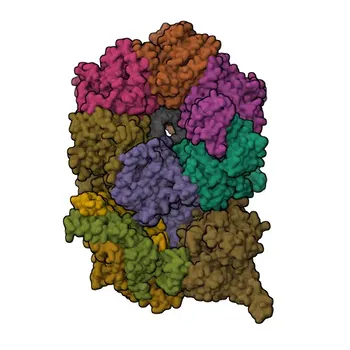
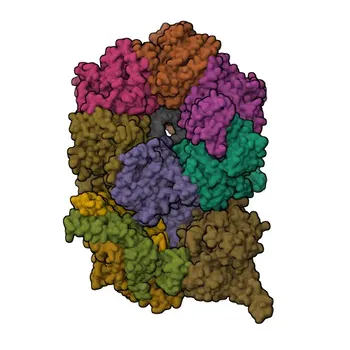
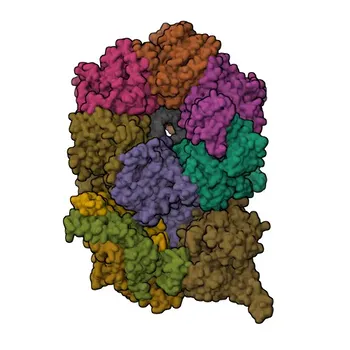
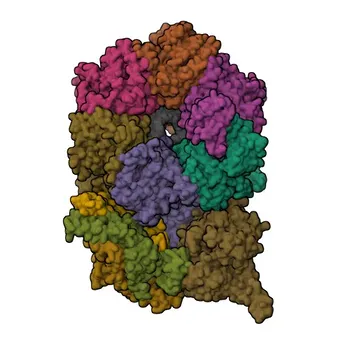
For IgM and IgG detection, the target must be immunodominant and highly conserved. Recombinant tegument proteins (such as pp150) and envelope glycoprotein B (gB) are the preferred starting materials. They must be produced with extreme purity in eukaryotic expression systems to ensure proper folding and conformational epitopes, eliminating the lot-to-lot variation and cross-reactivity risks associated with native viral lysates.
Engineering the IgG Avidity Assay
The avidity assay’s discriminatory power lives and dies by the reproducibility of its avidity wash buffer. If the chaotropic agent’s concentration varies by even a small margin, the index cut-off between low-avidity and high-avidity antibodies shifts, misclassifying a recent infection as past one. The raw material—typically a standardized urea solution—must be manufactured with traceable precision to guarantee consistent stringency across thousands of kit lots.
Molecular Assays: The Anchor of Neonatal Diagnosis
While serology deciphers maternal risk, molecular testing confirms fetal and neonatal infection. Here, the clinical need shifts from immune profiling to direct viral detection and quantification.
Coping with Biological and Technical Variability
Viral load decisions are never based on a single value. A true clinical change is defined as a >0.5 to 1.0 log10 shift. However, inter-assay variability can itself reach 1.5 log10 copies/mL, and whole blood yields values 0.8 to 1.2 log10 higher than plasma. To achieve clinical commutability, raw material selection must focus on traceably calibrated quantitative standards and consistent, high-efficiency DNA polymerases that minimize batch-to-batch fluctuation.
Building the qPCR Gold Standard
A neonatal urine or amniotic fluid qPCR assay requires specific primers and probes targeting conserved genomic regions, a high-fidelity polymerase resistant to common inhibitors, and a quantified DNA control panel that spans the clinically relevant reportable range. These raw materials must be formulated together to guarantee that a result of "undetectable" in a symptomatic infant is a biological truth, not a failure of amplification.
The pp65 Antigenemia Alternative
While qPCR is dominant, the pp65 antigenemia assay remains a viable cell-based quantification method. It relies on a fluorescein-labeled monoclonal anti-pp65 antibody that must bind with high affinity to the viral lower matrix protein in fixed leukocytes. The raw material spec here is direct: high signal-to-noise ratio and low background staining to accurately count positive nuclei, even when few infected cells are present.
Understanding the Trade-offs
No single raw material choice comes without compromise. Acknowledging these trade-offs is essential for developing a reliable assay rather than a theoretically perfect one.
Recombinant vs. Native Antigens
High-purity recombinant proteins (gB, pp150) offer unmatched lot-to-lot consistency and eliminate the biohazard of viral culture. However, they may lack conformational epitopes formed by protein complexes found in native dense bodies. The trade-off is that while recombinant antigens optimize reproducibility and scalability, they must be meticulously screened to confirm they capture the full spectrum of antibodies found in patient sera, especially in early infection.
Serological Breadth vs. Specificity
Using a broad immunodominant protein like pp65 (present in huge quantities in dense bodies) can increase assay sensitivity, but it might also capture cross-reactive antibodies. Pairing it with a more specific glycoprotein, like gB, in a dual-antigen format can balance sensitivity and specificity, but it increases raw material complexity and cost. The decision must align with the assay’s intended use: a screening test tolerates some false positives; a confirmatory test does not.
The Molecular Standardization Trap
Traceable WHO standards are essential for harmonizing viral load results across laboratories. But a DNA standard that behaves perfectly in a neat buffer might amplify differently in the complex matrix of amniotic fluid. Raw material providers must supply controls that are matrix-matched or validated to be commutably equivalent in the intended specimen type, avoiding a dangerous overestimation of assay precision.
Making the Right Choice for Your Diagnostic Platform
The raw material selection must flow directly from the clinical question your kit is designed to answer. A kit for maternal screening has different requirements than one for neonatal confirmation.
- If your primary focus is prenatal screening for high-risk primary infection: Select a highly pure recombinant gB/pp150-based IgG/IgM panel coupled with an ultra-consistent avidity wash buffer. The goal is to unequivocally timestamp the infection.
- If your primary focus is confirming congenital infection in a neonate: Prioritize a high-sensitivity qPCR system with traceably calibrated, matrix-validated DNA controls and a high-fidelity polymerase that can reliably detect low viral loads in urine or saliva.
- If your primary focus is transplant or immunocompromised patient monitoring: Adopt a fast, quantitative pp65 antigenemia assay using a high-affinity fluorescein-labeled anti-pp65 monoclonal antibody, or a tightly standardized qPCR assay with controls that guarantee commutability across whole blood and plasma.
- If your primary focus is high-throughput, automated screening: Choose recombinant antigens and conjugates that lyophilize robustly and resuspend with minimal activity loss, ensuring consistent performance across thousands of microtiter wells without drift.
The raw materials you select are not just components; they are the physical embodiment of a clinical promise to protect a child’s brain and senses from a preventable threat. Choose them with that weight, and your assay will serve its true purpose.
Summary Table:
| Diagnostic Focus | Clinical Goal | Recommended IVD Raw Material | Critical Selection Criteria |
|---|---|---|---|
| Maternal Prenatal Screening | Distinguish primary vs. recurrent infection (timestamping) | Recombinant gB & pp150 Antigens, Standardized Avidity Wash Buffer | Eukaryotic expression for natural folding; traceable chaotropic buffer for reproducible avidity indexes |
| Neonatal Confirmation | Direct viral detection at low titers in urine/amniotic fluid | High-Fidelity DNA Polymerases, Matrix-Matched qPCR Control Panels | Resistance to biological inhibitors; traceable calibration to WHO standards |
| Cell-Based Quantification | Direct counting of infected leukocytes | Fluorescein-labeled Monoclonal Anti-pp65 Antibodies | High affinity & specificity, high signal-to-noise ratio, minimal background staining |
Elevate Your Diagnostic Assays with CamelBio
Developing high-precision CMV assays requires raw materials engineered for uncompromising sensitivity and consistency. CamelBio provides diagnostic manufacturers, labs, and research institutes with one-stop access to premium IVD raw materials, technical services, and expert consulting—covering every stage from concept to clinic.
Whether you require ultra-pure recombinant antigens, reproducible avidity reagents, or traceably calibrated molecular controls, our team is ready to accelerate your assay development pipeline.
Ready to enhance your diagnostic performance? Contact CamelBio today!
Related Products
- Anti-CCM2 Rabbit Polyclonal Antibody for WB, IHC-P, ELISA - Q9BSQ5
- Anti-CD239/BCAM Polyclonal Antibody for WB, ELISA - P50895
- Anti-Ceruloplasmin Monoclonal Antibody for WB, IF-P, IHC-P, ELISA - P00450
- Anti-CMIP Polyclonal Antibody for WB, IHC-P, ELISA - Q8IY22
- Anti-c-Myc Rabbit Polyclonal Antibody for WB, ELISA - P01106