Toggle Categories
Get Instant Support
Choose your preferred way to connect with our team
-
Get Free Quote Fill out form for detailed pricing
-
Send Email Detailed inquiry support
-
WhatsApp Quick mobile chat
Response Time
Within 8 hours on working days, 24 hours on holidays
Products
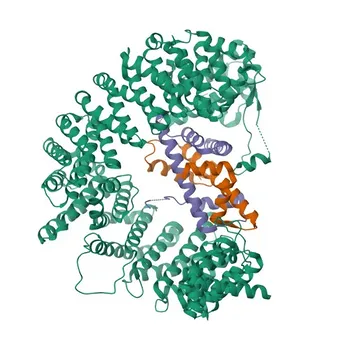
Anti-Importin 9 / RANBP9 Rabbit Monoclonal Antibody for WB, IHC-P, ELISA - Q96P70
Item Number: CM0003619
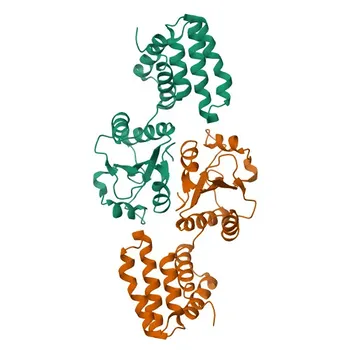
Anti-ERp29 Rabbit Monoclonal Antibody for WB, IHC-P, ELISA - P30040
Item Number: CM0003621
Anti-TIMP2 Monoclonal Antibody for WB, ELISA - P16035
Item Number: CM0003630
Anti-Syntaxin 3 Rabbit Monoclonal Antibody for WB, IHC-P, ELISA - Q13277
Item Number: CM0011852
Anti-p63 Rabbit Monoclonal Antibody for IHC-P, ELISA - Q9H3D4
Item Number: CM0011853
Anti-SLC25A20 Polyclonal Antibody for WB, ELISA - O43772
Item Number: CM0013411
Anti-Carbonic Anhydrase 1 (CA1) Rabbit Polyclonal Antibody for WB and ELISA - P00915
Item Number: CM0014881
Anti-ATP6V0A1 Rabbit Polyclonal Antibody for WB, IF/ICC, ELISA - Q93050
Item Number: CM0015621
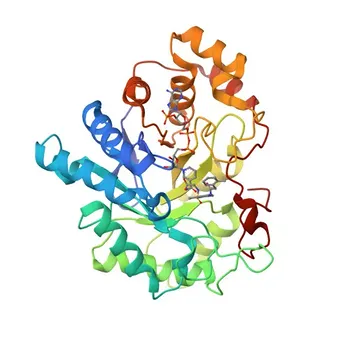
Anti-AKR1B1 Rabbit Polyclonal Antibody for WB - P15121
Item Number: CM0022457
Anti-OsGRF4 Polyclonal Antibody for WB and ELISA - Q6ZIK5
Item Number: CM0023434
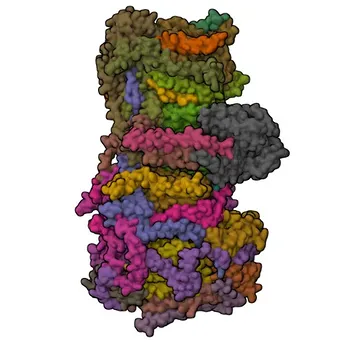
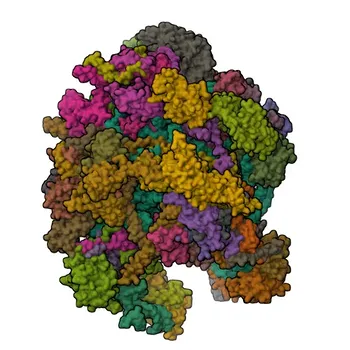
Anti-MRPL36 Rabbit Polyclonal Antibody for WB and ELISA - Q9P0J6
Item Number: CM0023535
Anti-NEUROD1 Rabbit Polyclonal Antibody for IHC-P, ELISA - Q13562
Item Number: CM0023624
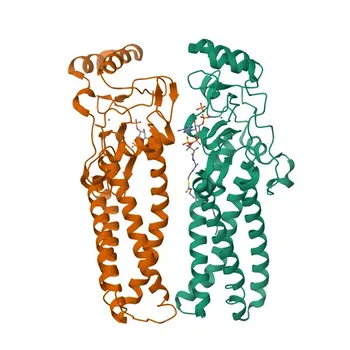
Anti-ZDHHC20 Rabbit Polyclonal Antibody for WB and ELISA - Q5W0Z9
Item Number: CM0024046
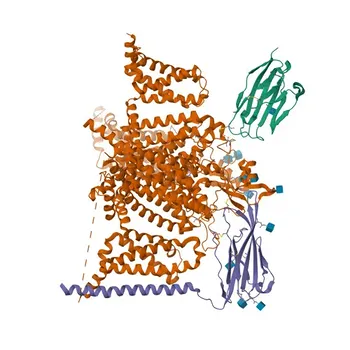
SCN2B Rabbit pAb for WB, ELISA - O60939
Item Number: CM0024758
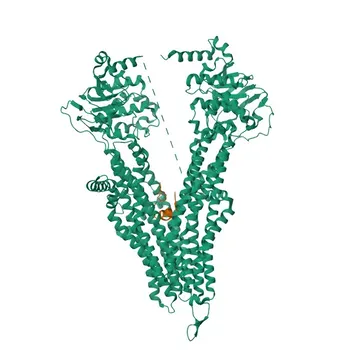
Anti-ABCC5 Rabbit Polyclonal Antibody for WB, ELISA - O15440
Item Number: CM0025210
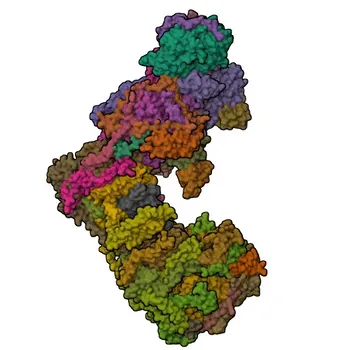
KD Validated Anti-NDUFA13/GRIM19 Polyclonal Antibody for WB, ELISA - Q9P0J0
Item Number: CM0025457

Anti-TRIM41 Polyclonal Antibody for WB and ELISA - Q8WV44
Item Number: CM0025755
Anti-LMO1 (Rhombotin-1) Rabbit Polyclonal Antibody for WB, ELISA - P25800
Item Number: CM0025953
Anti-CDX4 Polyclonal Antibody for WB, ELISA - O14627
Item Number: CM0026259
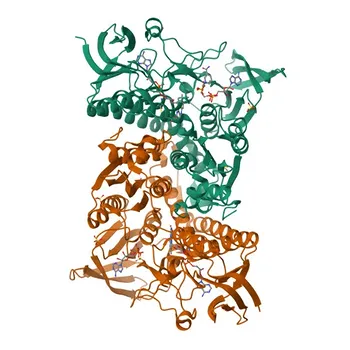
Anti-DLDH/DLD Rabbit Polyclonal Antibody for WB, IHC-P, ELISA - P09622
Item Number: CM0026331
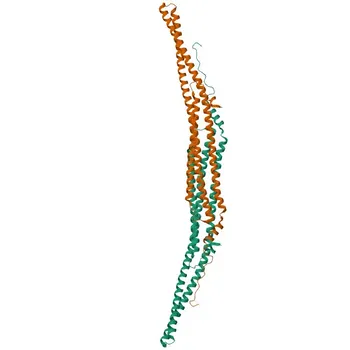
Anti-PSTPIP1 Rabbit Polyclonal Antibody for WB, IHC-P, ELISA - O43586
Item Number: CM0026494
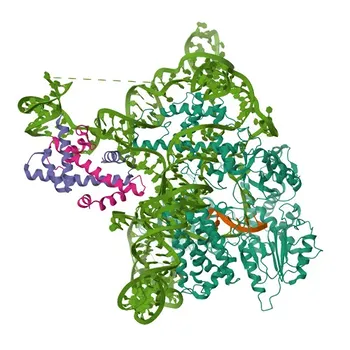
Anti-TERT Polyclonal Antibody for WB, ELISA - O14746
Item Number: CM0026795
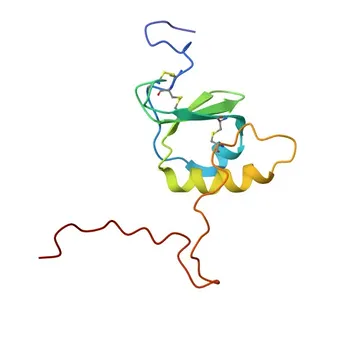
Anti-CCL28 Rabbit Polyclonal Antibody for WB, ELISA - Q9NRJ3
Item Number: CM0026974
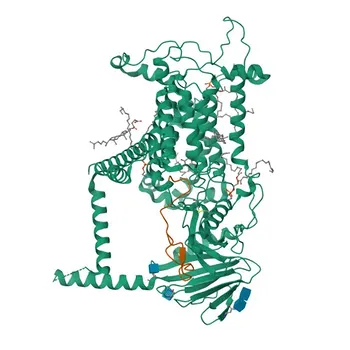
Anti-MGP Rabbit Polyclonal Antibody for WB, IHC-P, IF-P, ELISA - P08493
Item Number: CM0027027
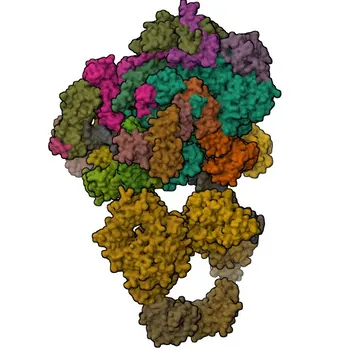
Anti-GTF2E2 Polyclonal Antibody for WB, ELISA - P29084
Item Number: CM0027163
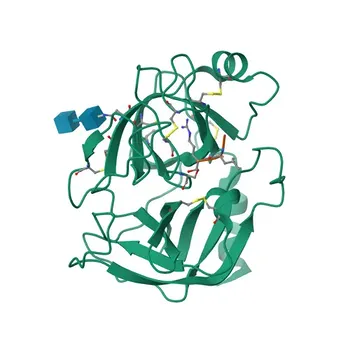
Anti-Kallikrein-5 (KLK5) Polyclonal Antibody for WB and ELISA - Q9Y337
Item Number: CM0027709
[KD Validated] Anti-CAT1 Rabbit Polyclonal Antibody for WB - P30825
Item Number: CM0028158
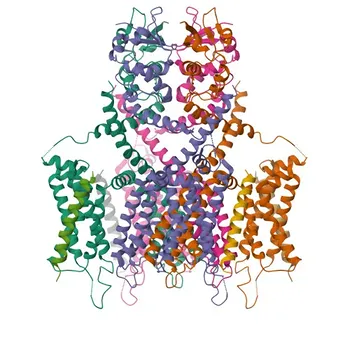
Anti-KCND2 Polyclonal Antibody for WB, ELISA - Q9NZV8
Item Number: CM0028268
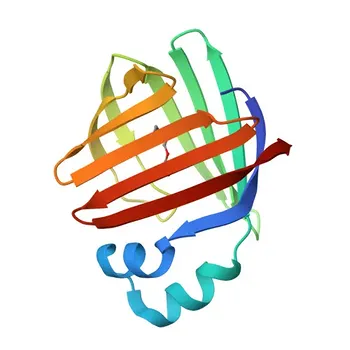
Anti-FABP6 Rabbit Polyclonal Antibody for WB, IF-P, ELISA - P51161
Item Number: CM0028557
REQUEST A QUOTE
Our professional team will reply to you within one business day. Please feel free to contact us!
Related Articles
Choosing the Thermal Architecture That Makes a Molecular Assay Transferable
Compare Peltier blocks and air-heated carousels across speed, uniformity, sample flexibility, optimization, and throughput for qPCR development.
Where Ct Values Become Trustworthy: Establishing the qPCR Fluorescence Threshold
Learn how baseline noise, statistical thresholds, exponential-phase placement, and validation turn qPCR fluorescence into reliable Ct values.
From Molecular Recognition to Reliable Results: Engineering Biosensors for Rapid Safety Testing
How antibodies and enzymes turn invisible molecular events into reliable biosensor signals, and how material quality determines test performance.
ROX in Real-Time PCR: The Optical Trade-Off Behind Precision and Multiplexing
Understand how ROX normalization corrects qPCR signal variation, how optics consume channels, and how to choose the right master mix.
From Hapten to Reliable Result: Engineering Small-Molecule Immunoassays for Diagnostic Use
Discover how hapten chemistry, antibody selection, competitive formats, and validation determine small-molecule immunoassay performance.
Why Direct Hapten Coupling Changes the Economics of Small-Molecule Biosensors
Compare direct hapten coupling with protein conjugates to improve ligand density, signal quality, antibody efficiency, and chip reusability.
Choosing the Right High-Throughput Toxicology Platform: Cell-Based Bioassays Versus ELISA
Compare cell-based bioassays and ELISA for toxicology screening, from biological relevance and throughput to validation and technical support.
Engineering the Weakest Link: Recombinant Antibodies for Reliable Multi-Analyte Biosensors
Learn how engineered recombinant antibodies improve multi-analyte biosensors through uniform recognition, oriented surfaces, avidity, and wider dynamic range.
qPCR Primer Design: The Small Decisions That Determine Assay Reliability
A practical guide to qPCR primer design, from amplicon length and 3' stability to validation for efficient, reproducible diagnostics.
Why Competitive Immunoassays Read Higher Than GC-MS—and How Raw Materials Close the Gap
Discover why competitive immunoassays overestimate target levels versus GC-MS, and how hapten, antibody, blocker, and buffer choices reduce bias.
From Molecular Binding to Manufacturing Discipline: How Reliable ELISA Kits Are Engineered
Explore the four operational mechanisms that govern ELISA kit performance, from passive coating and washing to signal generation and scalable IVD manufacturing.
The Silent Well: How No Template Controls Protect Molecular Diagnostic Integrity
A practical guide to No Template Controls: how unexpected qPCR signals reveal contamination, reagent impurities, artifacts, and broken workflow controls.
ROX in qPCR: The Quiet Reference That Makes Diagnostic Signals Trustworthy
Learn how ROX normalizes qPCR fluorescence, stabilizes Ct calls, and shapes the trade-off between instrument compatibility and multiplexing.
qPCR Efficiency: The Mathematical Foundation of Reliable Molecular Diagnostics
Learn how qPCR efficiency is calculated, why the 90–100% range matters, and how it protects diagnostic accuracy, sensitivity, and compliance.
From Fluorescence to Diagnostic Truth: Choosing Passive Reference Dyes for qPCR Master Mixes
Learn how passive reference dyes stabilize qPCR signals, improve diagnostic reproducibility, and guide ROX formulation across instrument platforms.
Reverse Transcriptase in RNA Diagnostics: The Enzyme That Determines What PCR Can See
Learn how AMV reverse transcriptase converts fragile RNA into amplifiable cDNA, and how processivity, inhibitors, and heat shape assay reliability.
ROX, Optical Architecture, and the Hidden Ceiling of Multiplex qPCR
How instrument optics determine ROX requirements, consume detection channels, and shape multiplex qPCR design, reagent logistics, and kit strategy.
When a Surface Becomes a Sensor: Choosing Between QCM, SAW, and Six Classes of Quality Detection
Explore six sensor families, how QCM and SAW convert molecular binding into frequency shifts, and why surface chemistry determines diagnostic reliability.
Competitive ELISA vs. GC/MS: Building a Faster, Defensible Strategy for Trace Detection
Learn how competitive ELISA compares with GC/MS for trace detection and how to validate immunoassay kits for reliable laboratory screening.
The Silent Correction Behind Reliable qPCR: Passive Reference Dyes, Rn, and Assay Design
Learn how passive reference dyes normalize qPCR noise, how Rn is calculated, and when ROX affects compatibility, accuracy, and multiplexing.