Toggle Categories
Get Instant Support
Choose your preferred way to connect with our team
-
Get Free Quote Fill out form for detailed pricing
-
Send Email Detailed inquiry support
-
WhatsApp Quick mobile chat
Response Time
Within 8 hours on working days, 24 hours on holidays
Products
Rabbit anti-FITC/5-FAM/6-FAM mAb - FITC
Item Number: CM0004082
Rabbit anti-Mouse/Rat CD27 Monoclonal Antibody for Flow Cytometry - P41272
Item Number: CM0004301
Rabbit anti-Mouse CD68 Monoclonal Antibody for IF/ICC, FC - P31996
Item Number: CM0004327
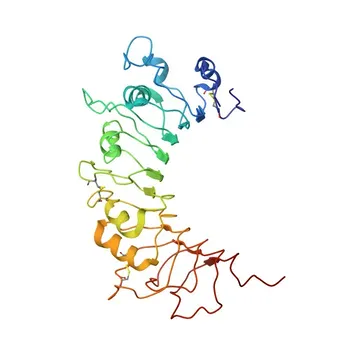
Rabbit anti-CD14 Monoclonal Antibody for Flow Cytometry - P08571
Item Number: CM0004334
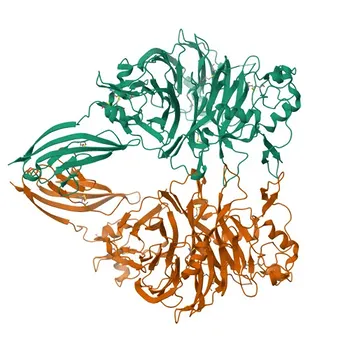
Rabbit anti-Human CD100/SEMA4D Monoclonal Antibody for IF/ICC, FC - Q92854
Item Number: CM0004358
Rabbit anti-Human KIR2DL2/KIR2DL3 Monoclonal Antibody for IF/ICC, FC - P43628
Item Number: CM0004673
Anti-YAP1 Rabbit Monoclonal Antibody for WB - P46937
Item Number: CM0006312
Anti-ATPB Mouse Monoclonal Antibody for WB, IHC-P, ELISA - P06576
Item Number: CM0006787
Anti-CFAP20/GTL3 Rabbit Monoclonal Antibody for WB, IHC-P, ELISA - Q9Y6A4
Item Number: CM0007151
Anti-ALDH1A1 Rabbit Monoclonal Antibody for WB, IHC-P, IF/ICC, ELISA - P00352
Item Number: CM0007189
Anti-PJVK Rabbit Monoclonal Antibody for WB, ELISA - Q0ZLH3
Item Number: CM0007198
Anti-Importin Alpha 5/KPNA1 Rabbit mAb - P52294
Item Number: CM0007261
Anti-TFAM Rabbit Monoclonal Antibody for WB - Q00059
Item Number: CM0007434
PerCP/Cyanine5.5 Rabbit anti-Mouse CD44 Monoclonal Antibody for FC - P15379
Item Number: CM0008772
![[KO Validated] CDK5 Rabbit Monoclonal Antibody - Q00535](https://image.camelbiological.com/images/products/4600/main_image_6a63668519f286.09654829-small.webp)
[KO Validated] CDK5 Rabbit Monoclonal Antibody - Q00535
Item Number: CM0008793
Rabbit anti-Human CD239/BCAM Monoclonal Antibody for Flow Cytometry - P50895
Item Number: CM0009370
Anti-RARS Rabbit Monoclonal Antibody for WB, IF-P, IHC-P, ELISA - P54136
Item Number: CM0009724
PE Rabbit anti-Human ILT5/CD85a Monoclonal Antibody for FC - O75022
Item Number: CM0009949
PE Rabbit anti-Human CD140b/PDGFRβ Monoclonal Antibody for Flow Cytometry - P09619
Item Number: CM0010135
APC Rabbit anti-Human/Monkey CD69 mAb for FC - Q07108
Item Number: CM0010465
![KO Validated Anti-N-terminal alpha-synuclein Monoclonal Antibody [MJFF-B-3A4] for WB, IF/ICC, ELISA - P37840](https://image.camelbiological.com/images/products/5574/main_image_6a6378b01eda94.54615831-small.webp)

Anti-MARVELD2 (Tricellulin) Rabbit Polyclonal Antibody for WB, ELISA - Q8N4S9
Item Number: CM0012924
Anti-Uhrf2 Rabbit Polyclonal Antibody for WB and ELISA - Q7TMI3
Item Number: CM0015428
Anti-NOMO1 Polyclonal Antibody for WB, IHC-P, ELISA - Q15155
Item Number: CM0016266
Anti-c-Maf Polyclonal Antibody for WB, ELISA - O75444
Item Number: CM0016767
Anti-TRIM25 Polyclonal Antibody for WB, IHC-P, IF/ICC, IP, ELISA - Q14258
Item Number: CM0016903
Anti-IGFBP7 Rabbit Polyclonal Antibody for WB, ELISA - Q16270
Item Number: CM0016916
Anti-SULT1A3 Polyclonal Antibody for WB, IF/ICC, ELISA - P0DMM9
Item Number: CM0017017
Anti-GFAP Rabbit Polyclonal Antibody for WB, IF/ICC, IF-P, IHC-P, and ELISA - P14136
Item Number: CM0017567
Anti-MESDC2 Polyclonal Antibody for WB and ELISA - Q14696
Item Number: CM0018278
REQUEST A QUOTE
Our professional team will reply to you within one business day. Please feel free to contact us!
Related Articles
Turning Parts-Per-Trillion Chlorophenol Detection into a Routine Quality Decision
How immunoassays, high-affinity antibodies, and purpose-built IVD materials enable rapid, trace-level chlorophenol screening.
ROX in Real-Time PCR: The Optical Trade-Off Behind Precision and Multiplexing
Understand how ROX normalization corrects qPCR signal variation, how optics consume channels, and how to choose the right master mix.
From Hapten to Reliable Result: Engineering Small-Molecule Immunoassays for Diagnostic Use
Discover how hapten chemistry, antibody selection, competitive formats, and validation determine small-molecule immunoassay performance.
Why Direct Hapten Coupling Changes the Economics of Small-Molecule Biosensors
Compare direct hapten coupling with protein conjugates to improve ligand density, signal quality, antibody efficiency, and chip reusability.
Why Competitive Immunoassays Read Higher Than GC-MS—and How Raw Materials Close the Gap
Discover why competitive immunoassays overestimate target levels versus GC-MS, and how hapten, antibody, blocker, and buffer choices reduce bias.
The Signal You Lose Before the qPCR Run Begins: A Practical System for Protecting Primers and Fluorogenic Probes
Learn how aliquoting, dark storage, controlled thawing, and buffer choice protect qPCR fluorescence, Cq reproducibility, and assay sensitivity.
Designing Competitive ELISAs for Small Molecules: The System Behind Sensitivity and Working Range
Learn how antibody affinity, HRP conjugates, and fluorescent substrates work together to improve competitive ELISA sensitivity, range, and reproducibility.
From Fluorescence to Diagnostic Truth: Choosing Passive Reference Dyes for qPCR Master Mixes
Learn how passive reference dyes stabilize qPCR signals, improve diagnostic reproducibility, and guide ROX formulation across instrument platforms.
When a Surface Becomes a Sensor: Choosing Between QCM, SAW, and Six Classes of Quality Detection
Explore six sensor families, how QCM and SAW convert molecular binding into frequency shifts, and why surface chemistry determines diagnostic reliability.
Designing Generic Antibodies: How Hapten Engineering Enables Broad-Spectrum Pesticide Detection
Learn how strategic hapten design exposes conserved pesticide structures, improves antibody cross-reactivity, and guides reliable multi-residue assays.