Toggle Categories
Get Instant Support
Choose your preferred way to connect with our team
-
Get Free Quote Fill out form for detailed pricing
-
Send Email Detailed inquiry support
-
WhatsApp Quick mobile chat
Response Time
Within 8 hours on working days, 24 hours on holidays
Products
Anti-Phospho-S6 Ribosomal Protein (RPS6)-S235/236 Polyclonal Antibody for WB, ELISA - P62753
Item Number: CM0000710
PE Rabbit anti-Human CD55 Monoclonal Antibody for FC - P08174
Item Number: CM0005328
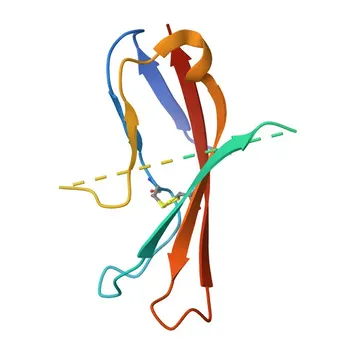
Anti-CD83 Rabbit Monoclonal Antibody for WB, ELISA - Q01151
Item Number: CM0007677
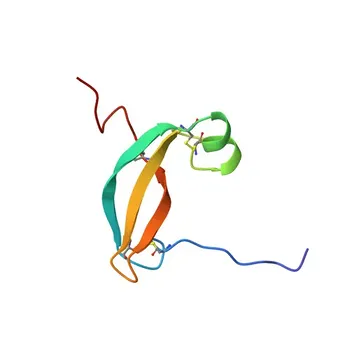
Anti-JTB Polyclonal Antibody for WB and ELISA - O76095
Item Number: CM0015417
Anti-PPM1F Rabbit Polyclonal Antibody for WB, ELISA - P49593
Item Number: CM0015897
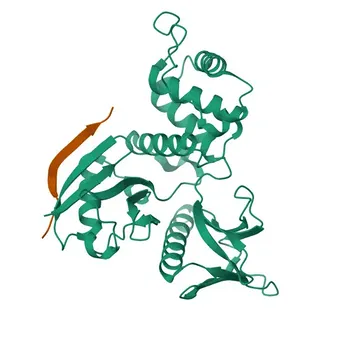
Anti-Radixin Polyclonal Antibody for WB and ELISA - P35241
Item Number: CM0018173
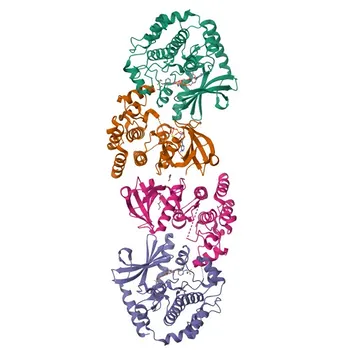
Anti-ARAF Polyclonal Antibody for WB, IF/ICC, ELISA - P10398
Item Number: CM0018735
Anti-PARVA Polyclonal Antibody for WB and ELISA - Q9NVD7
Item Number: CM0018738
Anti-GTPBP8 Rabbit Polyclonal Antibody for WB, IHC-P, IF/ICC, ELISA - Q8N3Z3
Item Number: CM0018879
Anti-KDM3B Polyclonal Antibody for WB, IHC-P, ELISA - Q7LBC6
Item Number: CM0019208
Anti-SEC63 Rabbit Polyclonal Antibody for WB and ELISA - Q9UGP8
Item Number: CM0019405
Anti-CCL19 Polyclonal Antibody for WB, IF-P, ELISA - Q99731
Item Number: CM0020077
Anti-MEK7 Rabbit Polyclonal Antibody (KO Validated) for WB, IF/ICC, ELISA - O14733
Item Number: CM0020674
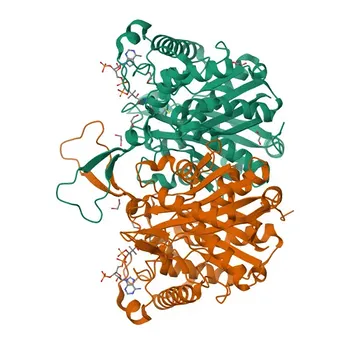
Anti-ACAA2 Rabbit Polyclonal Antibody for WB, IHC-P, IF/ICC, ELISA - P42765
Item Number: CM0021020
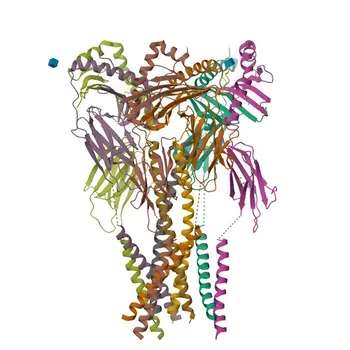
Anti-HLA-DQB1 Polyclonal Antibody for WB, IHC-P, ELISA - P01920
Item Number: CM0021248
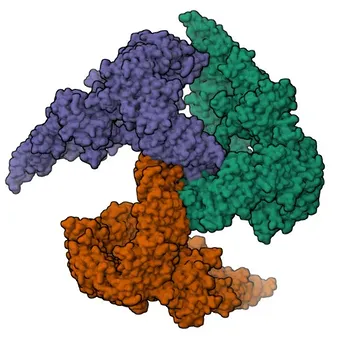
Anti-USP9X Polyclonal Antibody for WB, ELISA - Q93008
Item Number: CM0022865
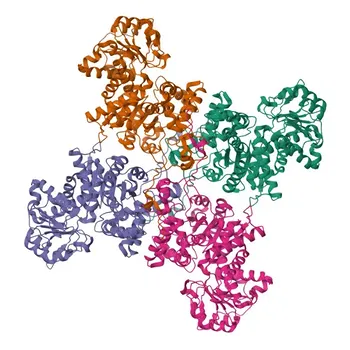
KD Validated Anti-ME1 Rabbit Polyclonal Antibody for WB and ELISA - P48163
Item Number: CM0023243
PDE11A Rabbit Polyclonal Antibody for WB, IF/ICC, ELISA - Q9HCR9
Item Number: CM0023679

Anti-CAPZA1 Rabbit Polyclonal Antibody for WB, ELISA - P52907
Item Number: CM0026630
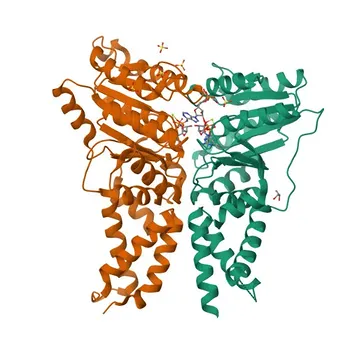
Anti-SRPR Rabbit Polyclonal Antibody for WB, ELISA - P08240
Item Number: CM0027180
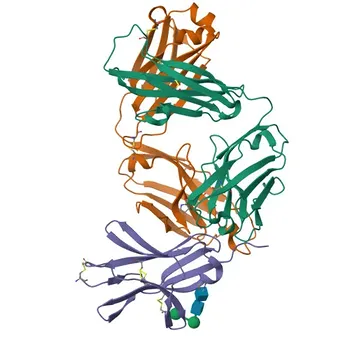
Anti-BTLA Rabbit Polyclonal Antibody for WB, ELISA - Q7Z6A9
Item Number: CM0027408
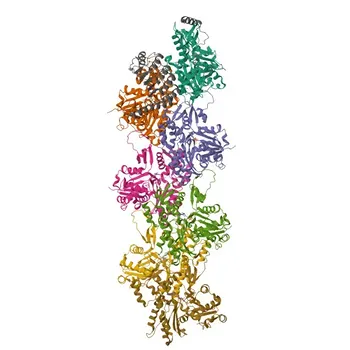
Anti-TMOD1 Polyclonal Antibody for WB and ELISA - P28289
Item Number: CM0027454
Anti-Glycerol kinase (GK) Rabbit Polyclonal Antibody for WB, IHC-P, ELISA - P32189
Item Number: CM0027675
Anti-ELOVL4 Rabbit Polyclonal Antibody for WB, IF/ICC, ELISA - Q9GZR5
Item Number: CM0027697
Anti-CROT Rabbit Polyclonal Antibody for WB, IP, ELISA - Q9UKG9
Item Number: CM0027774
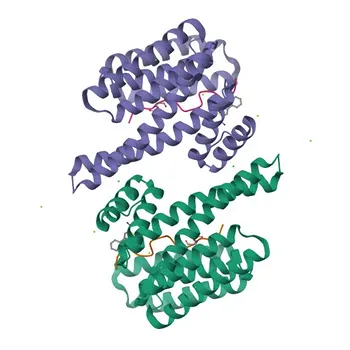
Anti-TAZ Polyclonal Antibody for WB, IHC-P, IF/ICC, ELISA - Q9GZV5
Item Number: CM0027978
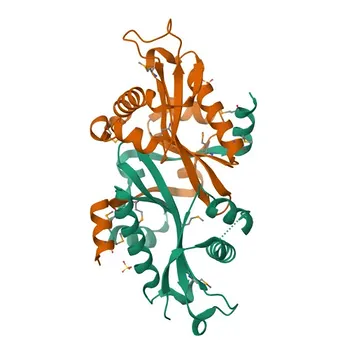
Anti-SAT1 Rabbit Polyclonal Antibody for WB, ELISA - P21673
Item Number: CM0028223
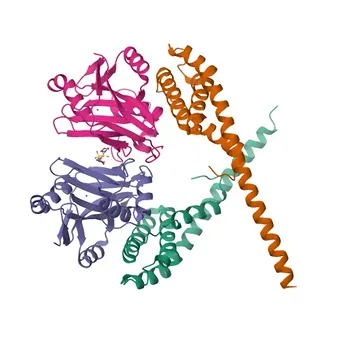
Anti-STAMBP Polyclonal Antibody for WB, IHC-P, IF/ICC, IP, ELISA - O95630
Item Number: CM0028428
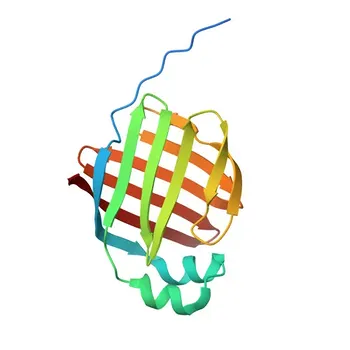
Anti-FABP1 Rabbit Polyclonal Antibody for WB, IF/ICC, ELISA - P07148
Item Number: CM0028745
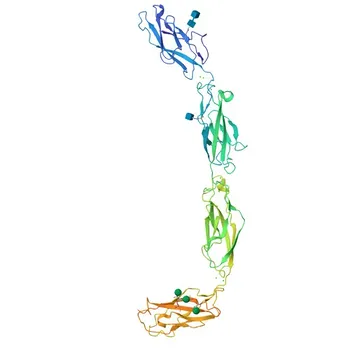
Anti-Desmoglein 3 Rabbit Polyclonal Antibody for WB and ELISA - P32926
Item Number: CM0028789
REQUEST A QUOTE
Our professional team will reply to you within one business day. Please feel free to contact us!
Related Articles
Engineering Trace-Level Sensitivity in Indirect Competitive ELISA for Small-Molecule Contaminants
How heterologous haptens, indirect signal amplification, and raw-material control push competitive ELISA sensitivity into the low-ng/mL range.
Choosing the Thermal Architecture That Makes a Molecular Assay Transferable
Compare Peltier blocks and air-heated carousels across speed, uniformity, sample flexibility, optimization, and throughput for qPCR development.
From Molecular Recognition to Reliable Results: Engineering Biosensors for Rapid Safety Testing
How antibodies and enzymes turn invisible molecular events into reliable biosensor signals, and how material quality determines test performance.
pH Is a Hidden Variable: Engineering More Reliable Competitive ELISA Kits for Small-Molecule Contaminants
Learn how precise pH control protects antibody binding, HRP activity, sensitivity, and reproducibility during competitive ELISA development.
When Fluorescence Becomes Evidence: Engineering a Competitive ELISA for Trace Molecule Detection
Learn how procedural discipline, blank correction, substrate selection, and reader configuration turn fluorometric ELISA sensitivity into reliable trace detection.
ROX in Real-Time PCR: The Optical Trade-Off Behind Precision and Multiplexing
Understand how ROX normalization corrects qPCR signal variation, how optics consume channels, and how to choose the right master mix.
When the Surface Becomes the Assay: Direct Hapten Coating for More Efficient IVD Biosensors
Compare direct hapten derivative coating with protein conjugates to improve SPR assay sensitivity, reduce antibody use, and extend chip life.
From Hapten to Reliable Result: Engineering Small-Molecule Immunoassays for Diagnostic Use
Discover how hapten chemistry, antibody selection, competitive formats, and validation determine small-molecule immunoassay performance.
Why Direct Hapten Coupling Changes the Economics of Small-Molecule Biosensors
Compare direct hapten coupling with protein conjugates to improve ligand density, signal quality, antibody efficiency, and chip reusability.
From a 36-Hour Wait to a 30-Minute Decision: The Workflow Advantage of Rapid Antibody-Based Immunosensors
Rapid antibody-based immunosensors compress analyte detection from 24–36 hours to about 30 minutes, changing workflows, decisions, and assay design.
Engineering the Weakest Link: Recombinant Antibodies for Reliable Multi-Analyte Biosensors
Learn how engineered recombinant antibodies improve multi-analyte biosensors through uniform recognition, oriented surfaces, avidity, and wider dynamic range.
qPCR Primer Design: The Small Decisions That Determine Assay Reliability
A practical guide to qPCR primer design, from amplicon length and 3' stability to validation for efficient, reproducible diagnostics.
From Molecular Binding to Manufacturing Discipline: How Reliable ELISA Kits Are Engineered
Explore the four operational mechanisms that govern ELISA kit performance, from passive coating and washing to signal generation and scalable IVD manufacturing.
The Silent Well: How No Template Controls Protect Molecular Diagnostic Integrity
A practical guide to No Template Controls: how unexpected qPCR signals reveal contamination, reagent impurities, artifacts, and broken workflow controls.
The Signal You Lose Before the qPCR Run Begins: A Practical System for Protecting Primers and Fluorogenic Probes
Learn how aliquoting, dark storage, controlled thawing, and buffer choice protect qPCR fluorescence, Cq reproducibility, and assay sensitivity.

Engineering High-Sensitivity Electrochemical Immunosensors for Small-Molecule Detection
How competitive assay design, high-affinity antibodies, HRP labels, and interface control enable reliable trace small-molecule detection.
Multiplex Micro-Array Immunoassays: The Antibody Bottleneck Behind Faster, Smarter Diagnostics
Explore how multiplex micro-array immunoassays increase speed and data density, and why antibody specificity, conjugates, and consistency limit scale.
ROX in qPCR: The Quiet Reference That Makes Diagnostic Signals Trustworthy
Learn how ROX normalizes qPCR fluorescence, stabilizes Ct calls, and shapes the trade-off between instrument compatibility and multiplexing.
Why Minor Groove Binders Turn Short Hydrolysis Probes into Precision Diagnostic Tools
MGB chemistry improves probe stability, SNP discrimination, signal-to-noise ratio, and low-copy detection in demanding molecular assays.
From Fluorescence to Diagnostic Truth: Choosing Passive Reference Dyes for qPCR Master Mixes
Learn how passive reference dyes stabilize qPCR signals, improve diagnostic reproducibility, and guide ROX formulation across instrument platforms.