Toggle Categories
Get Instant Support
Choose your preferred way to connect with our team
-
Get Free Quote Fill out form for detailed pricing
-
Send Email Detailed inquiry support
-
WhatsApp Quick mobile chat
Response Time
Within 8 hours on working days, 24 hours on holidays
Products
Anti-NDUFV1 Monoclonal Antibody for WB, IHC-P, ELISA - P49821
Item Number: CM0006899
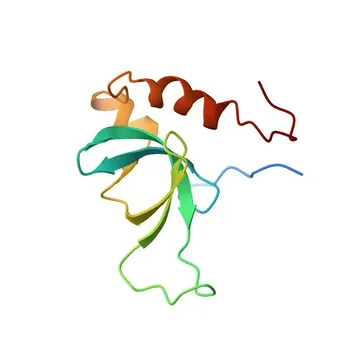
Anti-HDGF Rabbit Polyclonal Antibody for WB, IHC-P, IF/ICC, ELISA - P51858
Item Number: CM0013500
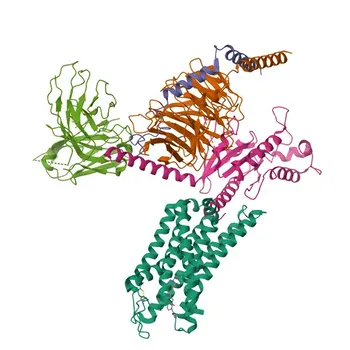
Anti-OPRK1 Rabbit Polyclonal Antibody for WB, IHC-P, IF/ICC, ELISA - P41145
Item Number: CM0014842
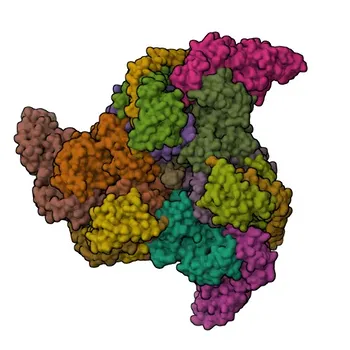
Anti-ATP6V1D Polyclonal Antibody for WB, ELISA - Q9Y5K8
Item Number: CM0015206
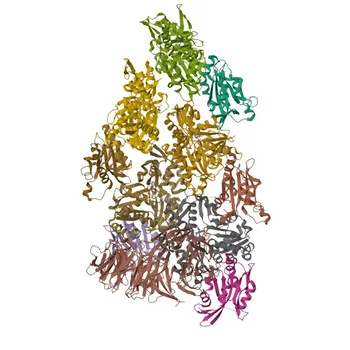
Anti-WDR1 Polyclonal Antibody for WB and ELISA - O75083
Item Number: CM0015758
Anti-USP24 Rabbit Polyclonal Antibody for WB, ELISA - Q9UPU5
Item Number: CM0015784
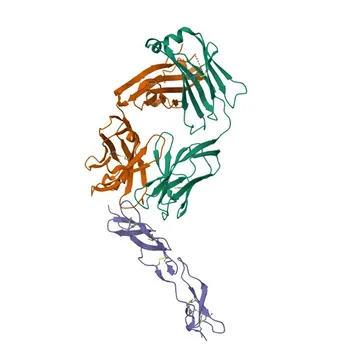
Anti-CD40 Polyclonal Antibody for WB, IHC-P, ELISA - P25942
Item Number: CM0015792
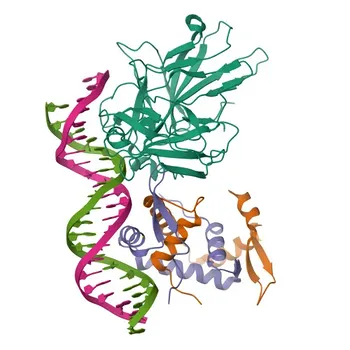
Anti-FOXP3 Rabbit Polyclonal Antibody for WB and ELISA - Q9BZS1
Item Number: CM0018197
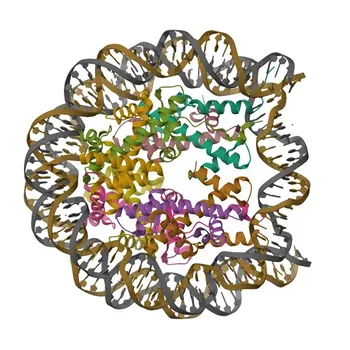
Anti-Histone H3.3 Rabbit Polyclonal Antibody for WB, ELISA - Q16695 / P68431
Item Number: CM0018497
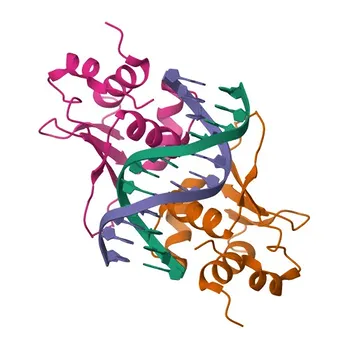
Anti-HSF1 Rabbit Polyclonal Antibody for WB, IHC-P, ELISA - Q00613
Item Number: CM0019642
Anti-ZNF521 Polyclonal Antibody for WB, ELISA - Q96K83
Item Number: CM0021004
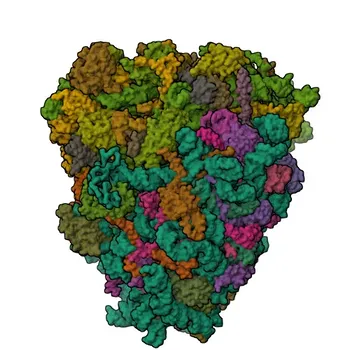
Anti-RPS19 Polyclonal Antibody for WB, ELISA - P39019
Item Number: CM0021727
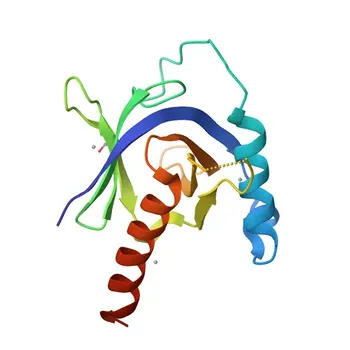
Anti-APBB1 Rabbit Polyclonal Antibody for WB, ELISA - O00213
Item Number: CM0024557
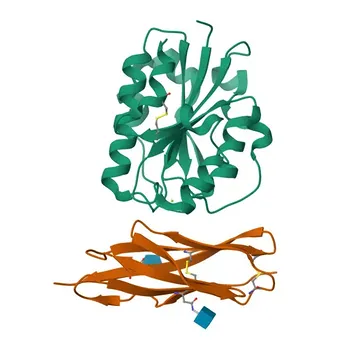
Anti-ICAM3 Rabbit Polyclonal Antibody for WB, ELISA - P32942
Item Number: CM0024941
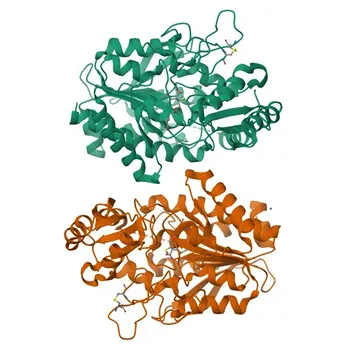
Anti-CPA1 Rabbit Polyclonal Antibody for WB, IF, ELISA - P15085
Item Number: CM0026052
![[KO Validated] Anti-SETD7 Polyclonal Antibody for WB, IF/ICC, ELISA - Q8WTS6](https://image.camelbiological.com/images/products/13989/main_image_6a6468a6462e92.97956040-small.webp)
[KO Validated] Anti-SETD7 Polyclonal Antibody for WB, IF/ICC, ELISA - Q8WTS6
Item Number: CM0027458
PDHA2 Rabbit Polyclonal Antibody (WB, IF/ICC, ELISA) - P29803
Item Number: CM0027814
PNPLA3 Rabbit Polyclonal Antibody (Adiponutrin, iPLA2-epsilon) for WB and ELISA - Q9NST1
Item Number: CM0027850
HOMER1 Rabbit Polyclonal Antibody for WB, IF-P, ELISA - Q86YM7
Item Number: CM0028642
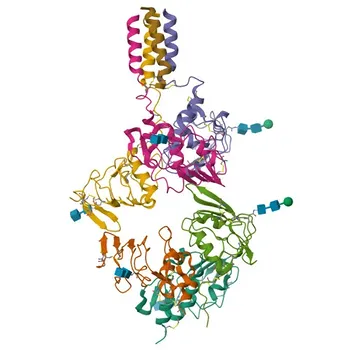
Anti-GP9 Polyclonal Antibody for WB, IHC-P, ELISA - P14770
Item Number: CM0029156
Anti-SERPINB6 Polyclonal Antibody for WB, ELISA - P35237
Item Number: CM0029239
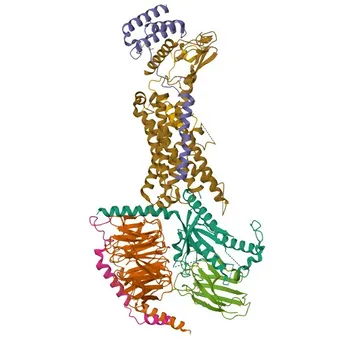
Anti-RAMP2 Rabbit Polyclonal Antibody for WB, IHC-P, ELISA - O60895
Item Number: CM0029250
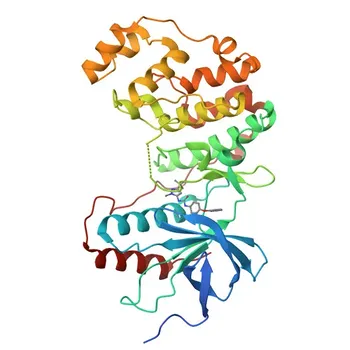
Anti-MAPK13 Rabbit Polyclonal Antibody for WB and ELISA - O15264
Item Number: CM0029292
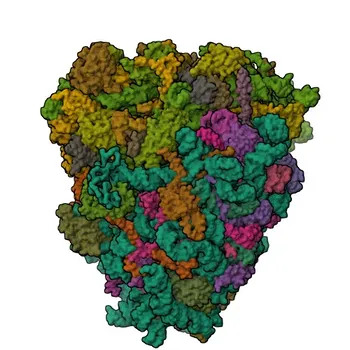
Anti-RPS7 Rabbit Polyclonal Antibody for WB, IHC-P, IF/ICC, ELISA - P62081
Item Number: CM0029585
Anti-CLTB Rabbit Polyclonal Antibody for WB, IF/ICC, ELISA - P09497
Item Number: CM0029620
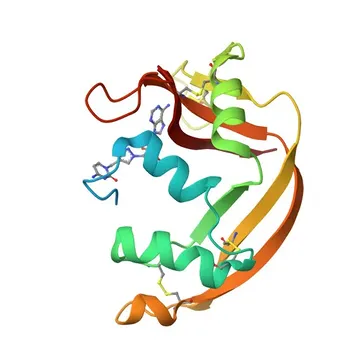
Anti-RNASE2 Rabbit Polyclonal Antibody for WB, IF-P, ELISA - P10153
Item Number: CM0030062
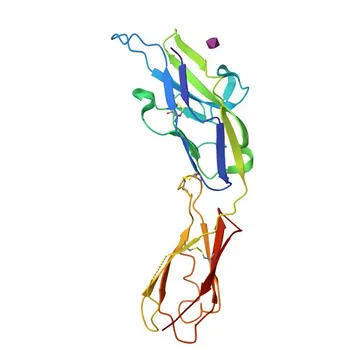
Anti-SIGLEC5 Rabbit Polyclonal Antibody for WB and ELISA - O15389
Item Number: CM0030128
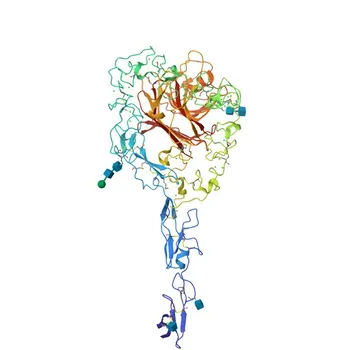
Anti-THBS2 Polyclonal Antibody for WB, ELISA - P35442
Item Number: CM0030377
REQUEST A QUOTE
Our professional team will reply to you within one business day. Please feel free to contact us!
Related Articles
Where Ct Values Become Trustworthy: Establishing the qPCR Fluorescence Threshold
Learn how baseline noise, statistical thresholds, exponential-phase placement, and validation turn qPCR fluorescence into reliable Ct values.
pH Is a Hidden Variable: Engineering More Reliable Competitive ELISA Kits for Small-Molecule Contaminants
Learn how precise pH control protects antibody binding, HRP activity, sensitivity, and reproducibility during competitive ELISA development.
Choosing the Right High-Throughput Toxicology Platform: Cell-Based Bioassays Versus ELISA
Compare cell-based bioassays and ELISA for toxicology screening, from biological relevance and throughput to validation and technical support.
The Signal You Lose Before the qPCR Run Begins: A Practical System for Protecting Primers and Fluorogenic Probes
Learn how aliquoting, dark storage, controlled thawing, and buffer choice protect qPCR fluorescence, Cq reproducibility, and assay sensitivity.
Why Minor Groove Binders Turn Short Hydrolysis Probes into Precision Diagnostic Tools
MGB chemistry improves probe stability, SNP discrimination, signal-to-noise ratio, and low-copy detection in demanding molecular assays.
qPCR Efficiency: The Mathematical Foundation of Reliable Molecular Diagnostics
Learn how qPCR efficiency is calculated, why the 90–100% range matters, and how it protects diagnostic accuracy, sensitivity, and compliance.
Competitive ELISA vs. GC/MS: Building a Faster, Defensible Strategy for Trace Detection
Learn how competitive ELISA compares with GC/MS for trace detection and how to validate immunoassay kits for reliable laboratory screening.