Toggle Categories
Get Instant Support
Choose your preferred way to connect with our team
-
Get Free Quote Fill out form for detailed pricing
-
Send Email Detailed inquiry support
-
WhatsApp Quick mobile chat
Response Time
Within 8 hours on working days, 24 hours on holidays
Polyclonal Antibodies
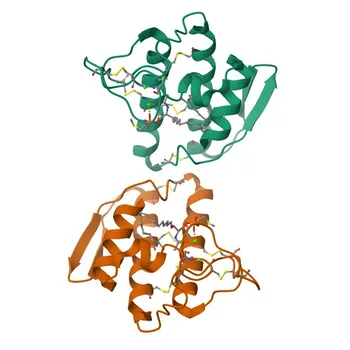
Anti-PLA2G2A Rabbit Polyclonal Antibody for WB, ELISA - P14555
Item Number: CM0013138
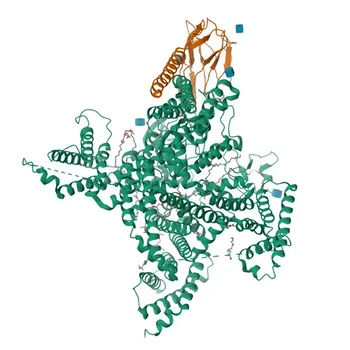
Anti-SCN3B Rabbit Polyclonal Antibody for WB, IF/ICC, ELISA - Q9NY72
Item Number: CM0014012
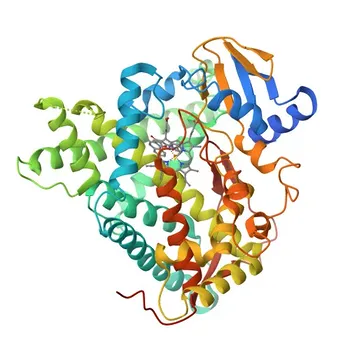
Anti-CYP1B1 Rabbit Polyclonal Antibody for WB, IF/ICC, ELISA - Q16678
Item Number: CM0014164
Anti-ZNF22 Rabbit Polyclonal Antibody for WB, ELISA - P17026
Item Number: CM0014170
Anti-CoA synthase (COASY) Rabbit Polyclonal Antibody for WB and ELISA - Q13057
Item Number: CM0014317
Anti-JAKMIP2 Polyclonal Antibody for WB, ELISA - Q96AA8
Item Number: CM0015250
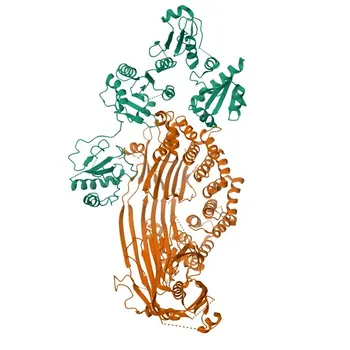
Anti-P4HB Rabbit Polyclonal Antibody for WB, IHC-P, IF/ICC, ELISA - P07237
Item Number: CM0016551

Anti-Cytokeratin 19 (KRT19) Polyclonal Antibody for WB, IHC-P, IF/ICC, ELISA - P08727
Item Number: CM0016636
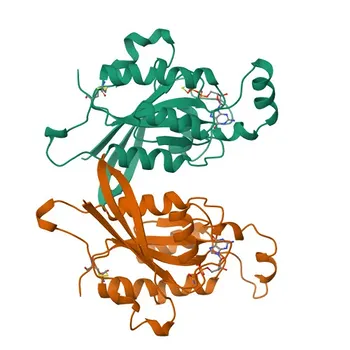
Anti-CDC42 Rabbit Polyclonal Antibody for IF/ICC, ELISA - P60953
Item Number: CM0016895
Anti-TMEM18 Polyclonal Antibody for WB, ELISA - Q96B42
Item Number: CM0023418
![[KO Validated] UBE2C Rabbit Polyclonal Antibody for WB, IF/ICC, ELISA - O00762](https://image.camelbiological.com/images/products/12176/main_image_6a643e30a38326.50505842-small.webp)
[KO Validated] UBE2C Rabbit Polyclonal Antibody for WB, IF/ICC, ELISA - O00762
Item Number: CM0023787
ZNF444 Rabbit pAb - Q8N0Y2
Item Number: CM0023988
Anti-FOPNL Polyclonal Antibody for WB, ELISA - Q96NB1
Item Number: CM0024205
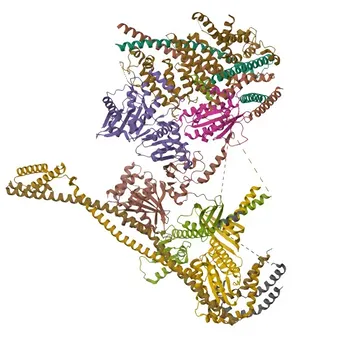
Anti-CENPK Polyclonal Antibody for WB, ELISA - Q9BS16
Item Number: CM0025405
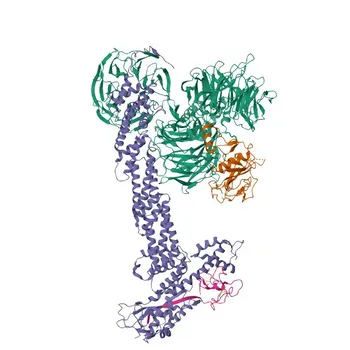
Anti-Cullin 4A Rabbit Polyclonal Antibody for WB, IF/ICC, IP, ELISA - Q13619
Item Number: CM0025738
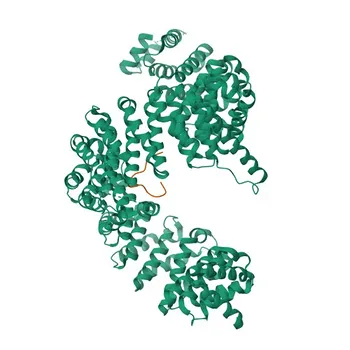
Anti-TNPO1 Polyclonal Antibody for WB, ELISA - Q92973
Item Number: CM0025842
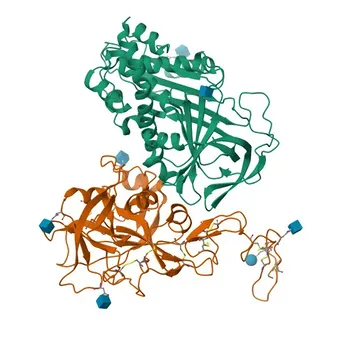
SERPINA10 Rabbit Polyclonal Antibody for WB, IF/ICC, ELISA - Q9UK55
Item Number: CM0026739
LECT1 Rabbit Polyclonal Antibody for WB, IF/ICC, ELISA - O75829
Item Number: CM0026872
Anti-PKA C-beta (PRKACB) Rabbit Polyclonal Antibody for WB, IHC-P, IF/ICC, ELISA - P22694
Item Number: CM0027759
Anti-NSMF Polyclonal Antibody for WB, ELISA - Q6X4W1
Item Number: CM0027837
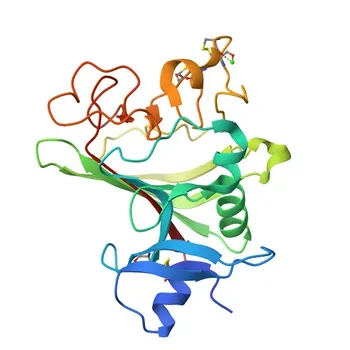
Anti-ANGPT1 Rabbit Polyclonal Antibody for WB, IHC-P, ELISA - Q15389
Item Number: CM0028210
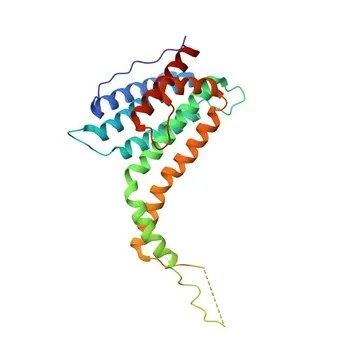
Anti-AFF4 Rabbit Polyclonal Antibody for WB, ELISA - Q9UHB7
Item Number: CM0028559
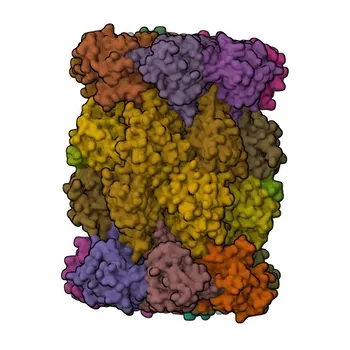
Anti-PSMA5 Rabbit Polyclonal Antibody for WB, IHC-P, IF/ICC, ELISA - P28066
Item Number: CM0028874
BGN Rabbit Polyclonal Antibody for WB, ELISA - P21810
Item Number: CM0028907
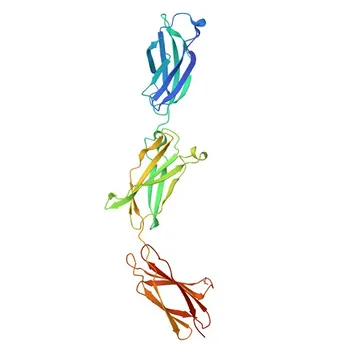
Anti-PTPRD Polyclonal Antibody for WB, IHC-P, ELISA - P23468
Item Number: CM0028949
Anti-PKC zeta Polyclonal Antibody for WB, IF/ICC, ELISA - Q05513
Item Number: CM0029470
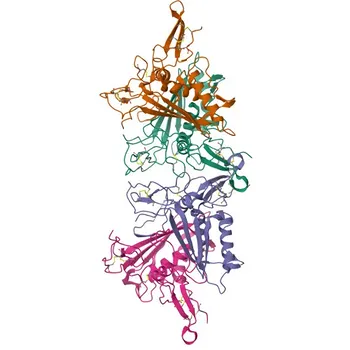
Anti-TROP-2 Polyclonal Antibody for WB, IF/ICC, IHC-P, ELISA - P09758
Item Number: CM0029748
Anti-KDM7A Rabbit Polyclonal Antibody for WB and ELISA - Q3UWM4
Item Number: CM0029883
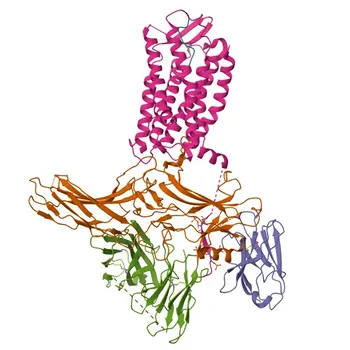
Anti-RARRES2 Rabbit Polyclonal Antibody for WB, IF/ICC, ELISA - Q99969
Item Number: CM0030954
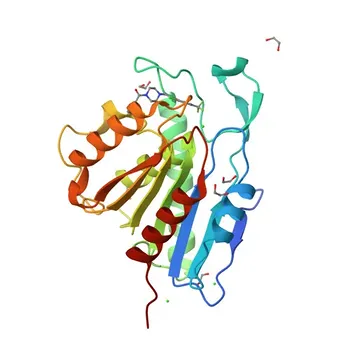
Anti-LYPLA1 Rabbit Polyclonal Antibody for WB, IHC-P, ELISA - O75608
Item Number: CM0031032
REQUEST A QUOTE
Our professional team will reply to you within one business day. Please feel free to contact us!
Related Articles
Choosing the Thermal Architecture That Makes a Molecular Assay Transferable
Compare Peltier blocks and air-heated carousels across speed, uniformity, sample flexibility, optimization, and throughput for qPCR development.
Where Ct Values Become Trustworthy: Establishing the qPCR Fluorescence Threshold
Learn how baseline noise, statistical thresholds, exponential-phase placement, and validation turn qPCR fluorescence into reliable Ct values.
From Molecular Recognition to Reliable Results: Engineering Biosensors for Rapid Safety Testing
How antibodies and enzymes turn invisible molecular events into reliable biosensor signals, and how material quality determines test performance.
pH Is a Hidden Variable: Engineering More Reliable Competitive ELISA Kits for Small-Molecule Contaminants
Learn how precise pH control protects antibody binding, HRP activity, sensitivity, and reproducibility during competitive ELISA development.
When Fluorescence Becomes Evidence: Engineering a Competitive ELISA for Trace Molecule Detection
Learn how procedural discipline, blank correction, substrate selection, and reader configuration turn fluorometric ELISA sensitivity into reliable trace detection.
Why Direct Hapten Coupling Changes the Economics of Small-Molecule Biosensors
Compare direct hapten coupling with protein conjugates to improve ligand density, signal quality, antibody efficiency, and chip reusability.
qPCR Primer Design: The Small Decisions That Determine Assay Reliability
A practical guide to qPCR primer design, from amplicon length and 3' stability to validation for efficient, reproducible diagnostics.
From Molecular Binding to Manufacturing Discipline: How Reliable ELISA Kits Are Engineered
Explore the four operational mechanisms that govern ELISA kit performance, from passive coating and washing to signal generation and scalable IVD manufacturing.
The Silent Well: How No Template Controls Protect Molecular Diagnostic Integrity
A practical guide to No Template Controls: how unexpected qPCR signals reveal contamination, reagent impurities, artifacts, and broken workflow controls.
The Signal You Lose Before the qPCR Run Begins: A Practical System for Protecting Primers and Fluorogenic Probes
Learn how aliquoting, dark storage, controlled thawing, and buffer choice protect qPCR fluorescence, Cq reproducibility, and assay sensitivity.
Why Open Chemistry and Flexible Reaction Volumes Define Better Diagnostic PCR Systems
Learn how open chemistry compatibility and flexible reaction volumes improve PCR assay control, sensitivity, cost, scalability, and supply independence.
ROX in qPCR: The Quiet Reference That Makes Diagnostic Signals Trustworthy
Learn how ROX normalizes qPCR fluorescence, stabilizes Ct calls, and shapes the trade-off between instrument compatibility and multiplexing.
qPCR Efficiency: The Mathematical Foundation of Reliable Molecular Diagnostics
Learn how qPCR efficiency is calculated, why the 90–100% range matters, and how it protects diagnostic accuracy, sensitivity, and compliance.
ROX, Optical Architecture, and the Hidden Ceiling of Multiplex qPCR
How instrument optics determine ROX requirements, consume detection channels, and shape multiplex qPCR design, reagent logistics, and kit strategy.
When a Surface Becomes a Sensor: Choosing Between QCM, SAW, and Six Classes of Quality Detection
Explore six sensor families, how QCM and SAW convert molecular binding into frequency shifts, and why surface chemistry determines diagnostic reliability.
The Silent Correction Behind Reliable qPCR: Passive Reference Dyes, Rn, and Assay Design
Learn how passive reference dyes normalize qPCR noise, how Rn is calculated, and when ROX affects compatibility, accuracy, and multiplexing.
Designing Generic Antibodies: How Hapten Engineering Enables Broad-Spectrum Pesticide Detection
Learn how strategic hapten design exposes conserved pesticide structures, improves antibody cross-reactivity, and guides reliable multi-residue assays.