Toggle Categories
Get Instant Support
Choose your preferred way to connect with our team
-
Get Free Quote Fill out form for detailed pricing
-
Send Email Detailed inquiry support
-
WhatsApp Quick mobile chat
Response Time
Within 8 hours on working days, 24 hours on holidays
Monoclonal Antibodies
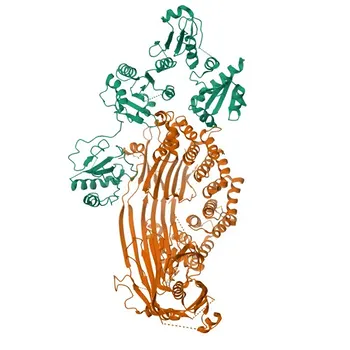
Anti-P4HB Rabbit Monoclonal Antibody for WB, IHC-P, ELISA - P07237
Item Number: CM0002132
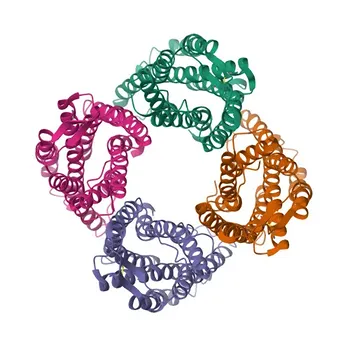
Anti-CXCR4 Rabbit Monoclonal Antibody for WB, ELISA - P61073
Item Number: CM0002616
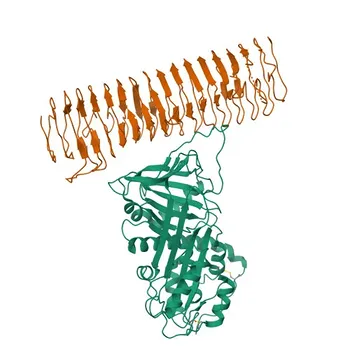
Anti-SERPING1 Rabbit Monoclonal Antibody for WB and ELISA - P05155
Item Number: CM0002798
PE Rabbit anti-Human CD24 Monoclonal Antibody for Flow Cytometry - P25063
Item Number: CM0004190
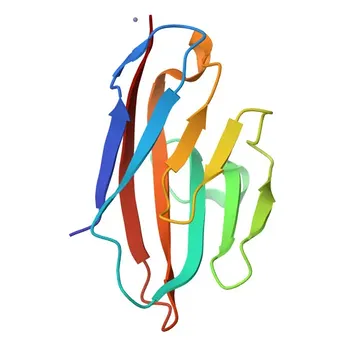
Rabbit anti-Human CEACAM6 Monoclonal Antibody for Flow Cytometry - P40199
Item Number: CM0004281
Rabbit anti-Human/Monkey Ki67 Monoclonal Antibody for Intracellular Flow Cytometry - P46013
Item Number: CM0004283
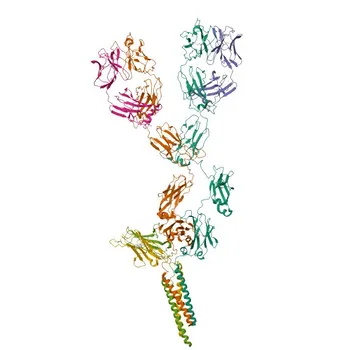
Rabbit anti-Mouse IgM Monoclonal Antibody for Flow Cytometry - P01872
Item Number: CM0004306
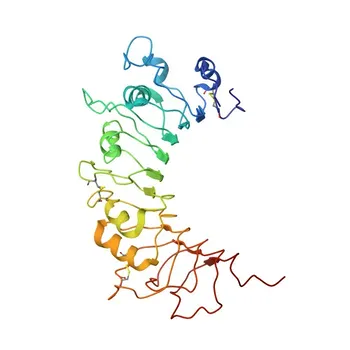
Rabbit anti-Human/Monkey CD14 Monoclonal Antibody for FC - P08571
Item Number: CM0004313
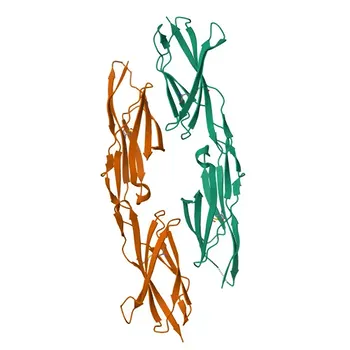
Anti-Human CD31/PECAM1 Monoclonal Antibody for FC - P16284
Item Number: CM0004335
Anti-Human FATP1 () Rabbit Monoclonal Antibody for Flow Cytometry - Q6PCB7
Item Number: CM0004338
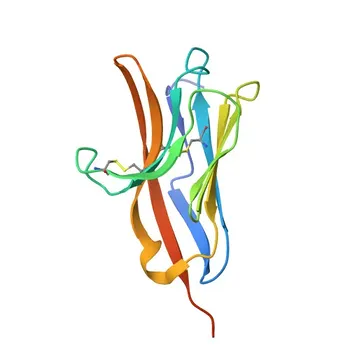
Anti-Human CD300F/IREM-1 Monoclonal Antibody for FC - Q8TDQ1
Item Number: CM0004341
Anti-Mouse CD82 Monoclonal Antibody for Flow Cytometry - P40237
Item Number: CM0004353
Rabbit IgG isotype control -
Item Number: CM0004379
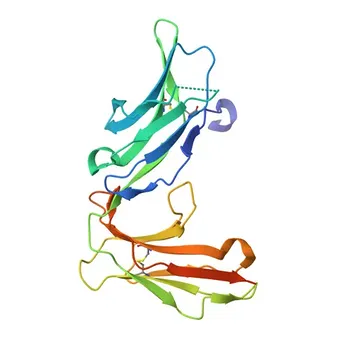
Rabbit anti-Human CD89 Monoclonal Antibody for FC - P24071
Item Number: CM0004381
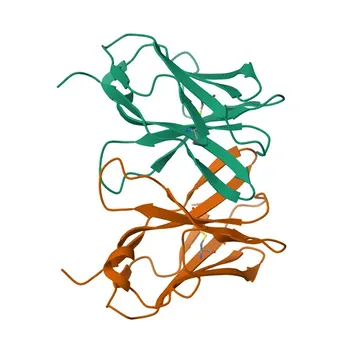
Rabbit anti-Cat CD8 alpha Monoclonal Antibody for FC - P41688
Item Number: CM0004404
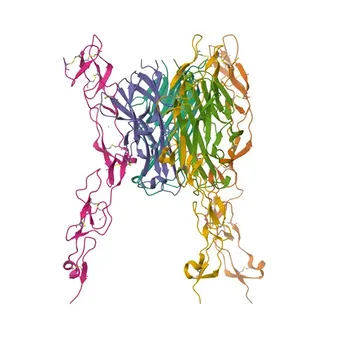
Rabbit anti-Mouse RANK/CD265 Monoclonal Antibody for Flow Cytometry - O35305
Item Number: CM0004422
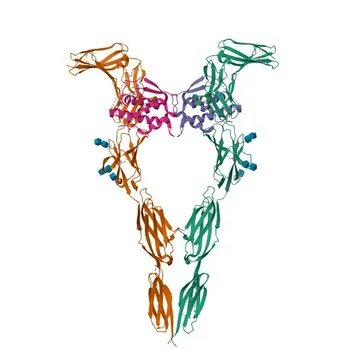
Rabbit anti-Human CD117/c-Kit mAb for Flow Cytometry - P10721
Item Number: CM0004440
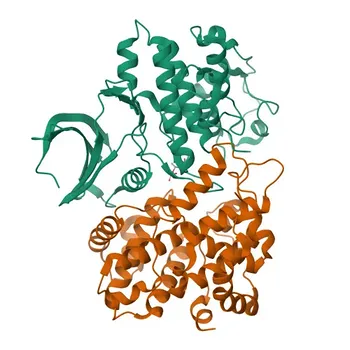
Anti-Cyclin E1 Monoclonal Antibody for WB, IHC-P, ELISA - P24864
Item Number: CM0005144
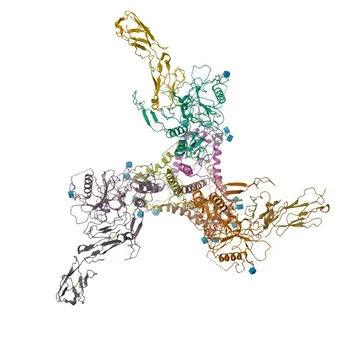
Anti-CD4 Monoclonal Antibody () for Flow Cytometry - P01730
Item Number: CM0005343
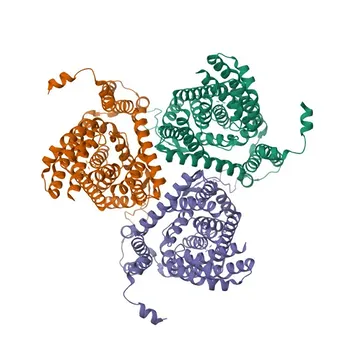
Anti-EAAT1/SLC1A3 Monoclonal Antibody for WB, IF-P, IHC-P, ELISA - P43003
Item Number: CM0005614
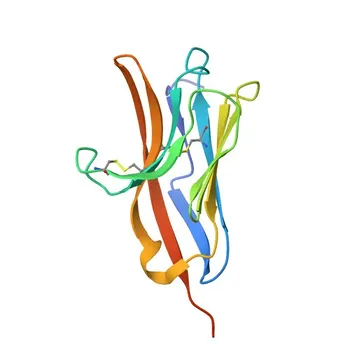
Rabbit anti-Human CD300F/IREM-1 Monoclonal Antibody for FC - Q8TDQ1
Item Number: CM0005706
![Anti-SND1 Rabbit Monoclonal Antibody [KO Validated] for WB, IHC-P, IF/ICC, ELISA - Q7KZF4](https://image.camelbiological.com/images/products/3070/main_image_6a633c054a7260.88035380-small.webp)
Anti-SND1 Rabbit Monoclonal Antibody [KO Validated] for WB, IHC-P, IF/ICC, ELISA - Q7KZF4
Item Number: CM0005766
Anti-Human Neurogranin (NRGN) Rabbit Monoclonal Antibody for WB, IHC-P, ELISA - Q92686
Item Number: CM0007498
Anti-KPNB1 Rabbit Monoclonal Antibody for WB, IHC-P, ELISA - Q14974
Item Number: CM0007710
Anti-CD11a Rabbit Monoclonal Antibody for WB, FC, ELISA - P24063
Item Number: CM0008430
PE/Cyanine7 Rabbit anti-Mouse CD25 Monoclonal Antibody for FC - P01590
Item Number: CM0012637
Rabbit anti-Human/Monkey CD8a mAb - P01732
Item Number: CM0012652
REQUEST A QUOTE
Our professional team will reply to you within one business day. Please feel free to contact us!
Related Articles
Choosing the Thermal Architecture That Makes a Molecular Assay Transferable
Compare Peltier blocks and air-heated carousels across speed, uniformity, sample flexibility, optimization, and throughput for qPCR development.
From Molecular Recognition to Reliable Results: Engineering Biosensors for Rapid Safety Testing
How antibodies and enzymes turn invisible molecular events into reliable biosensor signals, and how material quality determines test performance.
ROX in Real-Time PCR: The Optical Trade-Off Behind Precision and Multiplexing
Understand how ROX normalization corrects qPCR signal variation, how optics consume channels, and how to choose the right master mix.
When the Surface Becomes the Assay: Direct Hapten Coating for More Efficient IVD Biosensors
Compare direct hapten derivative coating with protein conjugates to improve SPR assay sensitivity, reduce antibody use, and extend chip life.
Why Direct Hapten Coupling Changes the Economics of Small-Molecule Biosensors
Compare direct hapten coupling with protein conjugates to improve ligand density, signal quality, antibody efficiency, and chip reusability.
qPCR Primer Design: The Small Decisions That Determine Assay Reliability
A practical guide to qPCR primer design, from amplicon length and 3' stability to validation for efficient, reproducible diagnostics.
The Silent Well: How No Template Controls Protect Molecular Diagnostic Integrity
A practical guide to No Template Controls: how unexpected qPCR signals reveal contamination, reagent impurities, artifacts, and broken workflow controls.
Designing Competitive ELISAs for Small Molecules: The System Behind Sensitivity and Working Range
Learn how antibody affinity, HRP conjugates, and fluorescent substrates work together to improve competitive ELISA sensitivity, range, and reproducibility.
ROX in qPCR: The Quiet Reference That Makes Diagnostic Signals Trustworthy
Learn how ROX normalizes qPCR fluorescence, stabilizes Ct calls, and shapes the trade-off between instrument compatibility and multiplexing.
Why Minor Groove Binders Turn Short Hydrolysis Probes into Precision Diagnostic Tools
MGB chemistry improves probe stability, SNP discrimination, signal-to-noise ratio, and low-copy detection in demanding molecular assays.
From Fluorescence to Diagnostic Truth: Choosing Passive Reference Dyes for qPCR Master Mixes
Learn how passive reference dyes stabilize qPCR signals, improve diagnostic reproducibility, and guide ROX formulation across instrument platforms.
When a Surface Becomes a Sensor: Choosing Between QCM, SAW, and Six Classes of Quality Detection
Explore six sensor families, how QCM and SAW convert molecular binding into frequency shifts, and why surface chemistry determines diagnostic reliability.