Toggle Categories
Get Instant Support
Choose your preferred way to connect with our team
-
Get Free Quote Fill out form for detailed pricing
-
Send Email Detailed inquiry support
-
WhatsApp Quick mobile chat
Response Time
Within 8 hours on working days, 24 hours on holidays
Antibodies
Anti-PAK1IP1 Polyclonal Antibody for WB, ELISA - Q9NWT1
Item Number: CM0021925
Anti-IFI16 Rabbit Polyclonal Antibody - Q16666
Item Number: CM0022818
Anti-RPS3 Rabbit Polyclonal Antibody for WB, IHC-P, IF/ICC, ELISA - P23396
Item Number: CM0024016
Anti-FABPI Polyclonal Antibody for WB, ELISA - P12104
Item Number: CM0024084

Anti-Prion Protein Polyclonal Antibody for WB, ELISA - P04156
Item Number: CM0024107
Anti-FOXA1 Rabbit Polyclonal Antibody for WB, IHC-P, ELISA - P55317
Item Number: CM0024426
Anti-TMF1 Rabbit Polyclonal Antibody for WB, ELISA - P82094
Item Number: CM0024436
Anti-IRAK4 Polyclonal Antibody for WB, IF/ICC, ELISA - Q9NWZ3
Item Number: CM0024586
Anti-LAMP3 Rabbit Polyclonal Antibody for WB, IHC-P, ELISA - Q9UQV4
Item Number: CM0024706
Anti-PRKACG Rabbit Polyclonal Antibody for WB & ELISA - P22612
Item Number: CM0024888
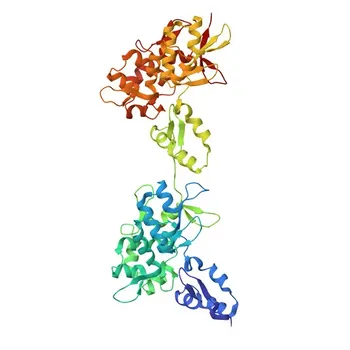
Anti-Desmoplakin Polyclonal Antibody for WB, IHC-P, ELISA - P15924
Item Number: CM0025907
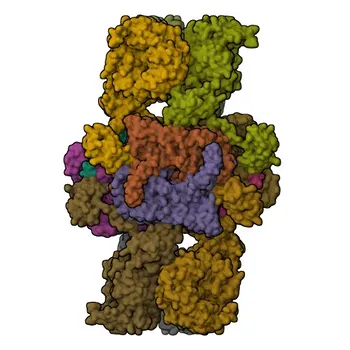
Anti-MCCC2 Rabbit Polyclonal Antibody for WB, IHC-P, ELISA - Q9HCC0
Item Number: CM0025965
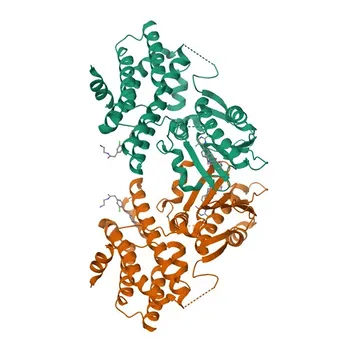
Anti-PDK2 Rabbit Polyclonal Antibody for WB, IF/ICC, ELISA - Q15119
Item Number: CM0026357
Anti-SLAMF7 Polyclonal Antibody for WB and ELISA - Q9NQ25
Item Number: CM0027885
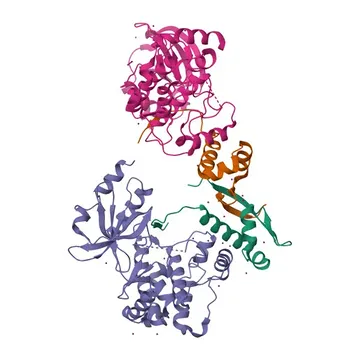
Anti-PAK1 Rabbit Polyclonal Antibody for WB, IHC-P, ELISA - Q13153
Item Number: CM0029234
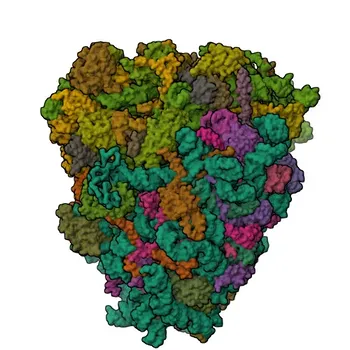
Anti-RPS10 Polyclonal Antibody for WB, IHC-P, IF/ICC, ELISA - P46783
Item Number: CM0029290
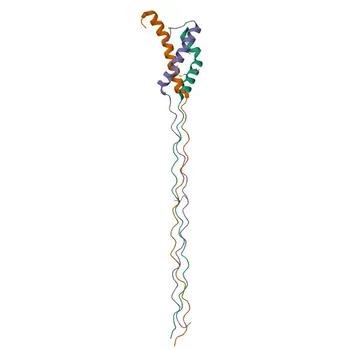
COL9A3 Rabbit Polyclonal Antibody for IHC-P and ELISA - Q14050
Item Number: CM0029381
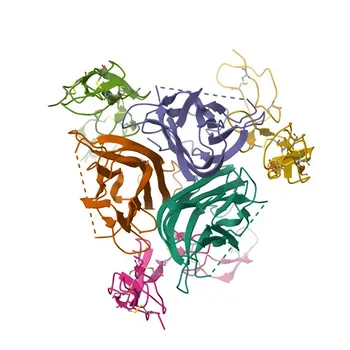
Anti-TNFRSF10A Polyclonal Antibody for WB, ELISA - O00220
Item Number: CM0029628
Anti-JMJD4 Polyclonal Antibody for WB, IF/ICC, ELISA - Q9H9V9
Item Number: CM0029925
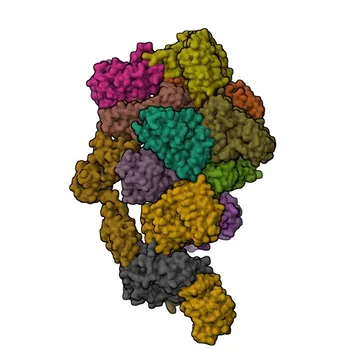
Anti-EIF2B2/eIF2Bbeta Polyclonal Antibody for WB, IHC-P, IF/ICC, IP, ELISA - P49770
Item Number: CM0029937
Anti-SP1 Rabbit Polyclonal Antibody for IHC-P, ELISA - P08047
Item Number: CM0030198
![[KO Validated] Anti-CSDE1 Rabbit Polyclonal Antibody for WB, IF/ICC, IP, ELISA - O75534](https://image.camelbiological.com/images/products/15391/main_image_6a647c8083cde8.52955227-small.webp)
[KO Validated] Anti-CSDE1 Rabbit Polyclonal Antibody for WB, IF/ICC, IP, ELISA - O75534
Item Number: CM0030220
Anti-KLF15 Polyclonal Antibody for WB, ELISA - Q9UIH9
Item Number: CM0030309
Anti-AGK Rabbit Polyclonal Antibody for WB, ELISA - Q53H12
Item Number: CM0030337
Anti-FGF6 Polyclonal Antibody for WB, ELISA - P10767
Item Number: CM0030563
ANAPC10 Rabbit pAb - Q9UM13
Item Number: CM0030647
Anti-ALAD Rabbit Polyclonal Antibody for WB, ELISA - P13716
Item Number: CM0030711
Anti-PAK6 Rabbit Polyclonal Antibody for WB, ELISA - Q9NQU5
Item Number: CM0030803
AGR2 Rabbit Polyclonal Antibody for WB, IHC-P, IF/ICC, ELISA - O95994
Item Number: CM0030844
REQUEST A QUOTE
Our professional team will reply to you within one business day. Please feel free to contact us!
Related Articles
The Three-Room PCR Strategy: Designing a Laboratory Where Contamination Has Nowhere to Go
A practical three-room PCR contamination-control strategy for laboratories, covering airflow, human behavior, equipment segregation, and reliable results.
Choosing the Thermal Architecture That Makes a Molecular Assay Transferable
Compare Peltier blocks and air-heated carousels across speed, uniformity, sample flexibility, optimization, and throughput for qPCR development.
Where Ct Values Become Trustworthy: Establishing the qPCR Fluorescence Threshold
Learn how baseline noise, statistical thresholds, exponential-phase placement, and validation turn qPCR fluorescence into reliable Ct values.
pH Is a Hidden Variable: Engineering More Reliable Competitive ELISA Kits for Small-Molecule Contaminants
Learn how precise pH control protects antibody binding, HRP activity, sensitivity, and reproducibility during competitive ELISA development.
Choosing the Right High-Throughput Toxicology Platform: Cell-Based Bioassays Versus ELISA
Compare cell-based bioassays and ELISA for toxicology screening, from biological relevance and throughput to validation and technical support.
Engineering the Weakest Link: Recombinant Antibodies for Reliable Multi-Analyte Biosensors
Learn how engineered recombinant antibodies improve multi-analyte biosensors through uniform recognition, oriented surfaces, avidity, and wider dynamic range.
qPCR Primer Design: The Small Decisions That Determine Assay Reliability
A practical guide to qPCR primer design, from amplicon length and 3' stability to validation for efficient, reproducible diagnostics.
Why Similar Molecules Produce Different ELISA Sensitivity: The Engineering of PCP and PCA Assays
Explore how antibody affinity, hapten architecture, conjugate design, and sample extraction shape sensitivity in competitive PCP and PCA ELISAs.
The Signal You Lose Before the qPCR Run Begins: A Practical System for Protecting Primers and Fluorogenic Probes
Learn how aliquoting, dark storage, controlled thawing, and buffer choice protect qPCR fluorescence, Cq reproducibility, and assay sensitivity.
Why Open Chemistry and Flexible Reaction Volumes Define Better Diagnostic PCR Systems
Learn how open chemistry compatibility and flexible reaction volumes improve PCR assay control, sensitivity, cost, scalability, and supply independence.
ROX in qPCR: The Quiet Reference That Makes Diagnostic Signals Trustworthy
Learn how ROX normalizes qPCR fluorescence, stabilizes Ct calls, and shapes the trade-off between instrument compatibility and multiplexing.
Why Minor Groove Binders Turn Short Hydrolysis Probes into Precision Diagnostic Tools
MGB chemistry improves probe stability, SNP discrimination, signal-to-noise ratio, and low-copy detection in demanding molecular assays.
qPCR Efficiency: The Mathematical Foundation of Reliable Molecular Diagnostics
Learn how qPCR efficiency is calculated, why the 90–100% range matters, and how it protects diagnostic accuracy, sensitivity, and compliance.
Competitive ELISA vs. GC/MS: Building a Faster, Defensible Strategy for Trace Detection
Learn how competitive ELISA compares with GC/MS for trace detection and how to validate immunoassay kits for reliable laboratory screening.
Designing Generic Antibodies: How Hapten Engineering Enables Broad-Spectrum Pesticide Detection
Learn how strategic hapten design exposes conserved pesticide structures, improves antibody cross-reactivity, and guides reliable multi-residue assays.