Toggle Categories
Get Instant Support
Choose your preferred way to connect with our team
-
Get Free Quote Fill out form for detailed pricing
-
Send Email Detailed inquiry support
-
WhatsApp Quick mobile chat
Response Time
Within 8 hours on working days, 24 hours on holidays
Antibodies
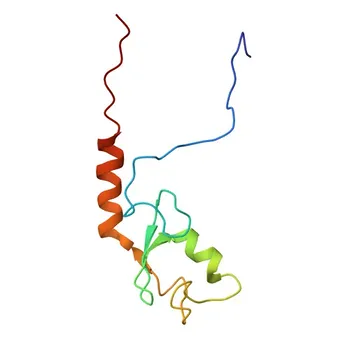
Anti-UBE4A Monoclonal Antibody for WB, ELISA - Q14139
Item Number: CM0003092
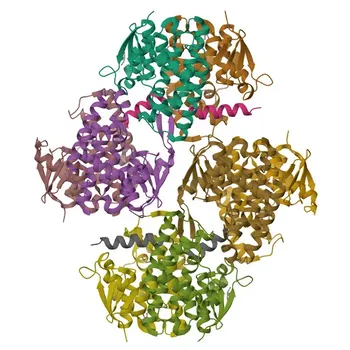
Anti-eEF1G Monoclonal Antibody for WB, IHC-P, IF/ICC, ELISA - P26641
Item Number: CM0006053
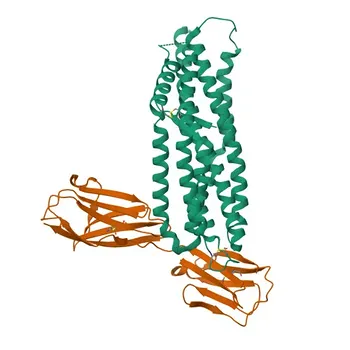
Anti-CD147/BSG Rabbit Monoclonal Antibody for WB and ELISA - P35613
Item Number: CM0006123
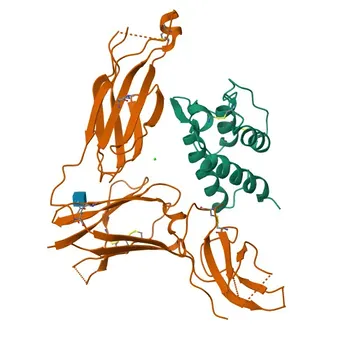
KD Validated Anti-IL13 Monoclonal Antibody for WB and ELISA - P35225
Item Number: CM0006451
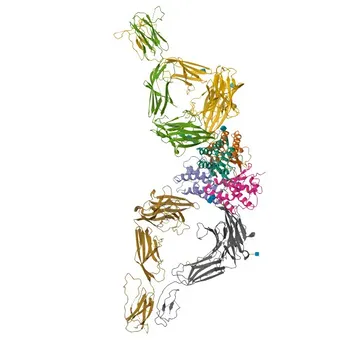
Anti-Flt3/CD135 Monoclonal Antibody for FC, ELISA - P36888
Item Number: CM0006531
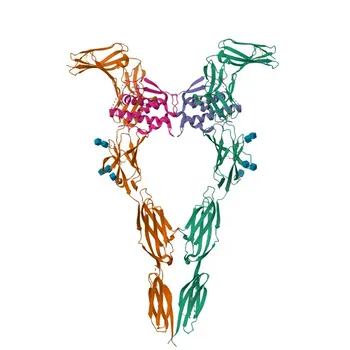
Anti-CD117/c-Kit Rabbit Monoclonal Antibody for WB, ELISA - P10721
Item Number: CM0006639
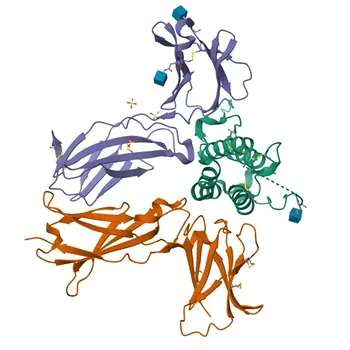
Anti-TSLP Rabbit Monoclonal Antibody for WB, IHC, IF, ELISA - Q969D9
Item Number: CM0007391
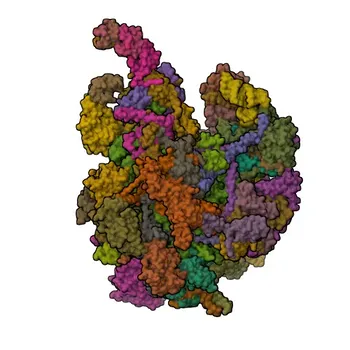
Anti-MRRF Monoclonal Antibody for WB, ELISA - Q96E11
Item Number: CM0007551
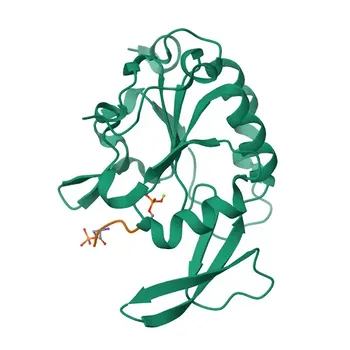
Anti-REST/NRSF Rabbit Monoclonal Antibody for WB, IP, ELISA - Q13127
Item Number: CM0007654
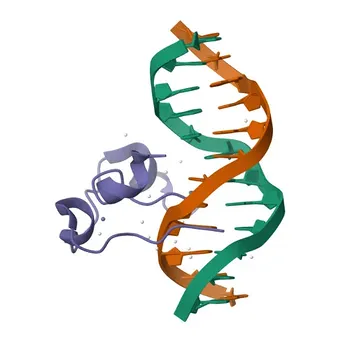
Anti-TET1 Monoclonal Antibody for WB and ELISA - Q8NFU7
Item Number: CM0007695
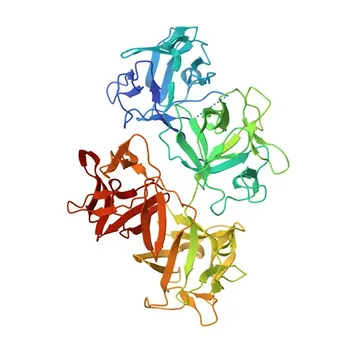
Anti-Fascin/FSCN1 Monoclonal Antibody for WB, IHC-P, ELISA - Q16658
Item Number: CM0007787
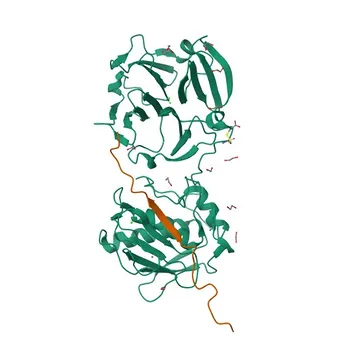
Anti-MMP13 Monoclonal Antibody for WB, ELISA - P45452
Item Number: CM0008001
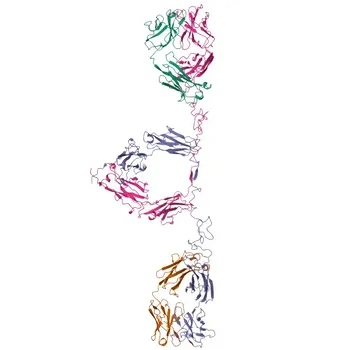
APC/Cyanine7 Rabbit Anti-Human/Monkey IgD Monoclonal Antibody for Flow Cytometry - P01880
Item Number: CM0008027
Rabbit anti-Mouse/Rat CD54 Monoclonal Antibody for Flow Cytometry - P13597
Item Number: CM0008395
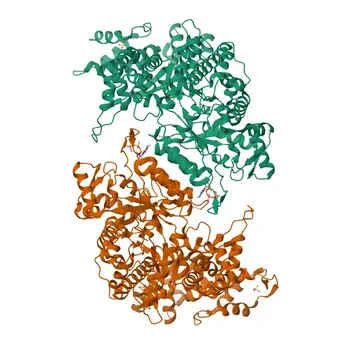
Anti-RRM1 Monoclonal Antibody for WB, ELISA - P23921
Item Number: CM0008661
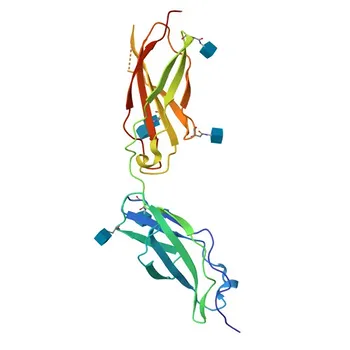
Rabbit anti-Human CD171/L1CAM Monoclonal Antibody for Flow Cytometry - P32004
Item Number: CM0008875
Anti-Synaptophysin Rabbit Monoclonal Antibody for WB, IF-P, IHC-P, ELISA - P08247
Item Number: CM0008990
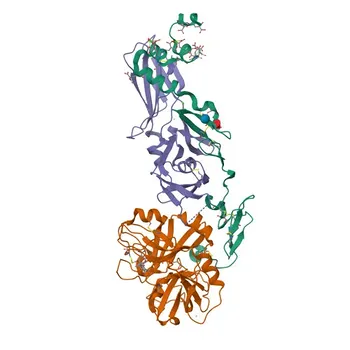
Rabbit anti-Human CD142 Monoclonal Antibody for Flow Cytometry - P13726
Item Number: CM0009108
Anti-CD351/FCAMR Monoclonal Antibody for ELISA, IF/ICC, FC - Q8WWV6
Item Number: CM0009493
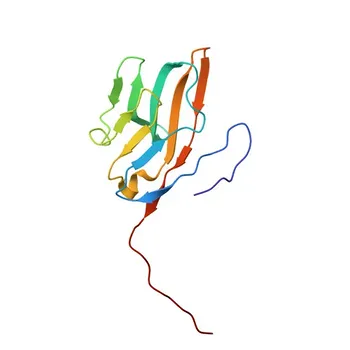
PE Rabbit anti-Human CD48 Monoclonal Antibody for Flow Cytometry - P09326
Item Number: CM0010296

Anti-β-Amyloid Monoclonal Antibody for IF-P, IHC-P, DB, ELISA - P05067
Item Number: CM0010487
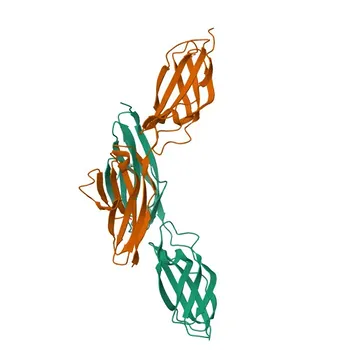
PE Mouse anti-Human CD56 Monoclonal Antibody for Flow Cytometry - P13591
Item Number: CM0011175
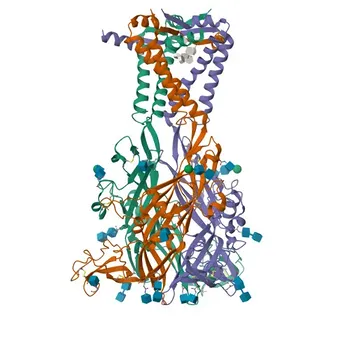
Anti-P2RX4 Rabbit PolymAb® for WB, IF/ICC, IF-P, IHC-P, ELISA - Q99571
Item Number: CM0011340
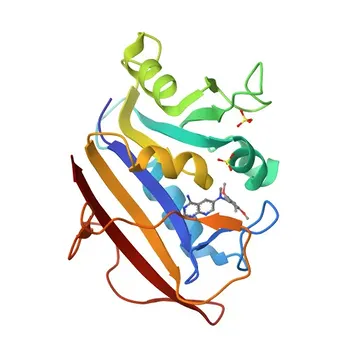
DHFR Rabbit mAb for WB, ELISA - P00374
Item Number: CM0011415
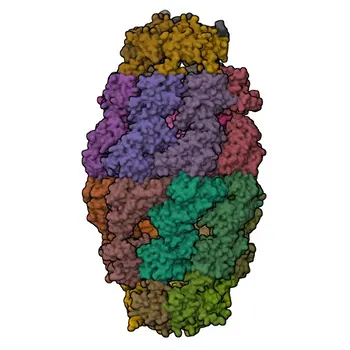
Anti-HSPE1/HSP10/CPN10 Rabbit Monoclonal Antibody for WB, IHC-P, ELISA - P61604
Item Number: CM0011601
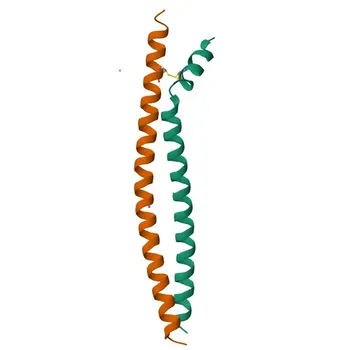
Anti-JunD Rabbit Monoclonal Antibody for WB, ChIP, CUT&Tag, ELISA - P17535
Item Number: CM0011633
Anti-GCLC Monoclonal Antibody for WB, IF/ICC, ELISA - P48506
Item Number: CM0011787
APC-conjugated Rabbit anti-Human CD30 Monoclonal Antibody for Flow Cytometry - P28908
Item Number: CM0011903
HES5 Rabbit Monoclonal Antibody for WB, IHC-P, ELISA - Q5TA89
Item Number: CM0011972
PE Rabbit anti-Mouse IL1R1/CD121a Monoclonal Antibody for Flow Cytometry - P13504
Item Number: CM0012701
REQUEST A QUOTE
Our professional team will reply to you within one business day. Please feel free to contact us!
Related Articles
Where Ct Values Become Trustworthy: Establishing the qPCR Fluorescence Threshold
Learn how baseline noise, statistical thresholds, exponential-phase placement, and validation turn qPCR fluorescence into reliable Ct values.
When Protein-Hapten Biosensor Chips Meet Blood Serum: The Hidden Cost of a Convenient Surface
Protein-hapten biosensor chips simplify immobilization, but serum interference and regeneration damage can erode sensitivity, precision, and reuse.
From Molecular Recognition to Reliable Results: Engineering Biosensors for Rapid Safety Testing
How antibodies and enzymes turn invisible molecular events into reliable biosensor signals, and how material quality determines test performance.
pH Is a Hidden Variable: Engineering More Reliable Competitive ELISA Kits for Small-Molecule Contaminants
Learn how precise pH control protects antibody binding, HRP activity, sensitivity, and reproducibility during competitive ELISA development.
When Fluorescence Becomes Evidence: Engineering a Competitive ELISA for Trace Molecule Detection
Learn how procedural discipline, blank correction, substrate selection, and reader configuration turn fluorometric ELISA sensitivity into reliable trace detection.
ROX in Real-Time PCR: The Optical Trade-Off Behind Precision and Multiplexing
Understand how ROX normalization corrects qPCR signal variation, how optics consume channels, and how to choose the right master mix.
Why Direct Hapten Coupling Changes the Economics of Small-Molecule Biosensors
Compare direct hapten coupling with protein conjugates to improve ligand density, signal quality, antibody efficiency, and chip reusability.
Engineering the Weakest Link: Recombinant Antibodies for Reliable Multi-Analyte Biosensors
Learn how engineered recombinant antibodies improve multi-analyte biosensors through uniform recognition, oriented surfaces, avidity, and wider dynamic range.
qPCR Primer Design: The Small Decisions That Determine Assay Reliability
A practical guide to qPCR primer design, from amplicon length and 3' stability to validation for efficient, reproducible diagnostics.
From Molecular Binding to Manufacturing Discipline: How Reliable ELISA Kits Are Engineered
Explore the four operational mechanisms that govern ELISA kit performance, from passive coating and washing to signal generation and scalable IVD manufacturing.
The Silent Well: How No Template Controls Protect Molecular Diagnostic Integrity
A practical guide to No Template Controls: how unexpected qPCR signals reveal contamination, reagent impurities, artifacts, and broken workflow controls.
ROX in qPCR: The Quiet Reference That Makes Diagnostic Signals Trustworthy
Learn how ROX normalizes qPCR fluorescence, stabilizes Ct calls, and shapes the trade-off between instrument compatibility and multiplexing.
Why Minor Groove Binders Turn Short Hydrolysis Probes into Precision Diagnostic Tools
MGB chemistry improves probe stability, SNP discrimination, signal-to-noise ratio, and low-copy detection in demanding molecular assays.
qPCR Efficiency: The Mathematical Foundation of Reliable Molecular Diagnostics
Learn how qPCR efficiency is calculated, why the 90–100% range matters, and how it protects diagnostic accuracy, sensitivity, and compliance.
From Fluorescence to Diagnostic Truth: Choosing Passive Reference Dyes for qPCR Master Mixes
Learn how passive reference dyes stabilize qPCR signals, improve diagnostic reproducibility, and guide ROX formulation across instrument platforms.
ROX, Optical Architecture, and the Hidden Ceiling of Multiplex qPCR
How instrument optics determine ROX requirements, consume detection channels, and shape multiplex qPCR design, reagent logistics, and kit strategy.
When a Surface Becomes a Sensor: Choosing Between QCM, SAW, and Six Classes of Quality Detection
Explore six sensor families, how QCM and SAW convert molecular binding into frequency shifts, and why surface chemistry determines diagnostic reliability.
Competitive ELISA vs. GC/MS: Building a Faster, Defensible Strategy for Trace Detection
Learn how competitive ELISA compares with GC/MS for trace detection and how to validate immunoassay kits for reliable laboratory screening.
The Silent Correction Behind Reliable qPCR: Passive Reference Dyes, Rn, and Assay Design
Learn how passive reference dyes normalize qPCR noise, how Rn is calculated, and when ROX affects compatibility, accuracy, and multiplexing.