All Questions
What Key Performance Benefits Do Chemiluminescent Reagents Provide Over Radioactive Isotopes In Ivd Assay Design?
Discover how chemiluminescent reagents offer superior sensitivity, rapid signal kinetics, long shelf-life, and safer workflows over radioisotopes.
What Are The Two Primary Technical Approaches For Luminescent Detection In Immunoassay Reagents?
Compare direct labeling and enzyme-mediated signal generation for luminescent immunoassay reagents to optimize sensitivity, speed, and platform fit.
How Do Chemiluminescent Detection Systems Achieve Superior Sensitivity Over Fluorescent Methods In Ivd Immunoassay Development?
Explore why chemiluminescence achieves 1,000x higher sensitivity than fluorescence in IVD immunoassays by eliminating optical background noise.
What Are The Main Enzymatic Principles Used In Diagnostic Blood Glucose Reagents? Key Formulation Guide For Ivd
Explore the core enzymatic principles (Hexokinase, GOD, GDH) for diagnostic glucose reagents and key formulation strategies for IVD stability.
What Are The Primary Endogenous Interferants In Uric Acid Assays? Learn Key Impacts & Mitigation Strategies.
Learn how ascorbic acid and bilirubin impact uric acid assay performance, and explore proven enzymatic and formulation strategies to mitigate bias.
How Is Uric Acid Measured In Enzymatic Ivd Kits? Key Raw Materials & Formulations
Discover how uric acid is quantified via uricase & Trinder reaction, key IVD raw materials (HRP, chromogens), and interference control methods.
What Enzymatic Raw Materials And Chemical Mechanisms Are Used In Clinical Diagnostic Kits For Urea Quantitation?: Ivd Guide
Explore the key enzymatic raw materials like Urease and GLDH, chemical mechanisms, and assay strategies for precise clinical urea quantitation.
What Are The Fundamental Procedural Steps Of A Standard Sandwich Elisa? Optimize Assay Specificity
Learn the 5 steps of a standard sandwich ELISA and how blocking reagents eliminate background noise to ensure high assay specificity and sensitivity.
How Do Compact Polymer Secondary Antibody Detection Systems Improve Ihc Assay Performance? Learn Key Advantages.
Learn how compact polymer detection systems enhance IHC assay sensitivity, eliminate steric hindrance, and drastically reduce background noise.
How Do Sample Characteristics Dictate Enzymatic Vs. Fluorescent Label Choice In Immunostaining? Find The Best Fit
Learn how sample type and autofluorescence dictate your choice between enzymatic and fluorescent labels in immunostaining assays for optimal signal.
What Defines A Homogeneous Fluoroimmunoassay & How To Select Labels? Key Criteria For Ivd Developers
Explore homogeneous fluoroimmunoassay principles and essential criteria for choosing fluorescent labels to enhance IVD assay sensitivity & speed.
What Technical Advantages Does Time-Resolved Fluorescence Offer Diagnostic Manufacturers? Boost Snr
Discover how time-resolved fluorescence (TRF) eliminates background noise, lowers detection limits, and accelerates IVD immunoassay kit development.
How Do Trf Immunoassay Systems Compare To Conventional Tracers? Achieve Picomolar Ivd Sensitivity
Compare TRF immunoassay systems with conventional fluorophores, chemiluminescence, and RIA to unlock picomolar sensitivity for IVD assay development.
Why Do Pre-Cut Paraffin Tissue Sections Lose Antigenicity Over Time? Key Storage Best Practices
Learn why pre-cut FFPE slides lose antigenicity due to oxidation and humidity, plus best storage practices like paraffin dipping to protect epitopes.
What Are The Key Mechanistic Differences Between Aldehyde And Denaturing Fixatives In Tissue Prep?
Discover how cross-linking and precipitating fixatives impact tissue structure, antigen availability, and antigen retrieval in IHC protocols.
How Does An Enhancement Solution Convert Europium Complexes Into Fluorescent Signals? Trfia Mechanism Explained
Learn how enhancement solutions trigger pH dissociation and micellar encapsulation to turn non-fluorescent europium into high-intensity TRFIA signals.
Why Is A Two-Step Trfia Preferred For High-Concentration Markers? Avoid Hook Effect & Ensure Accuracy
Discover why a two-step TRFIA protocol eliminates the high-dose hook effect, expands linear dynamic range, and ensures accurate quantitation.
How Do Core-Shell Nanoparticle Designs Optimize Reagent Performance In Particle-Enhanced Immunoassays? Key Insights
Explore how core-shell nanoparticles decouple signal generation & surface chemistry to maximize sensitivity and stability in diagnostic immunoassays.
Why Are F(Ab')2 Fragments Preferred Over Intact Igg In Petia? Eliminate Interference
Learn why F(ab')2 antibody fragments eliminate Fc-mediated background noise, improving low-end sensitivity and specificity in PETIA assays.
How Do Particle-Enhanced Immunoassay Techniques Improve Analytical Sensitivity And Precision In Diagnostic Assay Development?
Learn how particle-enhanced immunoassays boost sensitivity 10- to 100-fold, reduce CVs below 5%, and optimize clinical IVD performance.
How Do Fluorescent Tracers Compare To ¹²⁵I Radiolabels In Signal Efficiency? Boost Immunoassay Sensitivity
Compare fluorescent tracers vs. ¹²⁵I radiolabels in immunoassay efficiency. Discover how TRF boosts signal, sensitivity, and reagent stability.
What Advantage Does The Large Stokes Shift Of Lanthanide Chelates Offer In Immunoassays?
Learn how the >200nm Stokes shift of lanthanide chelates eliminates optical background, simplifies filter design, and boosts immunoassay sensitivity.
Why Are Lanthanide Chelates Preferred Over Organic Fluorophores In Trfia? Achieve Sub-Picomolar Sensitivity
Learn why lanthanide chelates surpass organic fluorophores in TRFIA by using time-gated detection to eliminate noise and boost assay sensitivity.
Why Is Agarose Preferred Over Traditional Agar As A Gel Matrix In Immunoelectrophoresis Diagnostic Workflows? Explained
Learn why high-purity agarose beats traditional agar in immunoelectrophoresis by eliminating electroendosmosis and smearing for sharp arcs.
What Key Physical And Environmental Parameters Influence Immunoprecipitate Band Formation In Gel-Based Immunoassay Matrices?
Learn how temperature, pH, ionic strength, and matrix pore size control immunoprecipitate band formation in gel-based immunoassays.
How Does Antigen Excess Impact Immunoprecipitation Assays? Master Reactant Balancing For Accurate Ivd Development.
Learn how antigen excess causes the hook effect in immunoprecipitation assays and why precise reactant balancing is vital for accurate IVD development.
What Limits Traditional Fluorophore Reagents & How Do Europium Chelates Overcome Them? 1000X Sensitivity Boost
Discover how europium chelates eliminate background noise in TR-FIA, overcoming traditional fluorophore limits for 1000-fold immunoassay sensitivity.
How Do Recombinant Enzyme Fragments Used As Ivd Raw Materials Help Overcome Matrix Interference In Immunoassays?
Learn how recombinant enzyme fragments eliminate matrix interference in homogeneous immunoassays, enabling direct serum testing with high sensitivity.
What Principles Govern Master Curves & Local Adjusters In Immunoassay Systems? Key Design Rules
Discover the mathematical and design principles governing master calibration curves and local adjusters in automated immunoassay systems.
Why Custom Recombinant Enzyme Fragments Are Key In Direct Serum Immunoassays? Eliminate Matrix Interference
Discover how custom recombinant enzyme fragments eliminate matrix interference in no-wash direct serum immunoassays for picogram-level accuracy.
How Do Emit And Cedia Compare In Diagnostic Kit Development? Key Differences Explained
Compare EMIT vs CEDIA for diagnostic kit design. Learn key differences in enzyme choice, matrix resilience, linear calibration, and assay sensitivity.
How Do Recombinant Enzyme Complementation Immunoassays Compare To Emit & Slfia? Key Benefits
Discover how recombinant enzyme fragment complementation outperforms EMIT & SLFIA with 2-point calibration and high serum matrix tolerance.
How Does Enzyme Fragment Complementation Achieve A Linear Dose-Response Curve? Key Ivd Kit Benefits
Learn how enzyme fragment complementation creates linear dose-response curves to simplify calibration and streamline automated IVD assay development.
What Are The Methodological Advantages Of Mass Sandwich Immunoassays For Ck-Mb? Superior Diagnostic Accuracy
Compare mass sandwich immunoassays and catalytic immunoinhibition for CK-MB. Learn key advantages in accuracy, sensitivity, and automation speed.
How Does Antibody-Modulated Enzyme Complementation Provide A Linear Dose-Response Advantage? Key Ivd Insights
Learn how antibody-modulated enzyme complementation achieves a linear dose-response for simplified calibration on clinical chemistry analyzers.
How Does An Enzyme Channelling Homogeneous Immunoassay Function? Key Mechanisms & Background Control
Learn how enzyme channelling homogeneous immunoassays work using GO/HRP proximity and how catalase minimizes non-specific background signal.
What Is The Biochemical Principle Of Pglia? Master Enzyme Reactivation & Amplification
Discover how PGLIA uses FAD-hapten conjugates, steric hindrance, and apoenzyme reactivation to achieve homogeneous signal amplification.
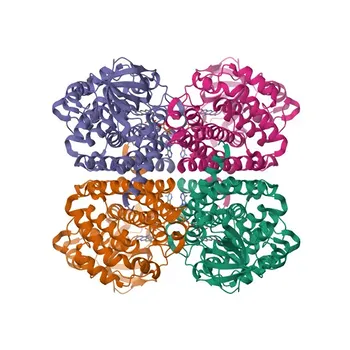
What Makes E. Coli Β-Galactosidase Ideal For Homogeneous Immunoassays? Discover Key Structural Advantages
Explore how E. coli β-galactosidase's zero-background signal, tetrameric stability, and alpha-complementation optimize homogeneous IVD immunoassays.
What Is The Primary Operational Advantage Of Cofactor-Labelled Homogeneous Immunoassays? Maximize Sensitivity
Explore how cofactor-labelled homogeneous immunoassays deliver catalytic signal amplification while managing endogenous matrix interference.
How Does An Inhibitor-Based Homogeneous Enzyme Immunoassay Operate? Guide To Ivd Reagent Selection
Learn how inhibitor-based homogeneous enzyme immunoassays work and key reagent selection criteria for IVD developers to optimize assay performance.
What Is The Working Principle Of Substrate-Labelled Fluorescence Immunoassays (Slfia)? Raw Material Guide
Explore the working principle of SLFIA and critical raw material selection criteria, from antibody affinity to fluorogenic conjugate design.
Why Do Homogeneous Immunoassays Struggle With Large Proteins? Adapt Your Assays With Macromolecular Substrates.
Discover why conventional homogeneous immunoassays fail with large proteins and how macromolecular substrates unlock robust homogeneous detection.
What Limitations Affect Traditional Pra Immunoassays & How Does Ms Improve Diagnostic Accuracy? Boost Assay Precision
Explore how mass spectrometry overcomes sensitivity ceilings and cross-reactivity in traditional PRA immunoassays for superior diagnostic accuracy.
What Technical Factors Determine Lc-Ms/Ms Vs Post-Column Derivatization For Clinical Amino Acid Profiling?
Explore how sensitivity, isomer resolution, run time, and dynamic range guide the choice between LC-MS/MS and post-column chromatography.
How Do Reagent Packaging Configurations And Kinetic Detection Modes Contribute To Homogeneous Immunoassay Performance?
Learn how two-reagent packaging and kinetic detection improve homogeneous enzyme immunoassays by eliminating wash steps and background noise.
Why Are Competitive Homogeneous Enzyme Modulation Assays Suitable For Haptens But Ineffective For Large Proteins?
Discover why enzyme modulation assays suit small haptens but fail for large proteins, and learn how to optimize your immunoassay design.
How Does A Competitive Homogeneous Enzyme Immunoassay Work For Hapten Detection? Key Raw Material Guide
Learn how competitive homogeneous enzyme immunoassays detect haptens without washing, and discover the role of key enzymes like G6PDH & MDH.
Why Is Kinetic Detection Preferred When Formulating Homogeneous Enzyme Immunoassay Reagents For Clinical Sample Analysis?
Discover why kinetic detection eliminates background noise and matrix interference in homogeneous enzyme immunoassays for accurate clinical analysis.
How Do Homogeneous Enzyme Immunoassay Reagent Formats Differ From Heterogeneous Formats In Clinical Diagnostic Applications?: Compare
Compare homogeneous vs heterogeneous enzyme immunoassays. Discover key differences in separation steps, sensitivity, and clinical applications.
What Protein Functional Groups Are Targeted In Bioconjugation? Guide To Optimal Conditions
Discover key protein functional groups in diagnostic bioconjugation (amines, thiols, sugars) and optimal pH/reaction conditions for assay success.
How Does Sodium Periodate Oxidation Work For Hrp Conjugation? Quality & Mechanism Explained
Learn how sodium periodate oxidation couples HRP to antibodies, preserving enzyme activity while balancing conjugate quality and heterogeneity.
What Benefits Does Click Chemistry Offer For The Preparation Of Bioconjugates Used In Commercial Immunoassay Reagents?
Discover how click chemistry delivers site-specific bioconjugation, high lot reproducibility, and stability for commercial immunoassay reagents.
Why Is Active Agitation Essential For Overcoming Mass Transport Limitations In Diagnostic Protein Microarrays? Boost Sensitivity
Learn how active agitation overcomes diffusion bottlenecks in protein microarrays to collapse depletion zones and achieve femtomolar sensitivity.
What Are The Advantages Of Using Peg-Grafted Surface Chemistries Over Conventional Slide Coatings? (100X Noise Cut)
Discover how PEG-grafted surface chemistries reduce background noise by >100x and preserve protein structure for high-sensitivity microarrays.
What Mass Transport Limitations Affect Protein Microarrays? How Mixing Improves Performance
Explore mass transport limitations in protein microarrays and how active mixing boosts immunoassay sensitivity to femtomolar levels.
What Distinguishes Chemosensors From Biosensors In Point-Of-Care Diagnostic Devices? Signal Transduction Explained
Explore key differences between chemosensors and biosensors in POCT, signal transduction mechanisms, and raw material stability needs.
What Are The Structural & Operational Differences Between Flow-Through & Lateral Flow Immunoassays?
Learn the key structural, fluidic, and operational differences between flow-through and lateral flow immunoassays for rapid diagnostic development.
What Are The Key Trade-Offs Between Go And Gdh In Glucose Biosensors? Select The Right Enzyme
Compare GO vs GDH in glucose biosensors: understand oxygen sensitivity vs maltose cross-reactivity to select the right enzyme for IVD design.
Why Can Direct Passive Adsorption Reduce Immunoassay Performance? Discover How Universal Capture Saves Signal.
Learn why passive antibody adsorption cuts immunoassay sensitivity by 90% and how universal capture proteins restore binding performance.
Why Is Separation Efficiency Critical In Heterogeneous Immunometric Assays? Unlock 99.99%+ Diagnostic Sensitivity.
Learn why 99.99%+ separation efficiency is vital for immunometric assays and how high-quality solid-phase coating drastically lowers background noise.
How Does Catalyzed Reporter Deposition (Tyramide Signal Amplification) Enhance Sensitivity In Elisa Kits?
Discover how catalyzed reporter deposition (TSA) breaks standard ELISA limits, boosting signal sensitivity up to 30-fold for ultra-low LOD.
What Are The Advantages Of Pre-Coated Streptavidin Solid Phases? Boost Assay Consistency & Save Reagents
Learn how pre-coated streptavidin solid phases preserve antibody conformation, slash reagent waste by 90%, and streamline diagnostic manufacturing.
How Do Fluorescent Dyes & Probes Enable Qpcr Quantification & Melting Curve Analysis? Master Dual Readout Assays
Learn how fluorescent dyes and probes enable dual quantitative Ct detection and melting curve analysis in automated real-time PCR systems.
How Do Lateral-Flow And Flow-Through Immunostrips Operate In Point-Of-Care Ivd Assays, And What Factors Impact Their Performance?
Learn how lateral-flow and flow-through immunostrips operate in POC IVD assays. Explore key strip layers, performance factors, and optimization tips.
Why Is Minimizing Non-Specific Binding Critical For Optimizing The Analytical Sensitivity Of Iemas?
Learn why controlling non-specific binding (NSB) is vital to maximizing signal-to-noise ratio and achieving ultra-low detection limits in IEMAs.
How Do Particulate Solid Phases Improve Immunoassay Performance Compared To Microtiter Plates?
Discover how magnetic beads and latex particles boost immunoassay sensitivity, kinetics, and workflow compared to microtiter plates.
What Advantages Does Colloidal Gold Labeling With Silver Enhancement Offer Over Traditional Enzyme Immunoassays (Eias)?
Discover how colloidal gold with silver enhancement offers picogram sensitivity, fade-proof signals, and inhibitor resistance over traditional EIAs.
What Solid-Phase Separation Techniques Are Commonly Employed In Automated Immunoassay Platforms To Isolate Bound And Unbound Fractions?
Explore solid-phase separation techniques in automated immunoassays—from magnetic microparticles to microtiter plates—to optimize assay design.
How Do Acridinium Ester Chemiluminescent Labels Operate During Signal Generation In Automated Immunoassay Systems?
Discover how acridinium ester labels produce flash chemiluminescence in automated immunoassays, exploring chemical mechanisms and assay trade-offs.
What Is The Mechanism Of Up-Converting Phosphor Technology (Upt) And How Does It Benefit Diagnostic Assay Sensitivity?
Explore how up-converting phosphor technology (UPT) eliminates matrix background via NIR excitation to achieve zero-noise, high-sensitivity assays.
Why Is Streptavidin Preferred Over Avidin As A Generic Raw Material For Biotin-Based Immunoassay Signal Amplification?
Discover why streptavidin outperforms avidin in biotin-based assays by drastically reducing non-specific noise and boosting signal sensitivity.
How Does The Immunometric Format Achieve Superior Sensitivity? Key Parameters Driving Lower Detection Limits.
Learn how excess-reagent immunometric assays boost sensitivity and explore key parameters like antibody affinity (K2), NSB (K3), and CV_nsb.
What Advantages Do Heterogeneous Enzyme Immunoassays Offer Over Radioisotopic Assays? Enhance Ivd Safety & Stability
Explore how heterogeneous enzyme immunoassays replace radioisotopic methods to improve reagent stability, lower costs, and simplify IVD automation.
What Mechanism And Materials Are Needed To Engineer A Loci Assay? Key Guidelines For Ivd Development
Learn how singlet oxygen relay and 250 nm microparticle design power homogeneous LOCI assays with low background and high sensitivity.
How Do Europium Chelates Eliminate Background Fluorescence In Tr-Fia? Achieve Femtomolar Sensitivity
Discover how europium chelates and time gating eliminate biological autofluorescence to achieve femtomolar sensitivity in TR-FIA assay development.
How Do Fluorescently Coded Liquid Microarrays Enable High-Throughput Multiplex Ivd Assays Compared To Planar Microarrays?
Compare liquid and planar microarrays for IVD assays. Learn how spectral bead coding enables fast, automated, high-throughput multiplex testing.
What Is The Working Principle Of Digital Immunoassays? Unlock Single-Molecule Ivd Sensitivity
Learn how digital immunoassays and paramagnetic microbeads deliver single-molecule sensitivity through Poisson loading and femtoliter well isolation.
What Constrains Ria Vs Irma Detection Limits? Key Sensitivity Factors Explained
Learn what limits RIA vs IRMA sensitivity: antibody affinity ceiling vs non-specific binding noise, detection limits, and assay optimization.
How Does Increasing The Specific Activity Of A Radioisotope-Labeled Tracer Affect Immunoassay Sensitivity And Reagent Stability?
Learn how tracer specific activity affects immunoassay sensitivity and stability. Discover trade-offs between radiolysis, affinity, and shelf life.
How Does The Specific Activity Of A Radiolabeled Tracer Influence Immunoassay Detection Limits And Reagent Stability? - Guide
Learn how tracer specific activity impacts immunoassay detection limits, radiolytic stability, and antibody affinity to optimize your assays.
What Are The Core Functional Differences Between Emit And Sandwich Elisa In Clinical Kit Design? Format Guide
Explore key differences between homogeneous EMIT and heterogeneous ELISA in IVD kit design, from sensitivity and speed to raw material selection.
Why Are Antibody-Coated Latex Microparticles Used In Turbidimetric & Nephelometric Assays? Rate Vs Pseudoequilibrium
Discover why latex microparticles enhance turbidimetric immunoassays and compare rate vs. pseudoequilibrium protocols for IVD assay optimization.
What Is The Working Principle Of Petinia? Master Raw Material Design For Small-Molecule Assays
Learn how PETINIA works via competitive inhibition and explore essential raw material strategies for small-molecule assay development.
How Do Particle-Based Solid Phase Carriers Enhance Immunoassay Stability? Synthetic Vs Cellular Reagents
Discover how latex nanoparticles, colloidal metals, and liposomes outperform cellular reagents in immunoassay stability, kinetics, and sensitivity.
What Are The Technical Differences Between Immunoturbidimetric & Immunonephelometric Assays? Ivd Guide
Compare immunoturbidimetric and immunonephelometric assays. Learn how optical principles impact raw material selection and immunoassay performance.
How Does Enzymatic Chemiluminescent Detection Compare To Direct Fluorescent Labeling In Biochip Assays?
Discover how enzymatic chemiluminescence delivers zeptomole sensitivity and superior signal-to-noise over Cy3/Cy5 fluorescence in biochip assays.
What Is Chemical Quenching In Liquid Scintillation Counting, And How Does It Affect Beta-Emitting Immunoassay Detection?
Learn how chemical quenching reduces light signal in beta-emitting immunoassays, impacts assay accuracy, and how to mitigate detection errors.
Why Use Igy Antibodies As Ivd Raw Materials? Eliminate Matrix Interference And Boost Clinical Assay Accuracy.
Learn how avian IgY antibodies eliminate HAMA, complement, and Fc receptor interference to improve accuracy in clinical IVD diagnostic kits.
What Makes Camelid Heavy-Chain Antibodies Effective For Reducing Ivd Interference? Key Biophysical Traits
Discover how Fc-free Camelid VHHs and antibody fragments eliminate immunoassay interference, increase stability, and access hidden epitopes in IVD.
What Key Requirements Must Enzyme Calibrators Meet For Ivd Traceability? Master The 3 Pillars
Learn the 3 core requirements for enzyme calibrator traceability in IVD products: reference measurement systems, matrix commutability, and specificity.
How Do Multi-Wavelength 1,2-Dioxetane Chemiluminescent Substrates Facilitate Multiplex Detection In High-Throughput Diagnostic And Research Assays?
Learn how multi-wavelength 1,2-dioxetane substrates enable single-well multiplex detection, zero crosstalk, high sensitivity, and stable glow kinetics.
How Do Homogeneous Glow-Type Chemiluminescent Reporter Gene Assay Reagents Function? Critical Scaling Factors
Explore how glow-type chemiluminescent reporter gene assays function and the critical factors for scaling across 96-, 384-, and 1536-well formats.
What Are The Structural Differences Between Competitive Ria And Sandwich Irma? Developer Guide
Compare competitive RIA vs sandwich IRMA formats to optimize antibody selection, matched pair validation, and immunoassay performance.
How Do Chemiluminescent Assay Platforms Optimize Reaction Volumes And Integration Times Across Microplate Densities?
Learn how high-throughput chemiluminescent platforms balance miniaturized reaction volumes and camera integration times across 96 to 1536-well plates.
What Capabilities Are Required In Chemiluminescent Workstations To Support Both Rapid Flash And Extended Glow Assays?
Explore essential liquid handling and optical features for dual-kinetics chemiluminescent workstations, from syringe pump injectors to cooled CCDs.
How Do High-Throughput Luminescent Imaging Platforms Prevent Optical Distortion And Well-To-Well Cross-Talk During Microplate Screening Assays?
Learn how telecentric field lenses, collimator arrays, and microplate selection eliminate optical distortion and cross-talk in microplate assays.
How Do Background Subtraction & Pixel Binning Optimize Bioluminescence Imaging? Boost Speed & Snr
Learn how background subtraction and pixel binning enhance sensitivity, boost SNR, and accelerate digital bioluminescence imaging workflows.
Why Is Sensor Cooling Necessary For Ccd Cameras? Boost Bioluminescence Sensitivity
Learn how CCD sensor cooling suppresses thermal dark current noise, dramatically enhancing signal-to-noise ratios in weak bioluminescence assays.
How Do Solid-Phase Immunoassay Formats Differ From Liquid-Phase Assays? Key Ivd Advantages & Automation Trade-Offs
Learn how solid-phase immunoassays outperform liquid-phase formats in IVD automation and dry chemistry, plus key optimization trade-offs.
How Is The Enzyme Commission (Ec) System Structured? Optimize Ivd Raw Material Selection & Assay Design
Learn how the Enzyme Commission (EC) system decodes enzyme specificity to guide IVD raw material selection, assay design, and standardization.